Showing posts with label Green Politics. Show all posts

Sunday, 13 July 2008

Climate Statement by the G8

Here is the full unabridged text to the statement on Climate issued by sixteen countries at the G8

We, the leaders of Australia, Brazil, Canada, China, the European Union, France, Germany, India, Indonesia, Italy, Japan, the Republic of Korea, Mexico, Russia, South Africa, the United Kingdom, and the United States met as the world's major economies in Tokyo, Hokkaido, Japan, on 9 July, 2008, and declare as follows:

1. Climate change is one of the great global challenges of our time. Conscious of our leadership role in meeting such challenges, we, the leaders of the world's major economies, both developed and developing, commit to combat climate change in accordance with our common but differentiated responsibilities and respective capabilities and confront the interlinked challenges of sustainable development, including energy and food security, and human health.

We have come together to contribute to efforts under the UN Framework Convention on Climate Change, the global forum for climate negotiations. Our contribution and cooperation are rooted in the objective, provisions, and principles of the Convention.

2. We welcome decisions taken by the international community in Bali, including to launch a comprehensive process to enable the full, effective, and sustained implementation of the Convention through long-term co-operative action, now, up to, and beyond 2012, in order to reach an agreed outcome in December 2009

Recognising the scale and urgency of the challenge, we will continue working together to strengthen implementation of the Convention and to ensure that the agreed outcome maximises the efforts of all nations and contributes to achieving the ultimate objective in Article 2 of the Convention, which should be achieved within a time frame sufficient to allow ecosystems to adapt naturally to climate change, to ensure that food production is not threatened, and to enable economic development to proceed in a sustainable manner.

3. The Major Economies Meetings constructively contribute to the Bali process in several ways:

First, our dialogue at political, policy, and technical levels has built confidence among our nations and deepened mutual understanding of the many challenges confronting the world community as we consider next steps under the Convention and continue to mobilise political will to combat global climate change.

Second, without prejudging outcomes or the views of other nations, we believe that the common understandings in this Declaration will help advance the work of the international community so it is possible to reach an agreed outcome by the end of 2009

Third, recognising the need for urgent action and the Bali Action Plan's directive for enhanced implementation of the Convention between now and 2012, we commit to taking the actions in paragraph 10 without delay.

4. We support a shared vision for long-term cooperative action, including a long-term global goal for emission reductions, that assures growth, prosperity, and other aspects of sustainable development, including major efforts towards sustainable consumption and production, all aimed at achieving a low carbon society.

Taking account of the science, we recognise that deep cuts in global emissions will be necessary to achieve the Convention's ultimate objective, and that adaptation will play a correspondingly vital role. We believe that it would be desirable for the Parties to adopt in the negotiations under the Convention a long-term global goal for reducing global emissions, taking into account the principle of equity.

We urge that serious consideration be given in particular to ambitious IPCC scenarios. Significant progress toward a long-term global goal will be made by increasing financing of the broad deployment of existing technologies and best practices that reduce greenhouse gas emissions and build climate resilience. However, our ability ultimately to achieve a long-term global goal will also depend on affordable, new, more advanced, and innovative technologies, infrastructure, and practices that transform the way we live, produce and use energy, and manage land.

5. Taking into account assessments of science, technology, and economics, we recognise the essential importance of enhanced greenhouse gas mitigation that is ambitious, realistic, and achievable. We will do more. We will continue to improve our policies and our performance while meeting other priority objectives, in keeping with the principle of common but differentiated responsibilities and respective capabilities. Achieving our long-term global goal requires respective mid-term goals, commitments and actions, to be reflected in the agreed outcome of the Bali Action Plan, taking into account differences in social and economic conditions, energy mix, demographics, and infrastructure among other factors, and the above IPCC scenarios.
In this regard, the developed major economies will implement, consistent with international obligations, economy-wide mid-term goals and take corresponding actions in order to achieve absolute emission reductions and, where applicable, first stop the growth of emissions as soon as possible, reflecting comparable efforts among them. At the same time, the developing major economies will pursue, in the context of sustainable development, nationally appropriate mitigation actions, supported and enabled by technology, financing and capacity-building, with a view to achieving a deviation from business as usual emissions.

6. We recognise that actions to reduce emissions, including from deforestation and forest degradation, and to increase removals by sinks in the land use, land use change, and forestry sector, including cooperation on tackling forest fires, can make a contribution to stabilising greenhouse gases in the atmosphere. These actions also reduce climate change impacts and can have significant co-benefits by maintaining multiple economic goods and ecological services. Our nations will continue to cooperate on capacity-building and demonstration activities; on innovative solutions, including financing, to reduce emissions and increase removals by sinks; and on methodological issues. We also stress the need to improve forest-related governance and cooperative actions at all levels.

7. We recognise that adaptation is vital to addressing the effects of inevitable climate change and that the adverse impacts of climate change are likely to affect developing countries disproportionately. We will work together in accordance with our Convention commitments to strengthen the ability of developing countries, particularly the most vulnerable ones, to adapt to climate change. This includes the development and dissemination of tools and methodologies to improve vulnerability and adaptation assessments, the integration of climate change adaptation into overall development strategies, increased implementation of adaptation strategies, increased emphasis on adaptation technologies, strengthening resilience and reducing vulnerability, and consideration of means to stimulate investment and increased availability of financial and technical assistance.

8. We affirm the critical role of technology and the need for technological breakthroughs in meeting the interlinked global challenges of energy security and climate change. In the near term, broader deployment of many existing technologies will be vital for both mitigation and adaptation. In particular, energy conservation, energy efficiency, disaster reduction, and water and natural resource management technologies are important.

We will promote the uptake and use of such technologies including renewables, cleaner and low-carbon technologies, and, for those of us interested, nuclear power. Technology cooperation with and transfer to developing countries are also vital in this effort, as is promoting capacity building.
For the longer term, research, development, demonstration, deployment, and transfer of innovative technologies will be crucial, and we acknowledge the need to enhance our investment and collaboration in these areas. Mindful of the important role of a range of alternative energy technologies, we recognise, in particular, the need for research, development, and large-scale demonstration of and cooperation on carbon capture and storage. We also note the value of technology roadmaps as tools to promote continuous investment and cooperation in clean energy research, development, demonstration, and deployment.

9. We recognise that tackling climate change will require greater mobilization of financial resources, both domestically and internationally. There is an urgent need to scale up financial flows, particularly financial support to developing countries; to create positive incentives for actions; to finance the incremental costs of cleaner and low-carbon technologies; to make more efficient use of funds directed toward climate change; to realise the full potential of appropriate market mechanisms that can provide pricing signals and economic incentives to the private sector; to promote public sector investment; to create enabling environments that promote private investment that is commercially viable; to develop innovative approaches; and to lower costs by creating appropriate incentives for and reducing and eliminating obstacles to technology transfer relevant to both mitigation and adaptation.

10. To enable the full, effective, and sustained implementation of the Convention between now and 2012, we will:

Work together on mitigation-related technology cooperation strategies in specific economic sectors, promote the exchange of mitigation information and analysis on sectoral efficiency, the identification of national technology needs and voluntary, action-oriented international cooperation, and consider the role of cooperative sectoral approaches and sector-specific actions, consistent with the Convention;

Direct our trade officials responsible for WTO issues to advance with a sense of urgency their discussions on issues relevant to promoting our cooperation on climate change;

Accelerate enhanced action on technology development, transfer, financing, and capacity building to support mitigation and adaptation efforts;

Support implementation of the Nairobi Work Programme on impacts, vulnerability, and adaptation to climate change;

Improve significantly energy efficiency, a low-cost way to reduce greenhouse gas emissions and enhance energy security;

Continue to promote actions under the Montreal Protocol on Substances That Deplete the Ozone Layer for the benefit of the global climate system;

And Intensify our efforts without delay within existing fora to improve effective greenhouse gas measurement.

11. Our nations will continue to work constructively together to promote the success of the Copenhagen climate change conference in 2009.


Tuesday, 1 July 2008

Zimbabwe

When the Media covers a story as big as the sham election in Zimbabwe, I realise that journalists sometimes are looking for something different to say. As a blogger I am frequently faced with the same problem, especially when the Main stream media are covering the story, how can I say anything that has not already been said. Then on Sunday, in a radio report, a journalist that I normally respect said something so stupid that I was shocked by the appalling lack of understanding of the man. He said that; “As Morgan Tsvangirai had withdrawn from the race he may no longer have the opposition support”

Well as has been well reported, Morgan Tsvangirai withdrew from the election run off after around seventy supporters of the MDC (Movement for Democratic Change) were murdered and countless hundreds of others were severely beaten. Additionally, Morgan Tsvangirai himself had to flee for his life to the Dutch Embassy.

What did this reporter expect? Morgan Tsvangirai at least had the interest of the people of Zimbabwe in mind, as it looked as thought the country was on the brink of a genocide. He was trying to prevent any more killings, rapes and beatings from occurring. Further, by refusing to take part in this sham of an election, he has placed a spotlight on the illegitimacy of Mugabe, one the world can no longer ignore.

While I too was disappointed that Morgan Tsvangirai was not going to contest the election, I could understand why. In the first round, even after stuffing the ballot boxes with three million extra votes for Mugabe, Zanu-PF still failed to win the presidential race. That message did apparently get through to Mugabe who was ready to stand down. However, all the other people who are part of the Zanu-PF leadership dissuaded him from doing so because they knew they could face the international criminal courts for crimes against humanity.

It is interesting to note that many of the spoilt ballot papers in the run just had the word “Murderer” written on them. Also while the official result says that there was a high turn out, the independent observers say that the turn out was minuscule. Again the independent observers were saying that there were more spoilt ballot papers than actual votes.

While I feel sorry for the many supporters of the MDC that were determined to vote against Mugabe, defying the threats of violence, by Morgan Tsvangirai withdrawing from the race he largely prevented that violence escalating. That shows a high degree of statesmanship.

The greatest difficulty is and will be need to build a fair and equitable society in Zimbabwe. Far to much of the talk from outside has been about how to force Mugabe out of office. Yet Morgan Tsvangirai has only ever spoken about how to effect peaceful change.

At least now other African leaders are calling on Mugabe to go.

The shame is that it has taken so long for this to happen. As Zimbabwe was the bread basket for southern Africa, the failing economy and the agricultural failures will have a devastating effect for the whole region. While I have sympathy for the argument that the Black (indigenous) population had regarding the fact that most of the land was owned by a minority of white farmers, just taking the land away from the white farmers was never going to solve the problems of black poverty. There had to be a willingness and ability to work the land, to produce a crop.

In effect all that Mugabe did was take the land from the white Farmers and give it to a few selected supporters of Zanu-PF, the former rebel fighters, who just wanted to own the land for its own sake. Land only has economic value because of productive value. Most of that land is not even providing a sustenance living for the people who now own that land. All the while Mugabe blames everyone else for the economic crisis. And has relied upon the fact that as the rebel leader who won independence that morally justified him having power. But like all thugs and bullies, he cant see the damage he is causing.

At least now with other African leaders calling for him to go, the end will come sooner rather than latter. What Africa needs is good governance and while I don't know if Morgan Tsvangirai will be a good leader, he has won my respect by talking peace and taking actions to avoid violence.


Saturday, 3 May 2008

The Madness of Green Washing our Rubbish

A couple of weeks ago, there was a story about a man who was fined for overfilling his bin so that the lid couldn't close. While most of the press and media reported it as, “Council gone mad” I had an open mind. Further, I doubted that the media was reporting the full facts. In fact the media reports were downright bias. I was tempted to make a posting at the time, along the lines of a man gets fined for leaving the lid up, something that all women will understand.

However, I was also aware of the serious aspect, that of the vast amounts of rubbish we in the UK send to landfill. Therefore, I wanted to think that this was more about a council trying to reduce waste rather than officials over reacting to the breaking of rules.

Then, in a separate report, I heard about a small greengrocer who has been fined for recycling cardboard and composting his dead stock. By the same county council.

I have spoken before of the problem of rubbish going into landfill and that I personally am trying to reduce the volume of rubbish that I generate. Even I recognise that I could do more, but will require an investment that I can not afford at this time. But I will make this investment in the future. However, at the moment I only need to have my bin emptied every third or fourth week. Most frequently my bin is not full when emptied. Locally, I still do get weekly collections but some councils have changed to fortnightly collections. This benefits the environment as it reduces the number of miles that the trash trucks have to travel.

But this switch to fortnightly collections has caused some people problems. While for people like me who are environmentally aware, refusing the extra packaging that often makes up most of the rubbish in peoples bins is easy. For most of the population this all means that people need to change their behaviour. This includes the way they shop, not over buying food that just goes strait from basket to fridge to bin.

Therefore, my reaction to the first story was that it seemed that the local council were trying to get the reductions in the volumes of rubbish down, yet this man that was fined was probably not cooperating. However my opinion changed when I heard about the greengrocer who was fined for doing what was right for the environment.

Instead of adding to landfill, he was taking his cardboard to a recycling point and composting the waste food from his shop. But as I suspected with the first story, there is more to this than meets the eye. The recycling point where the greengrocer was taking the cardboard is not open to commercial traders or businesses and there is no recycling of commercial waste. Also as the council charges businesses for collecting rubbish, it hits their revenues if a shop or business doesn't send their rubbish to landfill.

Therefore the real story here is that the council are trying to reduce the volume of household waste as that's a cost, but as business waste generates income...

To me that shows that most of the so called recycling done by councils is nothing more than Green Washing.

Thursday, 13 March 2008

Not A Green Budget

While there were a couple of measures in the Budget that could be seen as “Green”, these measures are more about raising revenue than attempting to benefit the environment. The greatest obstacle is this obsession with growth.

The growth of an economy by measuring the Gross Domestic Product (GDP) is a seriously blunt instrument. Further, even most economists don't understand how or what elements of the economy go towards making up this measure. Put simply, it measures the total earnings of all individuals, the businesses and the government in the country. Now if we were just talking about people, businesses and government departments just buying goods and services then as a measure it would be useful. However as it also measures many negative aspects of life that money get spent on, it fails to show the real state of any economy.

The problem is that if there is a spate of arson, the cost of rebuilding the properties gets measured as does the increase in insurance premiums. This all makes it look as though the economy is growing, as if you lose everything in a house fire say you then have to spend more on refurnishing your new abode. However the GDP fails to measure the losses of the original property.

Looking at an environmental prospective; even shutting down an industry that was heavily polluting adds a paper benefit to the economy as the costs of clearing up the pollution gets seen as a benefit to the economy.

The economists have the same mindset as the people I challenge for dropping litter. The people who toss rubbish in the street, will often say that they are keeping the road cleaners employed.

Therefore the economists and politicians see growth as useful measure but fail to see that a shrinking economy can be equally as good if not better. If the shrinking was due to high unemployment then that would be bad. But if there was a downturn that was caused by the majority of office workers working from home, utilising the internet and telecommunications to do the same work and no longer having to travel to a place of work, the losses would occur in the daily cost of travel for those individuals. While there would be less money spent on petrol that would impact the oil companies and allied businesses, the benefits will also be less congestion delaying the essential journeys, less pollution to cause breathing problems and expenditure on health care.

All this could happen using existing technology, and that shrinking of the GDP would benefit all but a few vested interests.

This is just one example of where a shrinking could be a real benefit to the overall economy. If everyone who can grew their own vegetables, that would mean that there was less money spent in the supermarkets as well as the reduction in the cost of health care from improved diet and better exercise. The trouble is that activities like this, in the eyes of the economists, are not seen to benefit the economy in ways that can be measured.

Staying with the environment, growth in personal transport is seen as good for the economy. As well as greater volume in car sales benefiting manufacturing and the suppliers of the fuel, the conventional economists prospective fails to take account of the costs that go with this. Like congestion extending the time required to travel anywhere, or the effects of pollution on health. In fact these extra costs are seen as benefiting the GDP as more money is spent on these.

It is this drive for growth that is damaging the environment and stopping any real growth in the quality of life.

This method of only looking at the world purely in terms of its monetary value is at the core of most of the problems we have today. Environmentally where the worlds forests are only valued in terms of the economic earnings from the timber, and not in the way that these forests hold back rainwater, preventing flooding and providing drinking water.

Additionally this fixation on growth of GDP means that important tasks in our societies become undervalued. Here in the UK while the cost of childcare is expensive the wages for the people who work in childcare is very low. This leads to people who would be the best people to care for children, will move on to better paid jobs. Yet caring for the next generation should be one of the most valued tasks in life. Yet people who trade in financial derivatives get paid small fortunes even for doing their job badly.

Equally there needs to be a change to fair trade. While the concept of free trade may sound the right way to carry out commerce, free trade is in fact exploitation. It is based upon paying the least you can for any resource and selling it for the maximum price you can get. While that may earn businesses or individuals good profits, it also creates volatility in the market. That is why crude oil has hit record highs yet again. At the time of writing oil is 110 US dollars per barrel while it only costs 20 US dollars to produce. Yet the free market also means that livestock farmers in the UK and the US are struggling to make any profits as it is cheaper to ship in meat from halfway around the world. Even excluding the environmental cost, this free trading creates the situation where the UK and the US are placing themselves at risk of being held hostage over food supplies. If we loose the ability to feed ourselves we are venerable to any number of situations that could disrupt international transport.

Fair trade has the effect of ensuring a stable price, for the farmer and prevents inflation. While it does prevent spectacular profits, it stops the exploitation. Further, by stabilising supply there is less risk of starvation occurring.

Fair trade not only applies to food, when applied to all areas of commerce the consumer gets a better standard of product that's safer and lasts longer. The manufactures also get a better price, leading to better wages and less environmental impacts. Less resources wasted, Less energy used, fewer good transported around the world.

We need to start looking for alternative economic solutions. For example if everyone who is unemployed were provided with an allotment to grow some of their own food, we would reduce the cost of unemployment. However, I am a realist and know that most of the unemployed would not make the effort.

Just as I know that no government will really start to tackle climate change until we have the levels of the seas rising.


Wednesday, 12 March 2008

Climate Change not to blame for Summer Flooding - Who are you trying to kid


In the summer during 2007 parts of the UK suffered from flooding in what a new report from the Centre for Ecology and Hydrology (CEH) were the result of record breaking rainfall.

Now I wonder if they were assisted by the University of the Bleeding Obvious!

This whole report is pure propaganda to down play the effects of climate change. While not totally ruling out climate change, they say that we have not had enough extreme events to say if climate change is the cause.

Now as I sit here writing this we in the UK are facing another storm with winds of eighty miles an hour, the third in a row and only days after the last one, I am left wondering what it will take to convince people of the reality of what we have done to our planet. Yes winter storms happen, but this is supposed to be Spring. Wet summers do happen but as summer floods are supposed to be once in fifty year events, we can see no more summer flooding for next half a millennium can we?


We have, under Gordon Brown, a prime minister who pays lip service to the environment, but follows policies that will further damage the environment and our climate. The economic damage of not tackling this problem will be even greater than the investment in the solutions.

But we need to pull our heads out of the sand and see what is really happening.


Saturday, 9 February 2008

Expenses of Members of Parliament

There are two items in the news that I can resist commenting on; the first is the story of the MP (Member of Parliament) who was bugged while visiting a friend and constituent who is in prison. Personally I don't see what all the fuss is about, an MP who is actually being listened to, he should be pleased!

The other story centres around the MP who paid his son as a researcher yet there is no evidence that he ever did any work. This story has taken the lid off this rather murky can of worms, of the money that Members of Parliament claim as expenses.

While we may all hope that MPs are honest, it would be naive to assume that with the lack of verification, that politicians don't have their snouts in the trough and are not stuffing themselves.
I have a cynical view of all MPs simply because of the money involved in poltics. Further, while most will say good things to get elected, the number who ditch their principals for the sake of power is... well its not surprising.

What is most surprising is that it has taken so long for this abuse to become public. While all MPs need to have the costs of supporting their constituents, things like stamps office staff, but what should also be happening is items like computers and office equipment should not then be kept by the MP when they leave. That way Equipment bought by the state should be retained by the state.

Then there is the problem of MPs getting payments for their mortgages. An MP who's constituency is outside London gets extra money to buy a second home in London. They then get to keep all the profits from selling that flat or house when they leave parliament. All legal but to me that looks like an abuse to me.

Then there is the cost of travel, a Member of Parliament who's constituency is many miles from London will need to travel backwards and forwards. Yet far to many fly first class, when travelling by train would be cheaper and would give them the time they claim they need to do the paperwork.

The problem is that MPs treat this as a club and once in treat us the taxpayers as idiots, and don't think we even have the right to question what they are doing. If they want our trust and respect they need to earn it.


Wednesday, 6 February 2008

Education Is De-skilling our Children


Earlier on today I was drafting out a posting on a completely different topic, but as today is Shrove Tuesday, the topic I was writing about reminded me that in the village store I had seen an instant pancake mix. My initial reaction was that surely people know how to make pancakes?
However, I realised that actually it is quite likely that people don't. Further, I realised why this was and it is in fact at the root of many of the social problems that exist today. Back when I was at school even us boys were expected to do one term of cooking. It had the fancy title of Home Economics, but basically it was simply cookery. I enjoyed it and predominantly by teaching myself, I learned how to cook. I am not perfect, even now I can get my timing wrong and I have served starters after the main course!

However I went to school just as the industrial age was ending. No matter what your real talent was the schools then were churning out factory workers. Or so they thought, during my last two years at school on the bus I would pass the factories where I was expected to work. Yet in those two years I saw factory after factory close. I was fortunate as I got a job in a Horticultural Nursery, very poor wages, but a job.

The certainties of the whole basis of the education system just fell away. The education system then emphasised, even more than it had previously, that exams were the way to go. When I left school O-levels were what was required. Then the emphasis was pushed onto A levels, (the equivalent of a high school diploma). Now all the emphasis is on getting a degree.

What has been lost in this overly academic thrust in the education system is the chance to experience different subjects, especially the practical ones.

That's the base of this triangle, another aspect is the number of women that are now working. This is not an anti-feminist rant, the fact that a woman is just as good as a man in any job has been proved time and again. However, this change has not come as a choice that women are free to make as most of the time women have to work just to make ends meet. When I was a child on the news you would hear about “A Family Wage”, now even two young working professionals together struggle to afford to live on a joint salary. Therefore, parents are so busy working that they don't have the time to pass on the skills of cooking. Additionally, the food industry and the supermarkets are tricking us into buying all these highly processed convenience foods. Further undermining the confidence of people in their abilities to cook.

Finally is the hype that is marketed to us about what we should be consuming and the lifestyle we should be leading. In the developed western world, while we are all richer, anxiety and depression rates are at an all time high.

I don't know first hand what the situation is like in the US, as an example, but here in Britain very few families sit down at the table for a meal. More often than not, its a plate on the lap in front of the television. Further, sometimes because of shift patterns or other commitments different members of the family are eating at different times.

While I am not advocating that it should be the woman that does the cooking, when I was married I did most of the cooking. But the loss of household skills and the reliance on “Fast Junk Food” is de-skilling a whole generation. This all impacts upon the loss of social cohesion, as a family sitting around a table eating and talking builds bonds, while eating microwave mush in front of the television just deadens the mind.

It would have been all to easy to have dismissed the appearance of an instant pancake mix on the shelves of the local store as people being lazy, but its really the loss of skills and the confidence to try that enables the food industry to make and market products like this successfully. When I first started to cook, I made my own recipe book. Pancakes was the first recipe I wrote in the book.

Personally I would encourage everyone to make their own. Apart from it being way cheaper than this manufactured junk, it can also be fun.

Here's the Recipe:

3oz (75g) of flour
¼ pint (150ml) of milk
One Egg (Medium or Large)


Mix the milk with the flour until you have a smooth paste. Season to taste with salt and pepper, beat in the egg, you should have a pouring paste but you can add extra milk to make a pouring paste.


It really is that simple, but if you have never been shown or had the opportunity to learn, well now is your chance.

What is particularly crazy about all this processed food is that it all contributes to climate change. The factories that create this stuff use far more energy per portion that you would do in your own home manufacturing it, then with child and frozen food its all kept in open chillers in the supermarkets. Add in the energy used to transport it around and the economics of processed foods start to look crazy.

It is worth noting that the supermarkets don't sell convenience foods for our benefit, while they may say they are offering choice, really they do it because they make more profit on these foods.


Therefore save money and save the planet by learning how to cook.


Tuesday, 29 January 2008

The State of the Union

Last night I stayed up to listen to George W Bushes State of the Union address. While it did not contain anything that was surprising, there were three aspects that I found frustrating. The first was the Bush stance on Climate Change. While there appears to be a recognition of the reality of climate change, under bush, there will not be any real or substantive action until countries like China and India start tackling climate change as well.

Well China is, while china is doing this in part as the PR for the Olympics, there is also a recognition that a changing climate is already causing problems. Desertification, Drought, Floods and its having an economic impact too. That is why China is building the largest solar power station in the world in the Gobi Desert.

The difference really is that the US has a Gross Domestic Product of fifteen trillion Dollars, while Chinas economy is still only two and a quarter of a trillion dollars. If China can do it I am sure that the US could, and in my opinion should, be doing much more.

The other aspect of the proper gander of this speech was when Bush talked about overseas aid. Because of religious interference, the US refuses to fund or support any project that promotes the use of condoms as a way of tackling HIV/AIDS. Even though the world health organisation and a myriad of other specialists know that the use of condoms is the only was that the spread of HIV/AIDS can be halted. This stance, by Bush, is based upon an ideology that's akin to the belief that the earth is flat. Don't get me started on natural selection!

Over the years of listening to the world service, reading books, and talking to people involved in development, the one aspect of development that has the greatest benefit is family planning. Empowering and educating women actually has the greatest positive effect on the health, economics and productivity of the developing world. Therefore, the US dictating that aid will only be given to peoples and projects that comply with the morality (the word that Bush used in the speech) of the religious right (wing), is not only wrong but adds to the problems that the developing world has. Further, it adds (Rightly or Wrongly) to the impression that America is pushing an anti Moslem agenda.

Lastly was the way that the US has dealt with current financial crisis. The US economy has some serious structural problems. Over recent years it has been on a spending spree, this has been funded by borrowing. Here in the UK we have done the same, so we are not guilt free here. While borrowing can really help people archive more sooner, borrowing has to be repaid. The problem is that this borrowing has come from overseas, predominantly China and South East Asia. That means that now Americans are busy working to boost the economic standing of China, Korea, Japan etc.

This was why in the 1970s in the UK we had to sort out the structural problems of our economy as during the Second World War we had borrowed so much from the US. It was only last year that we finally repaid that money. The US now has a similar problem, with government borrowings of three trillion dollars, that's twenty percent of the US economy, America has to work harder just to pay off the debt.

Further as US business has transported industries and jobs overseas, cutting the taxes of the richer citizens will do little to help this problem. Had Bush given the money to the poorest people in the US then you would have seen that money spent and injected into the US economy and not spent on servicing overseas debt.

I never expected much from Bush and I was not disappointed, given all the problems in the world it would have been great if the speech had not been full of idealogical rhetoric and had more substantive action.


Tuesday, 22 January 2008

The Do Nothing Approach to Climate Change

On Saturday after a busy day, I realised that I needed to get some vegetables. Therefore I went to my local greengrocer. As it was late in the day, I had time for a chat. Sparked by something he said, I suggested a greener option to a minor difficulty. That of him buying a solar panel to recharge the battery for the scales he uses at the markets. Much to my surprise he rejected the idea as it would take over a year to recover the capital cost. Even though it will save him electricity costs, and add the benefit of not having to shut up shop when the battery runs down.

I said that even if it will take a while to recover the cost, with rising energy costs, in the long run he would save. I also went on to suggest that it would help to reducing the effects of Climate Change. His response was surprising and shocking, even though he is aware of the need to take action, and that we are destroying the planet for his children, he saw no point.

He said that unless countries like America, China and India did something on climate change he saw no point in doing anything. He even acknowledged that his children would suffer in the future, and that their future is bleak.

The point of telling you this, is simply that this is the attitude that I face every day. While I no longer seem to face the opposition to the idea of a changing climate, almost everyone I do encounter will not, not can not, but will not take any action that requires effort, thought or costs. Ultimately I agree with his conclusion that we are... (Here you have to play guess the expletive)

The real shame lays in the hands of everyone who refuses to take actions towards making reductions in Climate changing pollution. Even among those people who like to think of themselves as being green, people will not limit their personal freedom to pollute. If they can see it saving them money, they will, or if it adds kudos amongst peers, but real action is non existent.

Well I will continue to limit my impact upon the planet as unless you are part of the solution then you are part of the problem. All this should not have been a revelation for me, as everyone has been doing something similar in relation to consumer credit. In the UK there is one trillion pounds of personal debt. We have all been spending as though tomorrow doesn't matter, well looking at the state of the stock market, tomorrow has arrived. I said it would, long before it occurred.


I have long said that it will be the economic impacts of a changing climate that would be the first time that people really started to take notice, well that time has arrived. Increasing energy costs, increasing food costs, the collapse of (Over inflated) house prices, are all part of the overall picture of our devastating impact upon the earth.

We now need a new economic engine driving our economy, not the push for growth at all costs, but a sensible and equitable use of the earth's resource's. Only via that route will we all discover that we can share in the wealth of this planet and put an end to the conflict that harms us all.


Wednesday, 26 December 2007

Americas Bali Road Map to Inaction

The day after agreeing to the Bali Road Map for tackling Climate Change, America and especially the White House started backing off from the agreement. My reaction to that was one of puzzlement. If the US government didn’t agree with or want to be a part of the solution then why sign up?

Further, during the extension of the negotiations it did look as though the US were going to block an agreement. It became clear that the US was isolated and while on minor details America did have its supporters, the overwhelming feeling was that the US were trying to prevent agreement.

Then something rather curious happened. The Dutch Diplomat and Chief negotiator, Yvo De Boer came to the podium and after deigning that the secretariat had been involved in secret and separate talks he broke down and was lead off stage in tears.

Then the most curious aspect was that all of a sudden Paula Dobrianski under secretary of state and the US representative, said that America would join in and follow the majority, that’s the rest of the world as the US were indeed isolated.

I can now report what actually happened. The US had no intention of signing up to any agreement on climate change, well nothing that would be meaningful of effective. Further, in Bali the US were effectively trying to scupper any agreement by holding secret talks with other nations. It was only when the US were discovered doing this that the American delegation agreed to sign up to the Bali Road Map. That is why the Bush administration is calling foul and trying to avoid its responsibility.

The reality is that the US under Bush will do nothing to curb CO2 or take climate change seriously. While the US Government is saying that Climate Change is real it is doing so reluctantly. Additionally, while Americans are the greatest polluters of our planet, even the very weak energy bill that the president has just signed into law is woefully weak. Even the Chinese are implementing measures that are more effective than the US.

I suspect that the US is attempting to create the illusion of tackling the problem, while in reality it will be business as usual. Eventually this inaction by American will end up causing America real pain.

One of the conundrums of climate change is the simple fact that as the planet is warming more water vapour has been released into the atmosphere. As has been shown with Hurricane Katrina and the flooding that occurred in the UK this year, eventually that water will fall as rain. Further, the atmosphere has been retaining more water vapour than any of the computer models were ever predicting. Apart from the fact that this is speeding up the warming of the planet, current thinking is that at some point in the Weather/Climate cycle most of this extra moisture will be released in sudden and violent downpours. Not in areas normally affected by flooding but in places that monsoon type rains would not normally happen. Therefore just on the basis of landmass, America will be hard hit. It is just an event that the models are predicting like the snowstorms that have hit America. The inaction of the Bush government is impacting the population of America.


Sunday, 25 November 2007

What a waste

In previous Blogs I have talked about the problem of rubbish. In the UK we send more of our waste to landfill than any other country in Europe.

Personally, I work hard to avoid collecting packaging in the first place. No plastic bags, nor packaging or anything that can’t be reused or recycled. Thus in any normal month I will normally only need to put my own bin out, a normal sized wheelie Bin, once a month. I say normally as I do also add to my own rubbish the detritus that I collect from my local wood. It’s frustrating that so many people do leave their rubbish in the wood. I always bring my rubbish back with me. I also take the equivalent of a bin bag full of beer and drinks cans to the recycling point. These I should point out are collected from the wood not that I am drinking gallons of beer myself. While I would love to be drinking that much, I could never afford to become a real dipsomaniac, so I just practice.

However, the real point is that it is not difficult to ensure that I reduce the impact I have on the level of waste that goes into landfill. There is a real green benefit in reducing our waste as if our rubbish was only collected once a fortnight instead of once a week would halve the carbon-dioxide pollution emitted in one fail swoop.

Also we need to reuse and recycle much more. When I was a child everyone had their milk delivered in glass bottles that were reused time and time again. While the added weight would have added to the amount of carbon it took to deliver and collect them, it was and still is greener than buying from the supermarket, the way that milk is bought today.

The problem is that milk is now predominantly sold in plastic cartons. This means that the cartons are single use and as very little plastic is recycled, the saving in reduced carbon outputs from the lighter weight packaging, is more than lost by the carbon footprint from the manufacture and disposal of all this plastic. Further, as the supermarkets use centralised distribution, your milk will have travelled hundreds if not thousands of miles.

The problem of waste is a serious problem, while many people do recycle; locally there is a real problem, as our local council doesn’t recycle any cardboard or plastic. So I am pleased to see that three of the local authorities in the region are looking at ways of dealing with our waste.

Personally, I have always disagreed with many environmentalists, as I have always been an advocate for waste to energy solutions. While burning rubbish will produce pollution not just CO2 but all sorts of other harmful chemicals, but some waste has to be incinerated, therefore it must be better to use the energy this creates. Not only will waste to energy projects replace fossil fuels, but also as the waste is not shipped the great distances that fossil fuels are transported. Thus further reducing the carbon footprint.

In the past when trying to get people to take waste to energy seriously, opponents have always said that if we reduced the rubbish we produce then any facility producing energy would run out of fuel. Well if that ever happened then we would really have all turned green.


Wednesday, 24 October 2007

Mass Extinction and Climate Change

When I saw the headline of this story on the BBC web site, I thought this is not news, the IPCC (International Panel on Climate Change) have already reported that we will have up to a forty percent loss of species as a direct result of this man made pollution we call climate change. However, this research is new and marks an important change in the attitude of scientists. Previously the language used “Hedged the Bets” and spoke of what was theoretically possible rather than what was actually happening.

Part of the problem in dealing with the man made pollution that is climate change, is a psychological one. In the past we have seen pollution as localised, and no matter how bad it got, when action was finally taken, the environment improved and the problem dissipated. Even with acid rain as that was a regional problem, in Europe for example, when Europeans acted collectively the situation reversed. And while there still is some sulphur pollution that is causing acid rain, it is relatively negligible.

With Climate Change, we can not see (or at least some can) that there is anything we can do, as we psychologically assume that there is no point as China or India or what ever other country we want to use as an excuse, are not doing the same. What is needed is leadership, and that should be coming from America and Europe. As the USA is the biggest polluter, producing 24 tonnes of CO2 per head of population they should be taking the lead here.

But the problem is that everyone is hoping for that technological fix, that mythical grail of pollution free energy. As a planet we have squandered our energy resources. We have allowed a culture that is so reliant upon oil to develop that we are prepared to fight wars for access to it, and allowed our whole way of life to become dominated by the automobile. The problem is that to power our way of life we are burning billions of tonnes of oil and releasing all the carbon dioxide that the planet sequestrated away back into the atmosphere.

What this new research shows is that while climate change has naturally occurred in the past, and effected the biodiversity of our planet, our current man made driven warming of the globe could wipe out most of the life on our home world. That as I am sick of having to point out includes us.

If we lost important pollinators like bees how long would we last? That’s not a rhetorical question, but fortunately minds far better than mine have already done the research and tell us that we would last only six years. We would loose our ability to grow over ninety percent of our food. That is what mass extinction will do to us.

Even now when there are clear signs of the effects of Climate Change in the forest fires in California, we still do nothing. Unless we act now, if we survive, we will become the most hated generation of humans within our children’s history.

Tuesday, 23 October 2007

A call for a Badger Cull


Having been out on the last two nights watching badgers, it was very disheartening to hear that Sir David King the UK Governments chief scientist is calling for a cull of badgers.

The reason for this cull is to stop the spread of bovine tuberculosis within cattle in the UK. And while it is true that badgers are part of the reason why tuberculosis is spreading this cull will not do anything to prevent it remaining in the cattle and returning at much higher levels of infection in years to come.

Following the foot and mouth outbreak, when farmers were restocking, areas that had previously been free of bovine tuberculosis became infected. This was because simply that the cattle that introduced had the disease. Further, this restocking proved a long held theory that it was the cattle that were infecting the badgers first and not the other way round.

The real problem is one of intensive farming, the larger the heard the faster that any disease will spread. With herds of two and three hundred cows, it takes no time at all before something like tuberculosis becomes a latent infection within that population. Further, because of the size of the heard, it becomes impossible to isolate any infected or suspected animals.

In the past when a stockman had only a heard of fifty cows, he (or she) knew the individual beasts well and were better able to spot any problems earlier. Now it can take days before a stockman has the time to notice any change. This is not neglect, it is just that the more mechanised and intensive a farm is, the fewer people there are to watch and spot a change.

For example in a dairy heard one of the biggest problems is mastitis, where an udder becomes infected, this raises the bacterial count in the milk. In the old days it was via good hygiene and management that this would be spotted. Now there is reliance upon laboratory tests to show what is know as the Cell Count. This is why it is technology, mechanisation and intensification that are causing problems like tuberculosis in cattle. The cure is not killing off large populations of wildlife but reducing the heard sizes and ensuring infected and suspect animals are properly isolated.

This call for a Badger cull is not a scientific solution, but an economic one based upon politics.

Sunday, 14 October 2007

A Judge provides legal ruling on science!

Back in 1977, I read a book that was a scientific critique of the then Common Market and European Food and Farming Policy. It explained the reasons why following the Second World War we in Europe needed to greatly expand food production and how we got ourselves on to an economic tread mill. Unfortunately, the vested interests still remain in force and are increasingly damaging our environment.

However, it was one tiny part of this book that highlighted a practice that alarmed me and because of this practice, I became a vegetarian. The two authors talked about the way that cattle were being feed the remains of dead sheep to boost protein in the cattle feeds. They quite rightly argued that the dead sheep used for this would not be anywhere near the prime stock, but the diseased animals that could not lawfully go into the human food chain. As an example they chose the disease Scrapeie, as this was at the time the most common killer of sheep. They argued that using these diseased carcasses to feed cattle was a really bad idea, as we had no way on knowing what the consequences would be for human health.

It was this head in the sand attitude of we will deal with that problem latter that made me decide to become vegetarian, as I didn’t know what the providence was of any of the meat I was eating. Therefore I was not surprised when a new disease emerged, that was Mad Cow disease or to give it its true name, Bovine Spongiform Encoplepathy BSE.

What was even more alarming was that when this practice of feeding cattle dead diseased sheep was introduced, regulations were drawn up to try and prevent disease transfer or transmission. Thus, governments knew there was a serious risk but still allowed it to happen. The problem was that it was seen as an economic solution to keeping food cheep and disposing of fallen livestock.

That was a bad idea and if people had known of it I suspect that people would not have wanted it to occur. When I tried to talk about it then, I was told I was talking rubbish, well I was told I was talking out of the wrong orifice, or other less polite comments.

The same attitude was there then if I ever spoke of Climate Change. Here though the reaction was very different, as within peoples living memory they could remember colder winters, more snow, but had the attitude that it must be a good thing as we would have better weather.

It has taken a long time to even get Climate Change on the agenda, but even now the economic vested interests are not so much keeping their heads in the sand, but using their economic muscle to try and stifle education of the facts and consequences of Climate Change. Here in the UK, we have just had the ridiculous situation of a Judge in a law court, making a ruling about the validity of scientific evidence.

To update those that don’t know, the documentary film the Inconvenient Truth, is to be shown to all schools in England and Wales, to educate the coming generations of the effects and impacts of Climate Change. However, one individual, backed by money from mining companies, oil companies etc decided that this was political indoctrination and took the government to court to try and stop the film being shown.

While it has now been decided the film can be shown, the judge also states that the film has nine errors. However it is the judge who is factually wrong.

U.K. Judge Rules Gore's Climate Film Has 9 Errors [Washington Post]

But he also said Gore makes nine statements in the film that are not supported by current mainstream scientific consensus. Teachers, Burton concluded, could show the film but must alert students to what the judge called errors.

The judge said that, for instance, Gore's script implies that Greenland or West Antarctica might melt in the near future; creating a sea level rise of up to 20 feet that would cause devastation from San Francisco to the Netherlands to Bangladesh. The judge called this "distinctly alarmist" and said the consensus view is that, if indeed Greenland melted, it would release this amount of water, "but only after, and over, millennia."

Burton also said Gore contends that inhabitants of low-lying Pacific atolls have had to evacuate to New Zealand because of global warming. "But there is no such evidence of any such evacuation," the judge said.

Another error, according to the judge, is that Gore says, "A new scientific study shows that for the first time they are finding polar bears that have actually drowned swimming long distances up to 60 miles to find ice." Burton said that perhaps in the future polar bears will drown "by regression of pack-ice" but that the only study found on drowned polar bears attributed four deaths to a storm.

The most recent data from the artic about the sea ice shows that the rate of loss of the sea ice is accelerating. Once below a critical mass the warmer sea temperatures will encourage and speed the melting of the Greenland Ice shelf. Even the most conservative scientific predictions say that this will happen in a century not millennia, as the judge asserts. This is not alarmist, as the Greenland Ice sheet is already starting to melt and we already have 30 centimetres of sea level rise as a result of Climate Change.

Also the assertion that judge made that loss of sea ice and the loss of Polar bears was in error is plain stupid and ill informed. If we destroy any habitat, the flora and fauna that is specially adapted to that habitat will be lost too.

From my perspective it was like the Judge trying to make ruling that the laws of gravity have no place in his court.

At least the coming generations will at least know who to blame for the mess that we have left our home planet in.

The timing of this hearing was apposite as it came in the same week that Al Gore has been awarded, with the UN IPCC, the Nobel Peace Prize.

Fighting Climate Change is actually far more important than any war, or other political or economic considerations. In a friends on line Journal, after posting a link from Al Gores Web site, she asks when Al Gore calls for the US Government to enact legislation to cut greenhouse gases by 90 percent what does he know that we don’t? The answer, and my answer is nothing new, it is just that he can see what the science is telling us.

Just as BSE could have been prevented if we had not done stupid things for economic reasons, then Climate Change and the destruction of our home would not have occurred if we had not been driven by greed.

The next five years are critical, this will be the last generation that will have material wealth, as once the seas do rise we will be forced to live in harmony with the land that remains.


Friday, 28 September 2007

The Truth is Inconvenient

As I haven’t seen the Al Gore film the inconvenient truth, I cannot say if the film is party political or not. But Climate Change is political, if only because so many people are trying to keep their heads in the sand over it. I am glad that British school children will be getting the chance to see this film, as hopefully it will help capture the hearts and minds of the coming generation.

Even today the news that the old energy inefficient incandescent light bulbs are to be phased out is bitter news as it will not be until 2012 this happens. When it could have happened by the end of this year. That will mean at least twenty-five extra tonnes of CO2 will be released into our biosphere before the ban occurs. It’s all far too little, lets hope that it’s not too late.

After all the important line in the IPCC report that everyone seems to have missed says; “If Climate Change is not reversed, we will face temperature increases that will make life on this planet unsustainable”

I shouldn’t need to translate that but that means WE BECOME EXTINCT.

Already this year there is less sea ice in the Artic, and even conservative predictions are saying it will disappear by 2030, that’s only twenty-three years away. And once we have lost a critical mass of that sea ice, we then have thermal induction and convection from the sea, accelerating the rise in air temperatures. In reality if we lose the Sea Ice we lose the fight and the domination of Homo sapiens ends.

Therefore I hope this misguided parent looses his legal challenge to the film being shown to our children so that even if we fail to act, they will.


The original story on the BBC Web Site

Monday, 24 September 2007

Climate Change and Animal Health

It has been reported today that the UK has its first case of an animal disease called Blue Tongue. Over the last five years or so I have been hearing of this disease as it moved up from its normal area of impact around the Mediterranean Sea.

As the virus is carried by, and infection caused by a particular midge, it is only as a result of climate change that this condition has reached this country.

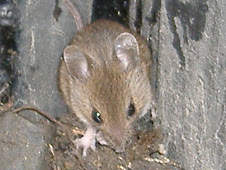
For this mouse, the fact that it infected one of the rare breeds, a Highland Cow, makes this even more poignant. As the farm where this has occurred are keeping rare breeds alive as well as farming in a very sustainable way.

This is not the first impact from Climate Change (Global Warming), nor will it be the last. But it should serve us all as a reminder that we all need to act now to combat climate change.

Another piece of news that many will have missed or ignored. Food prices are set to rise by at least ten percent as a direct result of climate change this year alone. This Mouse has always said that it would always be the economic impacts of our pollution our biosphere that we would see first. Well here it comes.


Wednesday, 5 September 2007

Our impact upon geography of our planet

I hear in the media that George W Bush has said that he is concerned about climate change and the often-stated fact that he is not is an Urban Myth. (Oh if only George W were an urban myth) But seriously, the problem with climate change is that people and politicos have taken a long time to even grasp the science of our climate, and of the way we are changing it. Further, they cant get out of the old ways of thinking, and cant get beyond the real urban myth that climate change will just mean warmer weather.

The impact of the effect upon geography of our planet was illustrated by the publication of a new edition of the Times Atlas, where two (in the reports I saw) of the largest bodies of inland water, have shrunk to ten percent of their original volume. However, as we have yet to see a clear and dramatic example of climate change in the media, people like George W can still get away with burying their head in the metaphorical sand.

Even where action is being taken such as with the creation of wind farms, it’s frequently done more for media hype and to chase the government subsidies, than as attempt to really solve the problems we face. I will write more on this once I have more facts, but briefly as the companies that are building the turbines and wind farms get tax breaks here in the UK, these farms are not being sighted in the best places, thus not producing anywhere near the levels of electricity they need to, to actually be a green source of energy. While the government trumpets this as reducing carbon emissions, it looks as if they will be Carbon Neutral at best, and because of poor placement may even have caused greater CO2 emissions from their construction than they will ever save during their lifetime of use.

The real challenge we all need to face up to is our profligate use of energy. Unfortunately, we live in a society whose whole economy is reliant upon us consuming more. Whenever there is economic news it is always illustrated by the rate that the economy has grown by. Yet this growth is at a real cost to our environment. Every new product we buy, every new gadget we use, has an environmental impact be it via the natural resources that goes into the manufacturing of it or the energy required to make it, transport it and then dispose of it.

The more we consume the more emissions we produce and the more energy is wasted. We are like children at Christmas with our consumer products; we play with them for a while then forget them as soon as the new latest wiz bang gadget comes out. The biggest difficulty is that our whole economy is built upon us consuming more and more.

Well, there is a limit to what I can consume. I spend long hours of my free time out in the countryside, and that is nearly free. I take my own rubbish (and often other peoples) home with me. If I travel I use Public Transport, or a pony belong to shanks. I try very hard not to waste energy, my electricity bill for the last quarter was twenty-six pounds my Gas costs were thirteen. I don’t waste resources like water, nor do I generate that much waste. In fact I find it impossible to fill a standard wheeled bin in four weeks. There it’s more about refusing to buy overly or heavily packaged items, and only buying enough food to use and not wasting it.

If I owned the property I lived in, I would fit Solar panels. Photo voltaic and solar heating, possibly even a small wind turbine and that way all my energy needs would be carbon free, and in time even the energy and carbon emissions of the production of my consumer goods would be removed from the equation.

Each individual action has a small effect; as can be seen in our changing climate, thus we can also collectively make a very large impact for the good.