Wednesday, 19 September 2007

Copper Beech


Here in Chopwell Wood we have along one of the rides an avenue of Copper Beech trees and while they look great at any time of year, in autumn they are spectacular.


Tuesday, 18 September 2007

Installing the Insect Bench

Yesterday I had a real treat as I witnessed the sculpture David Goss install our newest item in the forest. The artwork is a function piece as it is a bench, and provides a welcome rest stop on the boundary walk. Further its location has been carefully selected so that it provides a view out of the wood across to the moors and up the Derwent Valley.

I was able to observer and at times hinder, the whole of the operation. It was a delight to see a real craftsman at work.


Sunday, 16 September 2007

Walking the History Trail

Cue the Danger Mouse theme tune, however I cant afford David Jason to do the voice over! Yesterday I was a Mouse on a Mission!

On Wednesdays meeting of the Friends of Chopwell Wood committee, our secretary put out a request for photographs of some of the elements that make up our LHI (Lottery Heritage Initiative) trail. As he doesn’t know one end of a camera from another, that’s why he keeps on thinking he is getting films back that belong to opticians. So I thought I would try and get the images he needs. Thus I was up early with the aim of getting these pictures taken.

Now normally I tend to steer clear of the areas of the wood that are popular especially at weekends, as I know that for wildlife photography or even wildlife watching, other people can and do disturb the wildlife. They don’t do it intentionally, but few people seem to be able to walk in the countryside without making a lot of noise. I am not bothered by it, others are welcome to use my wood just as much as I do, and it’s always great to see others enjoying the wood too. Today people didn’t matter as I would be taking pictures of objects and primarily not the Fauna and Flora. That said I still keep my eyes open and ears attuned, as you just don’t know what you are going to see. And while there were quite a number of people about, they were much quieter than I normally experience.

Also there are many people who I now begging to recognise, and they all seem to know me. Or is it that there dogs that recognise me? Thus, it was a real pleasure to walk, greet and chat to many of the people out yesterday.

Getting the images was not practically challenging, and that is the advantage of using digital, as I could take lots to ensure that I had all angles covered. Had I used film it would have cost a fortune.

However, it was the fact that I was walking in the places I frequent least that enabled me to realise that I was missing some potentially interesting encounters. I could see a regular badger track in one location as well as signs of fox. Also I realised that there were locations near by where large numbers of birds must be roosting, and hence there would be a great dawn chorus. There were also indications of a bird of prey plucking post. As we had a pair of Goshawks nesting just beyond the boundaries of the forest, I cant say what bird it could be as both Sparrow hawks and Goshawks share the behaviour of using the same spot for plucking their lunch.

Part of the reason for taking up the challenge of trying to take the photos of the heritage elements in the woods was simply that they are well spaced out. That meant it was going to provide a good long walk at the very least. That in its self can open up opportunities to see something different. Not that I don’t want to see all the common sights as even seeing what you expect and hope to be there in terms of the wildlife is a good indication of a healthy ecology.

Having got the pictures in the North end of the wood, I was walking down next to the car park when another member of the Friends’ came along, a man that I will refer to only as RB or Rancid Badger for short. Don’t ask, but I didn’t name him that, he chose the name himself. It was fortunate that we met at that moment as it was just starting to rain. So we decanted to the Forest Classroom for shelter and Tea. As RB was meeting another of the Earth skills stalwarts, we decided we would all go for a walk down to Lintzford Mill together and just enjoy the spontaneity of being out with no particular destination other than the mill its self.

I always enjoy walking with RB, as he really does know his stuff, wild foods, the uses of plant materials for making objects. Personally he knocks the likes of Ray Mears into a cocked hat. Every time I am out with him I learn so much. Further there is no bull about him, he doesn’t claim or try to be all knowing and I always appreciate someone who will say that they don’t know something.


What was also great was the way we were just feeding ourselves on the berries along the way. Now I pride myself on my observational skills, but its rare to be with other people who are as observant. Moreover they appreciate the importance of the vitality of the countryside. It was at one of our little stops looking to see what had been eating the hazel seeds that one of them observed the robin in the picture.

As we ventured out of the wood, we stopped to observer the cattle on the farm. I do love the traditional breeds and it was a delight to see these Highland Cattle, they do look a bit like Doggle out of the Magic Roundabout though. Then stopping on the bridge we could see trout in the river.


Exploring further we discovered just how wonderful and quiet the areas are beyond the bounds of the forest are. We all tried to put the world to rights as we wandered. If only talk could solve the worlds problems.

Then I left them to go back via the wood, I wanted to explore further and I followed the course of the river back to Blackhall Mill. But I will leave what I saw there for another time.


Saturday, 15 September 2007

The History and Natural History of the Pond.


One of the aspects that people don’t realise is that voluntary conservation work is really fun. Let me explain, on Thursday I was out with the Countryside Wardens working on a wildlife pond. Ponds, or any healthy body of water are vital for all wildlife. However, most small ponds need to be managed carefully for them to be successful habitats.

In the past Most villages had their own ponds, these were mainly man made but were not dug as ponds but resulted from pits being dug to extract the clay to make the bricks to build the cottages that created these villages. However unlike much of the industrial scale work, these were dug by hand. Further they were managed as an important resource for the community. They provided drinking water for horses, the main source of power and transport. They provided food, as ducks would often colonise them. But more importantly, they enabled reeds and sedges to be grown and these were vital as roofing material. It was not until the coming of the railways that slate, from Wales, became more widely used, thus most cottages were thatched.

It was this annual harvesting of the reeds and sedges that prevented the village pond from silting up and drying up. Thus without that type of traditional harvesting modern wildlife ponds have to be managed to keep them from just becoming areas of boggy mud. That was the task in question, cutting back the vegetation and removing it from the water.

Now anything to do with water can be fun anyway, but get a crazy bunch of volunteers together, and we must be crazy to be doing it in the first place, and it’s a wonder that we get anything done because we are laughing all the while.

There was one chap who was keen to use the waders, simply because he had never used them before. We all joked about rubber fetishes. I bet you never guessed that conservationists were so kinky. Also, no matter how careful you are we all get wet and muddy doing a task like this.

But there is real excitement as while we are working, we get to see the wildlife in the pond; Smooth Newt, Great Diving Beatles, Frogs, Toads, and we are all like children rushing to see these creatures. There is also the delight of the wonderful smell of Water Mint as we are working too.

While it is hard work, the satisfaction and fun is amazing.


Friday, 14 September 2007

The Complications and Fun of Clearing a Pond

It can be extraordinary the way that events over three hundred miles away can impact upon this mouse’s activity here, but the fresh outbreak of Foot and Mouth down in Surrey has done just that.

Yesterday was the monthly committee meeting of the Friends of Chopwell Wood. Since I was elected Vice Chairman, I take my role of promoting Vice in the wood seriously; I have to make the effort to attend. Yesterday however was significant as I was also chairing the meeting for the first time. All in all I tried to be fair and I hope that I allowed everyone the chance to say what he or she needed to say. It did have me feeling a little stressed and I had, had quite a bit of work to do in the last month as well.

Therefore, I particularly wanted to get out today to do some practical work in the countryside as it’s a great stress relief valve for me and it’s a lot of fun too.

As I had been so busy I had not really had the chance to hear the news yesterday so it was a surprise to hear of the fresh outbreak of Foot and Mouth. Add to this it was not until this morning while having my task fuel of porridge that I read that today’s task was at a wonderful community farm at Bill Quay. I already knew of the farm as I had visited previously and had lived near there before moving to this village.

I had great fun; the task was clearing out vegetation from a small wildlife pond and wetlands area. Its part of why I do like the Farm is that everything is on a small scale and is full of great examples of how things can be done.

However, I was quite mucky and tired when I got home, and I tried to rush around to get ready for another meeting tonight. I had to cancel attending. Apart from the fact that I would be late, it occurred to me that several of the people there would need to be taking “Bio Security” measures as protection against Foot and Mouth. As I had been working at a farm, all be it a small one, the risks are the same no matter what the size. And even though there are no known cases of Foot and Mouth locally, I couldn’t justify the risk that I could inadvertently carry the infection to others.

I just hope that it doesn’t take long to eradicate the infection this time.

Wednesday, 12 September 2007

Future Forests

Here is an example of planting and planning for the future on this site owned and managed by the woodland trust.


Tuesday, 11 September 2007

Preparing for a transformation


Here in my local wood we are on the brink of a new era. As the wood is a plantation that sits on the site of an ancient wood, it has been decided that it will be replanted with the native hardwood trees that would have been part of its natural mixture long before it was used as a plantation. Thus I find myself in the luck position of being around to see this happen. Or at least the start of it happening as it will continue long after I have departed.

What makes me so pleased is that if we, the Friends of Chopwell Wood and the Forestry Commission get the management right, we will be regenerating a habitat that has been in rapid decline for years. Therefore we will be helping in preserving many rare and endangered species for future generations.

At the moment I am busy trying to collect seeds from the trees that we will need to grow on and plant in future years. My back yard already looks like a mini forest with hundreds of Oak seedlings in there. I expect that while these will be planted in November, watch this space for details, and there will be a new mini forest in my back yard for years to come.

In the picture you can see the trees marked with coloured dots are the trees that are to be thinned.


Monday, 10 September 2007

Pied Wagtail

Here’s a picture of a Pied Wagtail, while they are around all the time, they are starting to appear again in large numbers as the feed on the crane flies as they emerge.


The Extinction of the Polar Bear

While my primary concern is the fate and protection of the wildlife and habitats in my local wood and its surrounding countryside, I am still deeply concerned about the fate of the Flora and Fauna of the entire globe.

Global climate change is predicted to cause the loss of up to forty percent of species on our planet. The extinction of the Polar Bear is rapidly becoming an Icon of our collective failure to take seriously the crisis that is the pollution of greenhouse gasses.

Over the last decade we have witnessed the acceleration of loss of sea ice in the artic. It is happening faster then any of the respected climate models would have predicted. This is one of the problems, very few scientists wanted to put their head on the block and say that the situation really is a crisis. Even now, the predictions are cautious and they are saying that in fifty years we will have lost forty percent of the sea ice habitat used by the Polar Bear.

This caution is what is really holding back the politicians from making the bold moves that are really needed. If the rate of acceleration stays the same the sea ice will be gone in five years not fifty. That will mean the extinction of the Polar Bear, as they need the Sea ice to hunt from.

As well as losing this Icon to Climate change, the loss of the sea ice will cause the accelerated melting of the land Ice, particularly from the Greenland Ice shelf. That will cause a seven-meter rise in sea levels and such a dramatic change to climate and weather that we will be shown once and for all the true effect of climate change.


Digital Wildlife Photography


One of the main reasons that I started this on line journal, was that when I moved to the village, I started encountering some remarkable wildlife and I was having some really great experiences. It was in fact my excitement at these close encounters with the natural world that made me want to share. However, I didn’t want to just post up some geeks list, even though to many I am a geek, and I wanted to try and make the postings interesting. (One of the people that knows me said that it’s like reading your soul.)

I quickly realised that images were going to be important. While I had and still have some good film cameras, what I really needed was a digital camera if only to share what I was seeing at the time and not weeks later. The one I had at the time was not that good. Having worked in the professional photographic industry, image quality has always been important to this mouse. However, the cost of going digital appeared to be out of my league, so I compromised and got a reasonable compact digital camera, and many of the images here were taken on that. A Fuji A350 for all those geeks (like me) out there.

However I had expected to use my film cameras to do most of the wildlife photography. Yet this created a paradox, often it was the unexpected occurrences of an animal, bird or insect, which seemed to make some of my posts more entertaining. Therefore I was finding myself weighed down with equipment, or I just would not have the right lenses with me.

Further I was starting to rely on the digital camera much more. I have to say that I am now becoming a convert to digital photography. It does have its limitations, for example anything high contrast it doesn’t cope with well. But that may be the nature of the model of camera I have been using. Also it may be that unlike film we need to know more about the chips used in the cameras. But I was never that much of an anorak about film cameras so I don’t particularly want to waste my time, or fill my head with technical rubbish about what’s best this week. Apart from anything else, it goes against my non-consumerists grain.

But I have started looking seriously at what’s out there and what fits my needs. I decided I would look at older second hand cameras and found a Dimage Z1 on an internet auction site. While not anywhere near the resolution I would wish for, I thought I would see if this was closer to what I needed.

While I do want to take decent images, there are times when just being able to say that today I saw this bird and here’s the picture was becoming just as important as not being laden down with heavy and cumbersome equipment.

Well here are the results of me playing with my new toy. I could see be becoming a convert to digital. Further as it will reduce my pollution levels as I will not be causing a lot of nasty chemicals to be used, it will ease my guilt about despoiling the earth while trying to save it.


Sunday, 9 September 2007

A full complement of Volunteer

Yesterday was the rescheduled task of painting the Coal Tubs on the Tub way. I was feeling quite tired even when I got up, but as I was leading it, I of all people couldn’t afford not to turn up. Therefore I had to fuel myself up on portage, make my sandwiches and a flask of tea. The Tea and my telephone I left on the kitchen bench, so that was a good start. Personally I blame to post woman calling at that point causing me to forget to put them in my bag. Well I have to blame someone, it cant be the Mouse’s fault, or can it?

It was a great day weather wise, so walking to the Forest classroom, the meeting place for the volunteers, was a real delight. Had I just been out for a walk it would have been a perfect morning to just stroll around, but those tubs needed to be painted.

The difficulty for an organisation that relies upon volunteers to carry out any works or task it that you never know how many people will turn up. It became clear that I was it. The Friends’ are blessed with having some very good and reliable people who do give of their time so freely, but most of the regular volunteers yesterday were away on holiday, Mick enjoy your time in Malta, we have work for you when you return. Also as this was a rescheduled event, rain having prevented play previously, it was just possible that folks had other things planned. So it was left to the Mouse to paint these tubs. As an extra safety precaution I informed the Ranger, who was on her Day off, that I was working alone.

Now I don’t mind painting, but it can be boring, so I decided I would just do as much as I could manage. And I would work systematically, and used a wire brush to key the surface, as the plan was to do the work to as higher standard as possible, so that the minimum of future maintenance was needed in the future. Painting the wheels first, I wanted to ensure that all the fuddle bits were done and then I could take time with the large flat surfaces.

The work progressed well, and I even had time to stop for my lunch, and dreamt of my flask of tea I knew was at home. I even had visitors in the form of various dog walkers and a group of walkers. Even the Ranger came along to check on me, I think she was just making sure I was actually working and had not skived off.

Eventually, I just ran out of paint, with just a little bit of the coal to paint. Well its rock made to imitate coal, if we had used coal it would have lead to the brainless ones either stealing it or setting it on fire.

So with just the sign writing and a bit of coal left to paint I was happy but amazed that I had done so much. While I had been careful, I still got my hands covered in paint, well at least I wont go rusty now, I had the problem that I had to return the tools and ensure I informed the ranger I was finished. What made that a problem was I was really knackered and my home was in one direction and the Forest Depot was in the other.

At least I was able to check on the work as I went home eventually. The wet paint sign was still there, but it was gone by today. It is one of these things that amuse me. The tubs are in an area that is closed off to the public, with a viewing area at the top of the cutting. But to ensure we don’t get sued, we have to put up signs to warn the brain dead ones that the paint is wet. Just in case “Little Johnny” traverses into a place he shouldn’t be, and gets paint on his best designer shirt, and “Little Johnny’s” mother sues us as this hypothetical shirt is ruined. Personally I think that in these sorts of cases the people being sued should counter claim the cost of repainting because “Little Johnny” has ruined it. That would stop this sue for everything culture.

Well as you can see the Tubs are all shinny and black again. But someone else can finish them off!

Saturday, 8 September 2007

Topography of Chopwell Wood

Chopwell Wood is drained by a number of streams, brooks or ditches into the River Derwent. This actually means that the ground under foot is usually quite good. Even with all the rain we have had during the summer, the ground never became so bad that it was not possible to walk in the wood. However there are still places that get and remain muddy and sticky, or other places where caution is advised as the ground becomes slick and traitorous.

Part of the reason why it stays reasonably dry are these burns, as well as the geology of the soils, they are for the most part sandy, with a layer of mud, all the result of glacial activity long before this mouse was born. But it all goes to make the wonderful topography we have today.

So as I am just out of the bath, here is a clean image for you.

On the River Derwent

First, I thank the person who pointed out that there was a problem with the counter that I added. It is here more for fun than for any other reason, I just liked the idea of it being ladybirds. And while it is nice to know that this mouse’s efforts are being read, for me it’s the quality of the people not the quantity.

The counter is now at the bottom of the page, and all the digits can now be read, I was told it was showing zero, well it just shows that apart from you dear reader, I don’t have any readers. Well at least you’re a member of an exclusive club.

The picture for now is another taken down by the river.

Thursday, 6 September 2007

River Derwent


Just thought I would share this picture of the Derwent River taken the other day.

Good Bug or Bad Bug?

It is strange that our culture provides us with different reactions to different insects. Here for example is a Seven Spot Ladybird Adalia 7-puncatata as a beneficial insect, even as children we educated to respect it, even nurture them. Yet the other picture is of a Burying Beetle Necrophorus vespilloides another colourfully marked insect yet while an equally beneficial one, is treated as though it were a plague carrier. Yet often our pets, cats and dogs, carry more germs then do these beetles. I just wonder why this should be?


Red Admiral Butterfly

While out the other day I spotted this newly emerged Red Admiral butterfly Vanessa atalanta, although it could fly, it was still drying off its wings near the top of a young oak tree. Until recent years I could have positively said that it will soon be travelling all the way down to the Mediterranean to over winter, but this butterfly could over winter somewhere closer because of the milder winters. It will not breed until the spring.


Wednesday, 5 September 2007

Our impact upon geography of our planet

I hear in the media that George W Bush has said that he is concerned about climate change and the often-stated fact that he is not is an Urban Myth. (Oh if only George W were an urban myth) But seriously, the problem with climate change is that people and politicos have taken a long time to even grasp the science of our climate, and of the way we are changing it. Further, they cant get out of the old ways of thinking, and cant get beyond the real urban myth that climate change will just mean warmer weather.

The impact of the effect upon geography of our planet was illustrated by the publication of a new edition of the Times Atlas, where two (in the reports I saw) of the largest bodies of inland water, have shrunk to ten percent of their original volume. However, as we have yet to see a clear and dramatic example of climate change in the media, people like George W can still get away with burying their head in the metaphorical sand.

Even where action is being taken such as with the creation of wind farms, it’s frequently done more for media hype and to chase the government subsidies, than as attempt to really solve the problems we face. I will write more on this once I have more facts, but briefly as the companies that are building the turbines and wind farms get tax breaks here in the UK, these farms are not being sighted in the best places, thus not producing anywhere near the levels of electricity they need to, to actually be a green source of energy. While the government trumpets this as reducing carbon emissions, it looks as if they will be Carbon Neutral at best, and because of poor placement may even have caused greater CO2 emissions from their construction than they will ever save during their lifetime of use.

The real challenge we all need to face up to is our profligate use of energy. Unfortunately, we live in a society whose whole economy is reliant upon us consuming more. Whenever there is economic news it is always illustrated by the rate that the economy has grown by. Yet this growth is at a real cost to our environment. Every new product we buy, every new gadget we use, has an environmental impact be it via the natural resources that goes into the manufacturing of it or the energy required to make it, transport it and then dispose of it.

The more we consume the more emissions we produce and the more energy is wasted. We are like children at Christmas with our consumer products; we play with them for a while then forget them as soon as the new latest wiz bang gadget comes out. The biggest difficulty is that our whole economy is built upon us consuming more and more.

Well, there is a limit to what I can consume. I spend long hours of my free time out in the countryside, and that is nearly free. I take my own rubbish (and often other peoples) home with me. If I travel I use Public Transport, or a pony belong to shanks. I try very hard not to waste energy, my electricity bill for the last quarter was twenty-six pounds my Gas costs were thirteen. I don’t waste resources like water, nor do I generate that much waste. In fact I find it impossible to fill a standard wheeled bin in four weeks. There it’s more about refusing to buy overly or heavily packaged items, and only buying enough food to use and not wasting it.

If I owned the property I lived in, I would fit Solar panels. Photo voltaic and solar heating, possibly even a small wind turbine and that way all my energy needs would be carbon free, and in time even the energy and carbon emissions of the production of my consumer goods would be removed from the equation.

Each individual action has a small effect; as can be seen in our changing climate, thus we can also collectively make a very large impact for the good.


Tuesday, 4 September 2007

A New Season

It is remarkable the difference that a few days can make as the seasons turn. Just a few days ago it looked as if there was autumn hint just around the corner, today it looks as if the season has really started in earnest.

The start of autumn marks an important anniversary for me too as its one year since I moved to my village and fell in love with my forest. And what a year it has been. If last year someone had told me that I would be living my life as I am now doing, I would not have believed that person. While living in this former mining village has had its difficult moments, where I was living was far worse. It was a very deprived inner city area, which was so depraved that in the morning I could look out of my window upon the view of people injecting drugs, openly, in the street. It was so rough that it was impossible for the town to get twinned, but I believe it did have a suicide pact with Beirut.

Thus moving to this village was and has been a breath of fresh air for me. I have always been in love with the natural environment and had I not been able to reconnect with nature in the way that I have been able to do, then I think I would have gone mad. Not in any metaphorical sense, but very much in a literal sense. I already had to take anti-depressants, what I called my happy pills, as I had to live in conditions and an environment that no human should have to live in. But that was then, now I have a beautiful forest on my doorstep, and I have encountered so much wildlife that I have to remember that my old life and living space is still only ten miles away.

The other positive aspect of the move to this village has been the reawakening of my creative sprit. While I tried hard to retain previously, it almost impossible to be creative when all you can see is destruction and destructive people around. As I have said before its far easier to destroy something than to create something.

That’s not to say that there are not destructive forces around the village, but fortunately they are still in the minority. Nor am I saying that living here is some kind of rural ideal, it is far from that. But I would rather live with the beauty of the countryside and wildlife than in some inner city hovel.

The picture is of the reflected wood in the Derwent River.


Sunday, 2 September 2007

Equal Access and Solving a Conflict

One of the biggest challenges within the countryside is managing the resource so that all the different users can enjoy equal access to this precious landscape. Here in Chopwell Wood, there was a problem with mountain bikers. Not because the Mountain bikes themselves were a problem, but because of the lack of provision, they were creating their own routes. This resulted in a conflict between other users of the wood.

The Forestry Commission in their wisdom decided that the best way forward was to create places where mountain bikes could be used safely. This would prevent accidents and rather than developing a culture of stopping people using the woods, it was recognised that by saying this is a route that you can use walkers and horse riders were isolated from that extra traffic.

Further, this has started to have a beneficial effect upon the wildlife, as instead of the bikes traversing ecologically sensitive areas, they now have routes they can use that help protect the woods. Further, because walkers are not allowed down the dedicated bike tracks, a ribbon of undisturbed habitat has been created.

The effect upon Chopwell Wood is a positive one and the quality of the facilities is now being recognised nationally. However, what has been created at Chopwell is just a very small part of the facilities for mountain bikers, as at Hamsterley Forest and Kielder Forest there is more, much more.

It shows that by taking bold and positive measures, something positive can be created that benefits all.


The Challenge of Rural Poverty

I have just discovered from reading a friends Blog that Hilary Clinton was a republican but became a Democrat after seeing the poverty and deprivation of the inner cities. While poverty is distressing where ever it is, it was not until the industrial revolution and urbanisation that poverty became noticed.
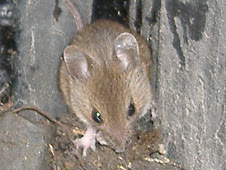
Previously poverty was something that was hidden away, not because it didn’t exist but because it was a rural problem. With families disbursed around the country, and I am not just talking about the UK, it was something that politicians and the wealthy could ignore.

The difference between the poverty of the cities and that of rural areas was always about the ability of people, mainly men, to work. As in the past most men worked on the land in the countryside, anyone reasonably fit would always find work. Although wages were very poor and housing conditions could be bad, in the old rural economy it was rare for people to starve.

Even the first agricultural revolution, and improvements to farming and agriculture, the situation never altered for the poor labours. It was not until the start of the industrial revolution that real grinding poverty and destitution started to surface. This was caused in two ways primarily. The first being the small craft produces of goods that were put out of business by industrialisation and the second the poor itinerant workers who moved to industrial jobs with the promise of better wages that working on the land.

What industry and urbanisation brought was usually very poor housing and wages that were only high if you worked extremely long hours in dangerous conditions. In the countryside (and I know this is a generalisation) if a man had an accident he would be looked after by his kith and kin, the community, even the employer/landowner. This was never the case with industrialisation, as to the factory owners the labour force was just part of the economic cost of running the factory. Any man who could not work was useless.

Thus urbanisation brought us unemployment. In the countryside of old, even old men could be useful as rat catchers or would have valuable skills that ensured they were never totally economically inactive. Further, it was rare that anyone in the countryside was ever injured so badly while working that they could never work again. This was not so in the urban environment as a man could end up crippled or maimed for life in a factory or mine. That is without even thinking of the families that lost the breadwinner if someone was killed.

Then there were the effects of improvements to industry and industrial processes. Many businesses still close down today leaving people without work because someone else has found a new or cheaper way of making something.

Therefore, poverty always appears to be worse in the cities than in the countryside. However, we only need to look back to the dust bowl and depression years to see that poverty was just as bad in rural areas as it was in the city.

Now if we look at the situation in this century, in this country in the countryside there is extreme poverty, much worse than in any city. The greatest problem is that of housing. Because the countryside can be a nice place to live, people have bought second homes, or else they buy nice places to let out as holiday lets. Thus making it imposable for local people to buy in their own areas. Not only that but rents have become unrealistically high again preventing poorer people from being able to afford to live in their own villages. Add to that difficulty the lack of transport, public transport in many rural areas is a joke and often far to unreliable to allow people to travel to work. Therefore personal transport becomes an essential part of rural life, even for people who are in minimum wage jobs, just to keep the job.

The transport difficulties would not be such a problem if there were local jobs, but with fewer jobs on the land, and an increasing reliance upon the tourist pound, most jobs local to any rural community will be low paid seasonal ones.

The difference between rural and urban poverty is simply that it’s the urban poverty that gets noticed, while the poverty in the countryside no one even wants to think about it.