Friday, 14 December 2007

I wish I had been Wrong - Part Two Saturated Oceans


While in the previous section of this post I have shown that predictions of devastating climate change is now inevitable. I have also shown that there are potential solutions if we can find the will to act.

While the attention has been focused on the atmosphere as climate change has been allowed to creep on, it is in the oceans that drive the climate where real damage has been allowed to become so polluted that we have created the situation where we cannot stop climate change.

The seas are now saturated with CO2 that it cannot absorb much more. If we don’t start to take real action today the effects that are already going to occur will only be the devastating beginning of the extinction of the human race.

Thursday, 13 December 2007

Books and Badgers


I have made no secret of my love for books here, they can provide some wonderful entertainment as well as information, and for me personally there have been books that have inspired me too. I may have mentioned before, hey the mouse repeats, there was one book, A Forest By Night by Fred Speakman, that inspired me to go badger watching when I was a child. Especially as the badgers he watched and recorded were in the same forest that was my stamping ground as a child.

Because of my own current watching activity, and my recent acquiring of a copy via the Internet, I have been rereading many of my books on badgers. I would love to get my paws on a copy of the New Naturalist Badger but as these books have become collectors items, I cant afford to buy a copy as copies of it are changing hands for three hundred pounds plus. That makes it frustrating for people like me who want to use the information rather than just own it as an investment. I do have many volumes from the New Naturalist series but I have them as tools for conservation.

Also, these books on wildlife have enabled me to understand what I should be looking for when I am out looking for wildlife, the type of habitat, the times that a species is active etc. However, sometimes what I see and experience is different from what the books would lead me to have expected. What happened last night is a perfect example of unexpected behaviour from my badgers.

I have previously spoken of the way that one sow, female badger, has musked me. That’s where she scent marks me with urine, it maybe what did for my previous boots.

With the freezing weather, watching the badgers has become a difficult and uncomfortable activity. While I normally position myself up a tree to watch the badgers, there is a hollow at the base of one tree that I have started to use as well. This is a warmer location but provides me with less visibility. I have had nights where I have only heard the badgers but not seen them clearly. The other night I knew there was a badger or two some ten feet or so from me, but in the dark shadows I could not be sure of what I was seeing, moving shadows, my eyes playing tricks on me, or were the badgers really sniffing at my feet.

Last night, while I was well wrapped up, I could see frost forming on my coat, as well as my legs. It has been so cold that I have taken a flask with me just to ensure that I don’t place myself at risk of incurring hypothermia. So last night I decided that I would have a hot drink and risk not seeing the badgers return, I had already seen them leave. I could hear them, but in the distance. So I was surprised when after I poured out some soup, I heard one of the badgers start to come closer. Its something that may surprise many people just how noisy the badgers are. Anyway, I think it was the smell they came to investigate.

I had the experience of having two young badgers, this years cubs, playing around me even occasionally running and jumping over my legs. That went on for a good forty minutes, then they both went off again.

My thoughts of going home returned and I poured another small cup of soup. I didn’t think it could get better and as I got ready to get up and move one of the young badgers returned. She was less boisterous and snuffled my boots and legs. I dropped a handful of peanuts for her and she made short work of them. Then she climbed onto my outstretched legs and settled down and went to sleep.

I couldn’t believe what was happening, her warmth was welcome but her weight did make my legs go numb. I think she stayed there for about half an hour, and only moved when she and I heard other badgers coming back to the sett.

What a remarkable experience, I had read of this type of interaction going on before with other experienced badger watchers, but I was sceptical, I never expected to experience anything like that myself.

When I finally stood up, it was clear where I had been sitting was clear as I had left a frost free patch on the ground. I will be stopping my nocturnal vigil for a while, but
I will be back watching my badgers again in the New Year.


A Sea of Wind Turbines


On Sunday John Hutton, the business secretary, announced that the UK government was planning a major expansion of offshore wind electricity generation. The irony that on that day the UK is being battered by high wind was not lost on me. I was also pleased to see that it was not the environment minister that was making the announcement. I was going to write about it on the day, but as I started looking at the details I realised that it looked less a definite plan than an aspiration.

First, to have this policy announced by someone other than the environment minister shows that the UK government is starting to take the issues of climate change seriously and that environmental considerations are permeating all aspects of government policy. There are other aspects of policy that are far from environmental, but this does sound as if in part at least the UK government appears to be taking the issues of climate change seriously. I say appears as while this policy and plan has been announced, the government expects private investment to create this massive engineering project.

What has been announced is that all around the UK coasts around seven hundred new turbines will be constructed, expanding our generating capacity to 38 giga watts. Unlike the positioning of wind turbines on the land these will be in positions where the turbines will fully benefit from the wind.

One of the problems of the current situation is where turbines are placed on the land; they are frequently sited near the infrastructure, to connect to the grid, rather than placed where they will benefit from the wind. All this is purely because of government grants and tax breaks, which subsidise the manufacturing and installation of these turbines, hence the companies positioning them are not basing their positioning decisions upon the need the need to generate the maximum electricity to make the turbines pay as they would if this were a purely commercial decision. Therefore creating opposition to wind power.

The difficulty with pensioning wind turbines off shore is quite a technical problem because of the difficulties of servicing the modules once installed, as well as the difficulties of building them. But one thing our off shore oil industry gave us was the skills to work in this hostile environment. The plans to involve building enough capacity to generate enough to power for every home in the UK, and that will mean about 7000 of these windmills. This will have the potential to either damage or enhance the marine environment.

As with any construction in the sea, there is the potential to damage the delicate marine habitats, be it reefs or sand banks or the spawning grounds of a multitude of species that inhabit our waters. Therefore the exact positioning of each structure needs to be carefully planed. After all destroying one environment to try and save another would leave a bitter taste in the mouth of many. However, the towers that have been installed thus far have produced mini reefs allowing many marine creatures a safe and expanded habitat.

All this could dramatically reduce the carbon impact of electricity generation, while it is true that manufacturing and installation will generate a carbon footprint, at least the positioning of these turbines offshore will ensure the turbines will be placed where they will operate most efficiently. The will also be the need for other forms of generation as turbines only generate power when the wind is blowing. Also these windmills cannot generate power in very high winds.

However, on the whole all this could reduce the climatic impact and carbon footprint for future generations.

While I have reservations about the environmental impact of this on the marine environment, on the whole I am in favour of this plan if it ever becomes a reality.


Tuesday, 11 December 2007

Is there hope for Polar Bears in a Fossil?


It used to be that the scientific community would couch their arguments on climate change with comments that “It appears…” or “the models indicate…” or other such caveats so that they didn’t appear alarmist. There is a new sense of urgency in the scientific community as the predictions of the climate models are coming to fruition thirty and forty years ahead of what the models expected. This is even more pronounced in the Artic and Antarctic. Even some of the most sceptical sat up and took notice when the Larson B ice shelf disintegrated in only a few months.

When this area of sea ice, the area of Cornwall, broke away from the Antarctic, suddenly climate change switched from being something that could or would occur in the future, but became something that’s happening now.

While many people have been trying to raise awareness of the very real threat of this, our voices have been drowned out by the noise of the hot air of they nay Sayers.

The new scientific reports on climate change are having to revise forward the dates when certain events are expected to occur. The most noticeable is the loss of the summer sea ice at the artic. This year the volume and area of Sea Ice, matched what was predicted in climate models it to be by the year 2050.

While I could tell you of the implications of this for our climate, it is the effect upon two important species that rely upon the Sea Ice that is really alarming. With a reduction in the size of the habitat, the ring seal population will eventually fall to about thirty-five to forty percent of existing numbers. This will impact even more on the numbers of Polar Bears.

While the discovery of this part of a jawbone of an ancient Polar bear shows that they could have survived a previous inter-glacial period, the fact remains that polar bears will loose ninety-five percent of their territory when the sea ice disappears. Further, while some may be lucky and find themselves stranded on some of the islands dotted around the Artic, unless they have a food source, i.e. Ring Seals, they will still die off.

While I would love this discovery to be a source of hope, I don’t see it as much of one.


The News Story Here.


My thanks to WWF for the image

Monday, 10 December 2007

A Comment on Comments

I would like to make a quick comment on the comments I get here. I fully welcome any comment or criticism; sometimes they have highlighted errors that I have made. Further, I know that some people out there in Webland think I am eccentric or just plain stupid, but the problem is with the language that is used to say that.

With this Blog and its previous incarnation on Yahoo, I apply settings so that I can reject or publish a comment. Personally I would like to publish all of them, but when people place comments that are offensive of full of strong profanities, I can’t justify allowing them. So if you want to call me all sorts of names, fine but do it with the English language, preferably not anonymously either so that others can see how childish you are really being.

While the Internet is a wonderful forum for debate and ideas, it is tiresome to keep on getting abuse from people who lack the brain cells to out smart a monkey.


Sunday, 9 December 2007

Bullfinch


The other morning after spending another night under the stars watching the badgers, I decided that I would go to a particular spot where I stood a good chance of seeing the Roe Deer. As I was already cold, a bone numbing cold, I knew that while I waited and watched I would have some shelter from the wind. Unfortunately the Deer failed to make an appearance, I suspect that as I was shivering so much that I was failing to be as quiet as I thought I was. Therefore, I failed again to get the pictures I was hoping for.

Because I was so cold I decided to head for one of the bird hides, where at least I would be out of the wind that was draining the warmth from my body. It worked wonders for me, as although tired, I was delighted to see the flocks of birds, particularly the Bullfinches that were using this feeding station.

My initial pictures were a little blurred as I was still shivering a bit, but as I warmed up I was able to keep the camera still to get some cracking shots.

This stop on my sojourn home was welcome as I was able to regain some of my body heat, and I had some good memories to take home with me. When I finally got to bed, I slept for a full twelve hours straight. While watching any wildlife nocturnally has its problems, one of my problems has been solved by the gift I was given of a pen that has a red LED light in it so that I can see to take notes without disturbing the badgers and foxes.

It’s rather funny but several people have asked me why study an animal like the Badger, don’t we already know about them? Well as I will be showing in a latter posting, no we don’t and it’s only from real observations can we really learn.


Stock Dove


Often mistaken for a feral pigeon this bird is still not that common. This one has probably travelled south from Scotland, although I could not tell if it had an accent. Locally, the Wood pigeon is the dominant species, so finding a Stock Dove is a rare treat.

While wood pigeons are a serious pest of farm crops, stock doves tend to rely on seeds from wild plants. In the past the flocks of wood pigeon were so vast that they could devastate a farmers grain crop, but following the second world war, with numbers seriously reduced, populations of birds like Stock Doves were able to repopulate areas that they been displaced from by the Wood pigeon.

The problem started with the changes in agriculture back in the 1700s. The enclosures of traditional strip farming lands, while improving yields for human consumption, also enabled the wood pigeon to increase in numbers. This helped displace other species like Stock Doves and Turtle Doves. It was not until the Second World War when food supplies were under stress that action was finally taken to control the wood pigeon, were the government paid for the ammunition to shoot them. As will as supplementing the diet, this enabled farmers to finally reduce the population of a serious pest species.

All this had the other benefit of providing the space in the ecology that allowed the numbers of Stock dove and Turtledoves to recover. Also, it created the additional benefit of allowing the collard dove to introduce its self in to Britain in the 1950s.

While the wood pigeon is still a numerous pest, its numbers are nowhere near as high as they were at the turn of the twentieth century. While the actions taken to control them were not designed as conservation measures, they did benefit the environment.

It is only when we see birds like the Stock Dove can we see the effect of measures taken years ago.


Saturday, 8 December 2007

Angle Shades Moth


The other morning returning, doing my impression of an icicle, from a night of watching the badgers, I noticed this Angle Shades moth that had settled on the doorframe of my shed. It’s actually what used to be the out house and colloquially known as a “Netty”. What is unusual is that this moth should be in hibernation but while the weather is cold, it is still warm enough for this insect to still be active.


Friday, 7 December 2007

A Changing Climate around the World

I know that most of the people that read the mouse’s Blog think that I must be a fruitcake and a doom seer, with my predictions of the coming climate change catastrophe. But my predictions are not the visions of a crazed lunatic; they are based soundly on the scientific data available to all. The real problem is that far to many people choose to ignore what is really happening to our climate and our environment, further they assume that as nothing disastrous has happened yet, a climate change disaster must just be a myth.

This attitude is not helped by all the vested interests. People who stand to loose out financially when we are all finally forced to take action to cope with this changed and changing climate.

Even with streets and roads choked with fumes and clogged with traffic, people refuse to give up their cars. But what’s worse, people insist on buying and driving a vehicle that’s much larger than they need and consequently costs more to run. The attitude seems to be that if they can afford to run an inefficient vehicle they will. All this leads to cars that emit more CO2 than is needed.

But its not just cars, I have lost count of the people that I have meet who on the surface are very committed environmentalists, but given the chance of a cheap flight or holiday overseas, principals evaporate as quickly as a jet produces Nitrous oxide and water vapour, both potent and long lasting greenhouse gases.

I keep on looking around me and around the world and wonder if its me? Am I the only one that can see the very real effects of Climate change going on? That question is a rhetorical one, as I know that I am not alone but I do feel like a lone voice in the wilderness.

To give you all a round up: In Australia there has been a drought going on for ten years. While large areas of Australia are deserts, it is the impact of a changing climate that has caused this drought.

In Georgia and other neighbouring states in the south east US there is a drought that has affected towns and cities like Atlanta and Birmingham, Alabama where all their water is coming from the same source.

In the Great Lakes region, the water level in Lake Superior is two feet lower than it should be. As each inch represents five hundred billion gallons of water, that’s one point two trillion gallons of water lost as vapour into the atmosphere, with all that water vapour adding to the greenhouse effect.

The forest fires that raged in California were as a direct result of a climate change induced drought. The list could go on, but it’s in the real wilderness places that the effect is most dramatic. The loss of the summer ice at the North Pole has been well reported. But what is less well known is that this level of melting of the sea ice was not expected until 2050. While all the computer models for the climate were predicting this to happen, it has occurred forty years earlier than expected.

While the global average increase in temperatures has only been just over one degree Celsius in two places its four and five degrees. In Japan temperatures are now five degrees higher than they were ten years ago and that has been constant for the past five years. In Southern Spain temperatures are four degrees higher and droughts there have exhausted the aquifers (underground water stored in rocks) to such an extent that salts are now leaching out and poisoning the land.

While each of these impacts are happening in local regions the effect has a global implication. The problem is that because these effects of climate change are occurring locally, they are all parts off a much larger image of global warming.

We already have gone past the point of no return and while governments argue about setting limits to how much we can be allowed to pollute our nest, none of the decisions made in Bali will stop what is already happening. It is in fact down to all of us to take action. Each little action will help.

Firstly we need to stop wasting energy; turning off lights, appliances and turning down the heating.

Further, we need to stop travelling, there are some journeys that are essential, going to work etc but there will be someone you can share your car with on at least some of your trips. However, the most important action must be to stop flying. While aircraft produce only four percent of the global CO2, the Nitrous Oxide and the water vapour generated are magnifying the greenhouse effect as the gasses are released in the upper atmosphere, just where it needs to be to warm the planet.

Water is the key to life on this planet. The human animal cannot survive more than three days without it, yet we are failing to take the global water crisis seriously. We all need to save water, act as though we all are living in an arid region and that water costs more than gold. In a few years it may well become that precious.

Our climate has gone into a feedback system; our climate is and will change. We can’t stop it now, but we can work on reducing the way it impacts the lives of our kith and kin.

I hope to be able to bring you news and information of what people are actually doing to help themselves, and to help the planet. At times I have felt that I am utterly alone in trying to live in an environmentally responsible way, so I hope that here we can all share ideas and information about the way we can all help heal the scars inflicted upon our home planet.


Wednesday, 5 December 2007

The Lakes that should not be there - Nepal Lakes


In the Himalayas a series of lakes have formed over the last twenty years. What is most extraordinary is that these lakes should not exist at all as they should be glaciers. They occupy the areas where the glaciers have retreated from, just like Imja Glacier Lake.

As the glaciers melt and are retreating via climate change, Imja Lake is a curse and a blessing. The blessing is that the glacier deposited the screed and rock debris just in front of where the lake formed, thus slowing down the flow of melt water off of the mountain. Therefore protecting the villages and populations from flooding, mudslides and devastation. However it is also a curse as the volume of this lake six thousand feet above sea level is growing. Already a kilometre long and one hundred meters wide it is growing, in length, by a further hundred meters per year.

While on this Lake a sluice gate has been added to control the flow and volume of water, this is only one of hundreds of new lakes that the retreating of the glaciers has created. All of these lakes are at serious risk of collapse, releasing billions of litres upon unsuspecting millions of people.

While attention has quite rightly been focused on the risks of a rise in sea level, we have all missed this looming disaster. If one lake fails it will have a domino effect causing a whole series lakes to fail. This could be a natural disaster that dwarfs the impact of the Boxing Day Tsunami.

I have long been perplexed by the relatively small rise in sea levels as a result of climate change. I am now beginning to understand where all this water is. Because we do have a warmer climate around the globe more of our water has disappeared into the atmosphere, warmer air holds more water. All this is going to lead to a sudden and dramatic environmental and weather event that really will shock everyone into really taking notice of climate change.

It is now to late to prevent the looming catastrophe, millions of people will be killed as a result of this, billions will be made homeless and without food or water. When this dramatic rise in sea levels occurs it will not only effect people in the developing world but every nation will be affected, none of us will escape the impact of this event.

While it will look as though it is a natural disaster, it will be a man made disaster.


Tuesday, 4 December 2007

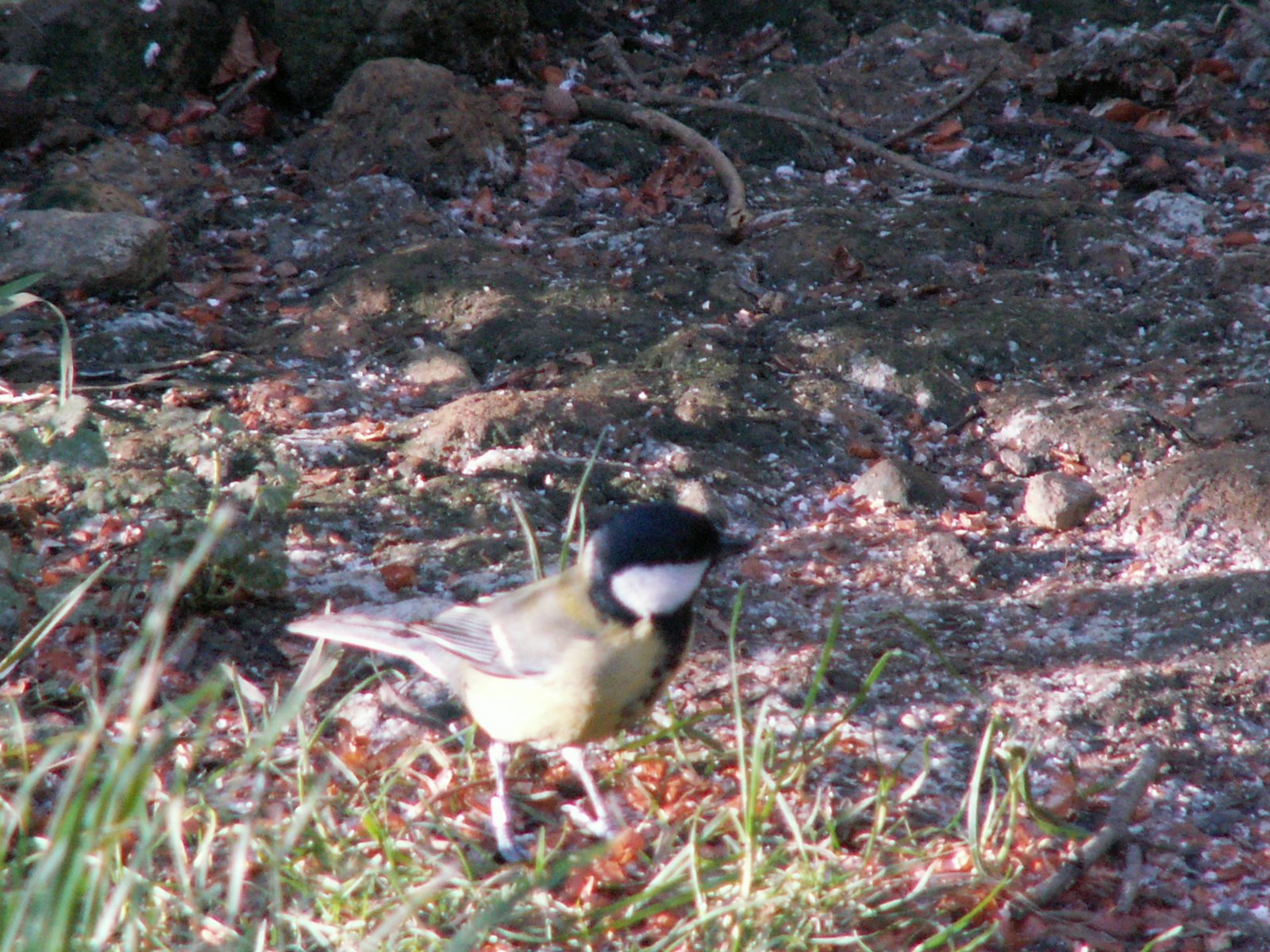
Great Tit


On a lighter note and to remind us all why saving the planet is so important, here’s a Great Tit.


Save the Cow, Save The World

Recently the militant vegetarian organisations, Viva, were saying that the way to solve Climate Change was to stop eating meat and to switch to a completely vegetarian diet.

As I used to be a vegetarian I wanted to look at the data, as it seemed that if what they were saying was correct then I may have missed something. However, while I some sympathy for what they are saying, I do feel that we do eat to much meat, the science is not only flawed it is wrong. Further, they are trying to push their animal rights agenda on the back of climate change. Also while anyone changing their diet to a vegetarian one will not do themselves any harm, the organisation, Viva, will harm the environment as anyone following their agenda will be distracted from the actions that really need to be taken.

At the heart of their claim is the myth regarding the methane that cattle and ruminants produce. More than once in the media here in the UK, mainly the tabloid press it has to be said, Climate Change has been blamed on farting cows. While it is true that bovines produce methane as part of their digestive process, most of it is released via belching. Further while methane is twenty times stronger as a greenhouse gas than Carbon dioxide, it doesn’t stay in the atmosphere.

If this was the cause for Climate change then when the buffalo herds were slaughtered in the North American plains then we should have suffered a global cooling. Also we used to use horses as the main form of motive and agricultural power and again they produce methane too. The simple fact is that while there is to much methane released into the atmosphere, it is not the cause or a major contributor to climate change. Any methane released today will be lost to the vacuum of space in five to ten years.

The difficulty with the approach that Viva want is that if everyone did stop eating meat, there would then be sixty billion animals extra to feed. That’s how many are killed for food each year. I suspect that if there was a great change in diet from meat that these animals would suffer. Also good traditional agricultural practice needs the manure and waste from livestock to fertilise the land to produce the vegetated crops. Without animal fertilisers then more polluting artificial fertilisers would be used.

What I find frustrating with so many of these organisations that are trying to push their agenda is that they miss the point. We all need to drastically change what we do. These organisations fool people into thinking that if they just do that one thing they will be doing all they can. However, we all need to do many things. We need to always think about the environmental impact of everything we do.

Also we do need to be cynical about the companies and businesses that are trying to “sell” us their product(s) as the solution. Nor should we allow ourselves be fooled by green-washing, companies that claim to be acting environmentally but are only doing what looks good. Its like Airlines who claim they are carbon offsetting, while planting trees and taking other measures to mitigate the carbon dioxide is useful, it is not the solution. The only real solution is to stop adding to the CO2 in the atmosphere by stopping consuming and only travelling when needed.


Herbal Tea


Now I have no idea if anyone but me reads the comments that you good folk leave, there are a few people that I need to contact because of what you folks do say. But, I thought I would highlight something I was sent today by a Musty Meles meles.

Why do anarchists only ever drink herbal tea?


Because all proper tea is theft. (Groan)

That’s nearly as bad as one of my jokes!

The picture is of the Badger Man making the tea, anyone for a cup of chamomile?


Monday, 3 December 2007

Good News Bad News


When this Mouse switched on his computer this morning, there were two news stories that caused my whiskers to twitch. The first was that Kevin Rudd the new Australian prime minister had as his first action after being sworn in has ratified (signed) the Kyoto Protocol. That leaves only the US as the only major developed country not to have signed the treaty.

All this is happening just as government representatives are meeting in Bali to discus what follows Kyoto. While it is taking time, little by little, politicians around the world are finally taking the issues of climate change seriously. I have even noticed that in the media they are no longer referring to the process as Global Warming, but are calling it Climate Change. As calling it global warming makes it sound like a jolly nice thing to happen, I am glad to see that the media is finally taking the matter seriously.

Then I came across this story:

An investigation has revealed that some airlines are flying longer routes to avoid paying higher Air Traffic Control fees. In doing so they are burning (Wasting) more Fuel and creating an extra three tones of CO2 per flight. That’s six extra tones for each aircraft in every round trip, all this to save a whopping ninety-nine pounds sterling.

The airlines in question say that they do it to maintain schedules, but if the Air Traffic Controllers didn’t have to adjust flight and holding patterns to accommodate aircraft like these coming in via the back door, there would be no delays.

Until we have people and industries thinking and acting in an environmentally responsible way, we all face the effects of the irresponsible.


Sunday, 2 December 2007

Wandering Albatross Diomedea exulans


When I was a child, as a family we only ever had two holidays. The first was on the Norfolk Broads and even though I would only have been about seven, I was excited by the sights of the bird life that I saw, especially the Herons and the Egrets that were all new to me. Further, I heard a haunting sound that I now know was the booming sound of a Bitten calling. Something that even now, is a really rare sound, seeing the Bitten is even more rare and I know many experienced birders who have never seen one.

The Second holiday was at Dawlish Warren near the Ex Estuary and by this time I was thirteen and able to appreciate the countryside and environment that was at this location. None of my family shared my love of natural history but fortunately I was able to garner the time to go off on my own and explore the mudflats. It was an amazing experience to just watch the waders and seabirds that I had never seen before.

Some of the birds I knew from books, some I didn’t. One that I had not seen before was a Wandering Albatross. Then I had no idea of just how rare my sighting was, and I had no idea that I could or should have reported seeing this bird. It was only a couple of years later when I became a member of the RSPB did I discover that there had been other unconfirmed reports of this Albatross being seen. Also it should be noted that this was in 1976 when the summer was remarkably hot and dry, and with hindsight, the weather and the unusual sightings were some of the first signs of a changing climate.

This experience prompted me to do two things, the first was to start saving up from doing a paper round for an SLR camera, the second was to start seriously looking at learning what I could about what I saw.

With the Albatross all I really knew was the ancient mariner poem and the bit about water and not a drop to drink. But the memory of seeing this bird with such an enormous wingspan has always stayed with me.

Therefore I was surprised to hear that we are loosing so many of these birds, as I couldn’t imagine what could we be doing to drastically reduce the population. The answer was that in tackling one conservation problem we had inadvertently generated another one.

Long line fishing had been seen as a much more sustainable way of fishing than trawling nets when catching species like Tuna. Frequently dolphins and proposes were also caught in the nets. As an air-breathing Mammal they were being drowned in the nets. Therefore fishermen were persuaded to go back to the traditional long line methods. The difficulty was that after years of trawling, the fishermen had lost the skills.

The older traditional fishermen would weight the hooks so they disappeared quickly so that birds like the albatross couldn’t snatch the bait. Also the older and more experienced fishermen would trail flags or banners from the back of the boat to keep the birds away. However the fishermen who returned to this form of long line fishing with lines of baited hooks some as long as one hundred kilometres, have lost the skills and it is now the albatrosses that were being drowned. Therefore organisations like the RSPB and Bird Life International have to re-educate the fishermen in the old skills.

As the albatross is such a long-lived bird, living to fifty odd years, they only reach sexual maturity at twelve to fourteen years. They also have slow reproductive cycle, laying only one egg per pair and only breeding every two to three years. Any sustainable losses will decimate the population. The fact is that in the last twenty years the population has halved and is decline at one percent per year.

The problem here was not the solution that saved the dolphins and proposes, but the fact that instead of using lines that were three or four miles long, but using lines that were more than ten times the length that were traditionally used.

Personally as Tuna is endangered itself anyway, I don’t buy or eat it. By not eating it we may help save the Albatross.


My thanks go to Lex van Groningen and Bird Life International for the stunning image of the Albatross


Business as usual for Bush on Climate Change

One of the greatest difficulties for all of us in our attempts to tackle climate change is the lack of political leadership, especially from the largest polluters. While not the largest population the change of leadership in Australia will be good news in tackling climate pollution.

However while US president Bush has finally been acknowledging that climate change is a problem, events this week shows that the Bush Government intends to do nothing to reduce the Carbon-dioxide emissions from the US. Here in the UK, in the Financial Times, the leading business and financial publication, a conglomerate of international businesses, in a two-page advert, called for leadership in dealing with climate change. The response from the white house was simple, the US will not do anything to cap CO2 emissions and it, the bush government, can not even say when the US will be able to start reducing its carbon footprint.

The science and the evidence is so compelling now that, international business people realise that real action has to be taken. The difficulty is that unless the US, the largest economy in the world, takes political action and tackles climate change then business can’t plan for the investment in a low carbon future.

While there are some businesses that are making the effort, if we have a large economy like the US that refuses to impose regulation, then those businesses will loose money and or profits. Put simply the people that make the effort will always be undercut by the most polluting countries. In some ways this problem is similar to the way that manufacturing has chased the low wages in china. However, unlike this chasing of low wages, governments like the US allowing carbon pollution to occur will kill all industry.

The greatest problem is that oil men like Bush see climate change as an advantage as it is allowing access to the vast oil and gas deposits that are untapped in the artic circle. Further, the US Japan China and the EU are all looking to the probability of mining helium three on the moon, as a new wonder fuel. That is why there is a new moon race and why so many countries are rushing to land men on the moon again. The carbon footprint from these enterprises are vast and will mean that we will seriously damage our climate in trying to obtain this new fuel for an unproven technology.

Further, the US bush government; in particular, assume that the loss of the sea ice will not be that serious for the climate. However that is based upon a false assumption and reliant upon out of date science. In the last five years the unexpected acceleration in the melting of the sea ice has allowed the Greenland Ice cap to start melting. It is loosing up to 150 cubic kilometres of melt water per year. Further this is increasing and this water is flowing into the sea.

Also the Greenland Ice Cap is suffering from cracks and crevices opening up on the suffice of this vast glacier. This means that lakes of melt water that form in the summer are draining down to the bedrock where it is lubricating the flow of the Ice. But this melt water doesn’t re-freeze during the winter as just as happens in a pond or lake the ice on top insulates the water and stops it from freezing. All this is making the three kilometre thick glacier that is the Greenland Ice Cap very unstable.

It will not take a lot for this ice to break up. Scientists are monitoring the Ice and recording the vibrations of the cracking up of this glacier, known as Ice quakes, they occur every twenty minutes. There is an inevitability that sooner rather than later there will be a large area of this glacier will calf and slip into the sea. This will raise sea levels.

Further, any sizeable earthquake nearby could provide the trigger to allow very sizeable chunks of the Ice cap to slide into the sea. This could trigger Tidal waves as well as a sudden and substantial rise in sea levels. What makes this scenario even more disturbing is that the trigger is already in place. Mount St Helens in the US, an active volcano has a bulging plug in its calderas, and when that blows, the quakes and vibrations from that could well be all that it takes to see the glacier slip into the sea.

This is not something that will happen in some mythical time years hence, but within the next four to five years. I just hope that when it happens it finally shocks the US government into taking action on climate change.

I make a clear distinction here between the American people who want action taken on climate change and the Government who have their head in the sand.

Friday, 30 November 2007

For a Fellow tree Hugger

I note that the Mouse’s fellow tree hugger, who lives in Maine has had difficulty seeing some of the pictures here. I am aware just how frustraiting it can be when using a dial up connection, especially when so many people seem to build their sites with only a thought for people with broadband. So I do try and ensure that my images do download properly. That way everyone can enjoy (ENJOY I am not sure that’s the right word?) what I put here.

Especially for my fellow tree hugger, and goat correspondent here’s a picture of a Nuthatch. So I don’t want anyone else to look at it.


An Old Friend Comes Back


As this Mouse had a meeting cancelled yesterday I found myself with unexpected time on my hands. I was fortunate as all this week the weather has been wet or very overcast, but yesterday it was sunny. Therefore I decided to make good use of this bonus.

However, before I tell you about that, I must say that I have been extremely busy working on a possible new project, watch this space for details to come. But it was in relation to this new project that I was supposed to be meeting with other people, but due to events outside of all our control, they had to cancel. It was so last minute that I had already left to travel in to Newcastle. Fortunately, I had missed the earlier bus that I had planed to catch and while waiting for the next one, I got a call on my mobile. As I had been trying to get into town early, had it not been for modern telecommunications I would not have known until I arrived for the meeting.

That left me feeling more than a little disappointed as I had spent a lot of time preparing for this business meeting. However, it is just one of those things that happens in life.

All this meant that I had unexpected time, so I decided to use it productively, and went back out, after changing, to go and watch some wildlife. As my regular reader knows, I have been puzzling over some unexpected animal behaviour among the badgers. At one of the Setts that I am watching, I have seen the badgers tramping over the tracks of the Roe Deer. So I went down to that area partly so I could see what else is about, as normally I am there in the dark. There were a significant number of small birds about feeding on the remains of the peanuts that I am using to feed the badgers. Therefore, I had the delightful vision of small flocks of great, coal and blue tits feeding. I used the opportunity to carefully examine the deer track.

Settling down I watched the birds and I was pleasantly surprised to see an old friend come along, the Fox that I filmed previously.

By watching the birds I realised what the badgers have been doing. The deer use a track that’s a quagmire most of the time. Because the ground is soft and muddy it’s a good area for worms, which is evidenced by the number of molehills I see. But what’s happening is that the worms are coming out after the Deer pass because of the droppings. The badgers are going down for the worms and in doing so are obliterating the signs of the deer.

It was all quite logical in the end, but it did look as though the badgers were deliberately masking the Deer’s passage.


Tuesday, 27 November 2007

Reading the Signs


Yesterday I wrote about interpretation of the signs of animal activity. This picture is a classic example of woodpecker activity. What the bird(s) have been doing is drilling in through the bark to extract insects that are living under the bark. While something like this is obvious to a seasoned naturalist like me, by seasoned I man that I have finally dried out, to a novice it could look as though it were insect activity that caused the holes. While it was experience that told me what I was seeing, I was able to confirm this via observation as I saw a Greater Spotted Woodpecker feeding on this stump. I also saw a Green Woodpecker feeding here during the early summer and both seemed to be feeding young at the time. The Green would vacate the stump when the Greater came along but would be back the moment the greater spotted had collected food for its young.

The second image shows just how perforated the woodpeckers have made the stump, and these holes make it easier for other insects to lay their eggs. Thus a tall standing stump from a wind snapped tree like this becomes more beneficial in its death than it was in its life.


Monday, 26 November 2007

Blackbird


Yesterday after lunch I went for a little wander. For a change I thought I would just go and look what was about in terms of wildlife, rather than going looking for something or anything specific. Often of late I have been out watching badgers or looking at other specific aspects of the local habitats. For example over recent days I have been asked by someone local to look at what he thought was signs of a wild bore. This followed my previous talk on here, of a possibility of a wild bore on the loose locally. On the two occasions I went to look at what he was saying were marks left by a bore, they turned out to be marks left by badgers.

I don’t see any signs of wild bore at all in the local area. I suspect that it is now an “Urban Myth” that is just not true. What signs are misinterpreted as being wild bore, but are really other animals like badgers grubbing up worms. Further, there are no prints and what prints that are seen are in fact the hoof prints of the deer. Further there is a distinct lack of tusk marks or mud smears on the trees that are so distinctive of Wild bore. So while I do keep an open mind, I think at best people are mistaken or are misidentifying what they are seeing.

Yesterday, I was in danger of misidentifying a bird that I saw. I saw a Blackbird that I was not sure was a blackbird. There is a similar sized bird called a Ring Ouzel that looks similar to a blackbird except that the Ring Ouzel has this white patch on the breast. When I first saw the bird it had its back to me, I was approaching and trying to take pictures of it. Then I noticed what looked as though was a patch of white on this bird. What I knew of the Ring Ouzel was that it is a summer migrant thus if it was a Ring Ouzel it shouldn’t be here. Therefore I needed to get a clear picture to ensure I could make a positive identification. Well as you can see from the picture it was a blackbird but is has some spots of white on it.