Sunday, 25 November 2007

What a waste

In previous Blogs I have talked about the problem of rubbish. In the UK we send more of our waste to landfill than any other country in Europe.

Personally, I work hard to avoid collecting packaging in the first place. No plastic bags, nor packaging or anything that can’t be reused or recycled. Thus in any normal month I will normally only need to put my own bin out, a normal sized wheelie Bin, once a month. I say normally as I do also add to my own rubbish the detritus that I collect from my local wood. It’s frustrating that so many people do leave their rubbish in the wood. I always bring my rubbish back with me. I also take the equivalent of a bin bag full of beer and drinks cans to the recycling point. These I should point out are collected from the wood not that I am drinking gallons of beer myself. While I would love to be drinking that much, I could never afford to become a real dipsomaniac, so I just practice.

However, the real point is that it is not difficult to ensure that I reduce the impact I have on the level of waste that goes into landfill. There is a real green benefit in reducing our waste as if our rubbish was only collected once a fortnight instead of once a week would halve the carbon-dioxide pollution emitted in one fail swoop.

Also we need to reuse and recycle much more. When I was a child everyone had their milk delivered in glass bottles that were reused time and time again. While the added weight would have added to the amount of carbon it took to deliver and collect them, it was and still is greener than buying from the supermarket, the way that milk is bought today.

The problem is that milk is now predominantly sold in plastic cartons. This means that the cartons are single use and as very little plastic is recycled, the saving in reduced carbon outputs from the lighter weight packaging, is more than lost by the carbon footprint from the manufacture and disposal of all this plastic. Further, as the supermarkets use centralised distribution, your milk will have travelled hundreds if not thousands of miles.

The problem of waste is a serious problem, while many people do recycle; locally there is a real problem, as our local council doesn’t recycle any cardboard or plastic. So I am pleased to see that three of the local authorities in the region are looking at ways of dealing with our waste.

Personally, I have always disagreed with many environmentalists, as I have always been an advocate for waste to energy solutions. While burning rubbish will produce pollution not just CO2 but all sorts of other harmful chemicals, but some waste has to be incinerated, therefore it must be better to use the energy this creates. Not only will waste to energy projects replace fossil fuels, but also as the waste is not shipped the great distances that fossil fuels are transported. Thus further reducing the carbon footprint.

In the past when trying to get people to take waste to energy seriously, opponents have always said that if we reduced the rubbish we produce then any facility producing energy would run out of fuel. Well if that ever happened then we would really have all turned green.


Saturday, 24 November 2007

High Water


As the last image was not perfect, well neither is this one, but I thought I would show just how the river looks after the recent rain.


Dipper


The other day I talked about seeing a dipper getting ready to roost. I did take a picture but the light was far to low to get a decent image, but this was what I did get.


Consumer electronics and the carbon footprint


I have had to finally spend some money and replace the screen/monitor for my old computer. While the central processing unit is younger, the monitor was well over ten years old. Unlike many people I kept it when I had to change the CPU, as it was a very energy efficient model. Part of my rational about keeping green is to not waste the resources that are used in manufacturing any product that I use.

While that may mean that I don’t have the latest wiz bang gadget or product, often by making careful choices in the first place, I don’t waste money constantly updating something that is still working well. But in the case of the monitor, it was starting to play up. Then finally the tube went so that the screen image collapsed to a third of the screen area. I did try turning it back on to take a picture of what I was seeing but when I did it blew, smoke out the back type of failure that told me it had committed suicide.

However I need the computer so I had to buy a new monitor. While I did look at obtaining a new one, I decided to buy second hand. As often when people buy their new even faster and more powerful computer, they get new keyboard and the rest of the kit, so that there are thousands of tonnes of perfectly good consumer electronic goods thrown away. Therefore, I bought a flat screen monitor for about a third of the cost of a new one. Further, by doing so I have stopped something else going into landfill and it will also reduce my energy costs and help reduce my already small carbon footprint.

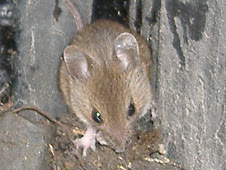
I know that some people think that I am being smug by telling you folks in “Blogland” about what I am doing to be greener, when all I am trying to do is lead by example. People seem to think that they can’t do much to help save the environment, when there are many things they can do. Also people feel that there is no point as if they are doing it they will be doing it alone. You will not be doing your bit for the planet on your own, this mouse and many others are already doing as much, and many much more.

It has been amusing for me to observe the way that people have gone out and spent a small fortune on new televisions over the past few years. The screens have got bigger, incidentally at the same time as homes have got smaller, yet with digital switchover coming most of these will be useless unless people invest in the box to receive the digital signal. Will this lead to more consumer goods being dumped as rubbish? Even now with the shut off of the analogue signal less than five years away, in the UK, most of the sets for sale are still analogue and not digital, a complete waste of energy and the earth’s resources.

I am not against consumer goods or luxuries; it is just that we all need to think carefully about only buying what we need and not just changing something just because it’s the latest fashion.

We have gorged ourselves on consumer goods, and just seem to never be satisfied with having a mobile telephone, but it must be the latest model. All these items eat energy and add to climate change, not just in their use but manufacture, shipping and then in the disposal of them.

Even if you don’t give a dam about the environment, not falling into the trap of consumerism will save you a small fortune.


Thursday, 22 November 2007

Learning Lessons from the Badgers


Meanwhile back to the environment. As my regular reader will know I have been spending a lot of time out watching some of my local badgers. Concentrating upon two of the sett’s, I hope to learn more about their behaviour and habits first hand. This has entailed me keeping the frost company while the wind stabs at me robbing me of body heat. While I do take care to keep warm, as I have to remain fairly still, I don’t have the benefit of movement and exercise to maintain body temperature. Therefore, when heavy rain was forecast, I decided to suspend my observations. It was unlikely the badgers would be that active, and the chance of obtaining any meaningful observations would be diminished.

Therefore, today was the first time I had been out for the past two days. I decided to go and look at the entire seven sett’s that I know of in the local area. The wet conditions makes spotting activity easier and my assumptions that the badgers would not be that active in the rain was only partially correct. As with all animals hunger will drive the badgers out looking for food. Further, as a badgers diet is mainly worms, the wet conditions make it easier to find the worms they rely upon. So that’s a lesson that I have learnt and one I should have known.

However, I have learnt something new about badgers already. I had noticed that the badgers were collecting up a lot of bracken for bedding. At this time of year it could be assumed that they are preparing for winter. But I noticed this happening in the summer as well. It seems that the badgers are collecting it when its dry and storing it so that will have a supply of dry bedding even when the conditions are wet. With this hypostatise I was able to find at each of the seven sett’s what appears to be a dry bedding store. Therefore it does appear that the badgers are able to plan ahead and it doesn’t seem to be just one or two clever badgers that are doing this but all of the family groups.

While the overcast and dark conditions made it difficult for photography, I did get some pictures to illustrate the amount of water that has fallen. Further the river is filling up and still rising. There is no risk of floods, but it must make it difficult for the wildlife that uses the river. It was getting towards dusk when I got to the end of my circuit but I did spot where a dipper is choosing to roost. I did try and take a couple of pictures but there wasn’t enough light, but I hope to return, so watch this space.


Don’t blame the Clerk

Yesterday I wrote about the fact that the Inland Revenue has lost in the post the data on all the 25 million people that receive child benefit. The part of the story that I was most alarmed about as it was reported yesterday was that a junior clerk had sent this information. What is alarming is that, if true as reported and I heard what Alistair Darling said, verbatim, that anyone in a junior position would be able to access all the records and to be able to copy them.

I refrained from calling this clerk all the stupid names he deserved to be called if it had been his fault, simply because knowing how people always try and avoid the blame when something goes wrong, was it really just a clerk that had done this.

Well today new information emerges. While the facts as reported were true, it was the facts that emerged late tonight that shows he was only carrying out instructions from above. It turns out that the National Audit Office requested that the data was stripped of anything that sensitive, this was refused by the revenue, on the grounds of cost. Also these emails asking for the information were copied to a person at director level, that fourth down the chain of command from the top, so the poor clerk who was being blamed for this was and is innocent.

It is interesting to note that the clerk, a young man of twenty-three, has been whisked away to a hotel to keep him away from the media. Oh how damaging his account will be.

In the UK we have to provide to various government bodies and departments all sorts of private and confidential information, we don’t have a choice. Therefore the government has to ensure that this data is secure. While I don’t agree with the paranoid people that say that no governments can be trusted, I don’t feel happy supplying any further information to any government department with this extremely poor level of data protection in place at the moment.


Wednesday, 21 November 2007

Between Northern Rock and a Hard Place

In the News over the past two days are two stories that are linked, both are shocking revelations, but the link for me is more personal than they will be for most. Yesterday the Chancellor of the Exchequer, the UK finance minister revealed that the UK treasury has loaned Northern Rock forty billion pounds of taxpayer’s money. In the past when my Blog was on yahoo I have spoken of the over inflated housing market, and as my personal experience will show Northern Rock are all part of this hyped up and grossly inflated market.

However before going there, today I heard that the Chancellor of the Exchequer was going to be making a statement to the commons. I thought that it would be related to Northern Rock, thus I was interested but I would wait until the news latter to find out what had gone wrong now. However the announcement that the government had lost in the post important confidential personal and security details of twenty-five million of its citizens completely floored me. As my ex-wife was and for all I know is, a senior tax inspector, I knew immediately that rules had been broken for this to happen. Also, knowing something about the data protection act, I knew that the law had been broken too.

As I don’t have any children myself, this news doesn’t affect me directly, but as I do have experience of having suffered “Identity Theft”, I realised just how serious this was. Also indirectly, I wondered just how safe are my details, details the government holds about me and everyone else in this country.

When my identity was stolen the term Identity Theft had not even been coined and I was shocked at how easy it had been. In no small part my then bank, Northern Rock, were guilty of gross negligence in allowing it to happen.

I was working away from home, I had a mortgage to pay and I had taken in a lodger. I had gone back to Newcastle for the weekend partly because the lodger had not paid the rent and because something odd was happening with my bank account. I asked the lodger for the rent but he said he couldn’t pay and he wanted to leave. So I went to the bank to try and find out what was happening there. The Northern Rock treated me coldly and quite rudely. It was only latter that I discovered that I was dealing with the same person who had enabled my lodger to have a new cheque book, cheque guarantee card and while I had proof of my identity had done this without carrying out the proper checks on him. Further, had the bank actually told me what they knew immediately, I could have gone to the police and they could have made an immediate arrest, as the lodger was still there in my home.

At this time I was still thinking it was just a stolen or missing chequebook that was the problem, and the lodger was just a non-paying lodger. If it hadn’t been for the fact that I had an empty bank account and I needed to get that sorted before I travelled back to London to work, I don’t know how long it would have taken to discover what was really happening. So on the Monday I called work and explained I had a serious problem that I needed to sort out, and would be back at work the next day. Fortunately, just before I went to the bank again, the post arrived and in it was a Driving licence in my name. This was before pictures were a requirement. Keeping this with me I went to the Northern Rock and got to see the branch manager. It was then that I discovered what the bank had done, and had they told me on the Saturday that there was a suspicion of what’s now called Identity Theft the whole matter could have been resolved strait away. The bank, Northern Rock, even inadvertently admitted that they had not followed their own security procedures and accepted weak and incomplete means of identification by the man that had been my lodger. Therefore I thought the matter would be resolved quickly.

I then took the evidence to the police. A CID officer took my statement and whilst shocked at what I discovered from the police about this type of crime, I was lucky as I had good documented evidence that a crime had occurred. Even the detective acknowledged that had it not been for that evidence, particularly the Driving Licence, there would have been little or nothing they could do.

My problem with Northern Rock continued as they kept on honouring the cheques from the stolen cheque book, and eventually I had to open a new account with another bank, to avoid loosing my pay to an overdraft that was increasing weekly.

Eventually, the police caught the culprit, I even discovered his real name and that the name he had given me was another stolen identity.

Even with the real culprit, Richard Michael Cope, pleading guilty and serving prison time, the Northern Rock Bank tried to pursue me for the several thousand pounds that this guy had stolen. Additionally, I ended up with a poor credit rating because of it. It took several years to recover from that, and I lost my home as a result of gross negligence by Northern Rock and the criminal who stole my identity.

Therefore, I can really feel for all the people who are facing a worrying time because of the gross incompetence of our government.

However the issue that is really worrying, and should worry us all, is the way that the government has supported a Northern Rock, a failing bank.

As Northern Rock is a regional bank its headquarters are here in Newcastle, locally many people don’t want to see the bank fail. Apart from the jobs that would be lost, I don’t see why it should survive. That is not based upon my experience with them, but the hard economic fact that the Northern Rock has been carrying out irresponsible lending. Twice since loosing my home, I have looked at getting back on the housing ladder, and twice I have been told how to get a mortgage via the Northern Rock by committing a fraud. Two different brokers told me how to do it, and Northern Rock would give a mortgage to anyone.

While it may have been tempting to try and cash in on the over inflated housing market, I also have my principals and I will not compromise my ethics for greed.

Also as the housing market is inflated, here in the Northeast the property prices are fifty to sixty percent higher than actual values, this irresponsible lending was bound to cause misery in the end.

When the problems with the sub-prime mortgage market broke here, it was clear that banks like Northern Rock would suffer. However, the government had a really difficult call to make. They couldn’t let this irresponsible bank fail as it would bring about the collapse of the housing market and in consequence the whole economy could fall into recession. Also as all politicians are also property owners, they don’t want to see prices fall for personal reasons too. That makes for poor judgement by governments.

Further, the finance market is not that simple, as the mortgage loans are sold as a commodity amongst banks on the money markets. Therefore, other banks who have been much more responsible and prudent were also at risk. While this method of selling bundles of debt to other financial institutions helped raise more capital for the banks, it also meant that lenders like Northern Rock could and were lending money without even caring if the money would be repaid. They could sell the loans on and it was whoever bought that package of loans to worry about getting their money back. Additionally, when prices are rising even the buyers of these derivatives know that the banks like Northern Rock are making really bad lending decisions, but as long as house prices are increasing, the banks will still make money even if they have to reposes. That is why when house prices stagnated, the other banks refused to lend to Northern Rock.

Step in the Bank of England, but had they known that Northern Rock were lending irresponsibly, as regulator for the banks they would have stopped them making bad loans anyway. So we have the government supporting a failing bank to the tune of thirteen hundred pounds per person in the UK, in a desperate attempt to stop an inevitable collapse in the credit and housing markets. Sooner or later it will have to happen and while I do feel for all the people that will suffer because of it, for the last ten years this country has gorged and consumed on a credit frenzy of one trillion pounds sterling.

Well the party is over and the mess needs to be cleared away.

Sunday, 18 November 2007

Night Life


Last night was the first night for over two weeks, which I have not been out keeping station on the Badgers. It was only because of the poor weather conditions that I decided to keep to my bed, as my nocturnal activities had enabled a chest cold to persist.

While it has been remarkable to watch the season change from autumn to winter, even more remarkable has been my ability to witness the animals as they prepare for winter. Often at night it is really the sounds that tell you the story of what is occurring, however the frequently heard owls seemed to have been everywhere. I had to do some serious reading to work out if what I was seeing was unique. But I realised that it is in fact just that the young hatched this year are finding their own feet, or should that be talons, and trying to establish territories. The fact that they are doing it in their parents’ territories is why they are suddenly so frequently seen. So while this observation is nothing new to science, it has increased my understanding of the natural world. Further, I have been privileged to be using the same branch as my viewing platform as a young tawny owl has been utilising as a hunting perch.

This observation also helped me to decode some of the other faint sounds I was hearing. What I had initially thought was the gentle rustle of leaf in the breeze turned out to be small mammals, mice, vole even shrews.

Then there have been the sounds and shadows of the foxes lightly imprinting their path across the frosted leaves. While a fox can be silent, the cries they emanate can make the blood run cold. I understand that when the mating season for foxes happens, the police get an increase in the number of calls informing them that some thinks a woman is being attacked in the bushes somewhere. Quite a chilling sound and it is no wonder that myths grew up around woods.

Before even talking about the badgers, the other remarkable experience is the deer. With my perch in a tree, I am above the roe deer as the pass below me. They know my sent and know that I have passed, but fortunately they don’t look up. If they did they would see me as this small group of seven hinds walk, amble and skip just feet below me. I may take a picture of this, but I know the flash will startle them and I don’t want to disturb the natural behaviour that I am seeing. Nor frighten them into taking another route. Partly this is because in the badgers I am seeing some remarkable behaviour.

After the deer have passed, quite close to the sett, the badgers seem to then go grubbing for worms along the track the deer took. This has the effect of obliterating almost all the signs that the deer were there. But what has been even more curious is that on the couple of nights that I haven’t seen the deer the badgers don’t forage for worms there. Further, when the deer were late passing, the badgers seemed to wait until they had passed and seemed to move from an equally rich feeding area to feed on the deer track. While I suspect that there is something else going on, it appears as if the badgers are aiding the deer by hiding their passing. Quite curious.


Saturday, 10 November 2007

BBC Autumnwatch


As my reader in the UK will know on television at the moment the BBC are broadcasting again there Autumnwatch season. I should explain to my overseas reader that this is the second year of doing this although for the last five years they have been broadcasting a similar programme in the Spring, yes you guessed it; Springwatch.

While I know that some people feel they don’t like the presenters, they seem to want their natural history/nature programmes to be rather po-faced, I actually enjoy the style. One of the things I love about the fact that they are live, is that we never quite know what is going to happen or if the animals, the real stars of the show, are going to turn up.

This being on has brought me in from the cold where I have been out watching Badgers and other wildlife, and made me appreciate the warmth of a cat on my lap and a cup of hot soup.

However, it is two of the animals that they have shown that sparks my wish to write here. Firstly are the beavers. Every night they are showing live images of a colony of wild European Beavers that have been breed at a compound with the hope of reintroducing them to the UK. As we lost our Beavers about five hundred years ago, I can see the difficulty in reintroducing them. As we would have to educate people to accept them, and we would have to learn how to change the way we manage our rivers to meet their needs. But on balance I think I am in favour of them being reintroduced.

The second animal though is a bit more controversial, Wild Bore. For many years now there has been a small population of wild bore that have re-established themselves, often as escapes from farming of the wild bore. Again this is an animal that was hunted to extinction, about seven hundred years ago, so while it was native to the UK its accidental reintroduction could be problematic.

The greatest problem is its interactions with people and specifically with people with dogs. Dogs and wild pigs don’t get on, and with wild bore having tusks, I can see some dog owners demanding “something is done” especially if a dog gets injured or killed. Then there will be the farmers who suffer losses from the damage they will do to crops. However, the biggest danger will be when the population starts to rise. As wild Bore no longer have any predators, we killed the Wolf off here about one thousand years ago, and there are no natural controls on the population size.

Thus I cautiously welcome this happening as well. I know that locally, though fortunately not in Chopwell Wood, there is a female wild bore on the loose. I have spoken to reliable witnesses of this fact, but also there appears to be no male in the area. Therefore the population is not growing here. But as this makes my nocturnal wildlife watching potentially dangerous, I have mixed feelings about knowing she is out there. That makes my personal preference for dealing with the actuality of wild bore being present in the UK even more controversial. I think there should be a reintroduction of the European Wolf into the UK.

Now I know that would upset almost everyone, but it would help to control the numbers of Bore, Deer and other potential pest species in the UK.

I doubt that it will happen, but it would restore the balance in nature.


Golden Larch

I just thought I would share this image of the Larches in Chopwell Wood. Often in the UK when people think of conifers they think of evergreen trees, but the larches needles turn gold and they shed them, as has now happened days after this picture was taken in the high winds here.
While they look attractive they don’t support much in the way of wildlife, not in this wood anyway, as they are an introduction to this habitat.


Wednesday, 7 November 2007

Unhealthy Skies

While I know that some of my readers think I “Bang On” about Climate Change far too much, it is the greatest threat we face. This Article on the BBC website should send a chill down all our backs. It contains a warning by Nobuo Tanaka, the Executive director of the International Energy Agency; he is warning that our energy demands are outstripping resources. However it is the figures quoted about the current global CO2 emissions that are most frightening. In 2005 they were 27 giga-tonnes! That is 27 trillion, trillion tonnes of new CO2 released into our air that year. I say new but its really old carbon that our planet locked away millions of years ago.

We are rapidly returning our home world back to the primeval first stages of life. The result will be that most of the Fauna and Flora will not survive, and Homo sapiens will become a footnote in the evolutionary history of our planet.

A Healthy River


At the weekend while down on the riverbank, I discovered some old signs of Otter activity. I was then told by one of the Friends’ that he had seen two Otters less than a week ago. On the River Derwent we do have otters, but they are elusive and as they are predominantly nocturnal or corpuscular (Active at Dawn and Dusk), they are difficult to find and rarely seen.

Unfortunately I have discovered that some people are jealous of me for having seen the otters, I have even been accused of making it up, but the otters are their and they are thriving, as the Picture of the Otter Scat shows. I have had some strange looks and comments when I have truthfully told them that I have been taking pictures of wildlife poo, but it’s a useful tool for assessing the health of any wildlife population. I would prefer to be taking pictures of the otters themselves, but while I have tried, they are too secretive for me to have had any luck so far.

Another problem is the territory size, Otters need up to twenty miles of river to hunt and breed on, that means they are often on the move from one holt to another. This was something I discovered from observation, and confirmed by reading what is known. One of the greatest problems that the otters face is disturbance by man, not intentional disturbance, and his best friend the dog. Otters can often be around people without them realising it, I have spoken to many fishermen who have seen otters and were surprised they were there. Further the otters were undisturbed by the human presence. However, add a dog and the otters behaviour changes and the will vacate the area and avoid it at the times when dog walkers are about.

Anyway with otters in mind I headed off yesterday to see if I could find where the otters are. With the new digital camera I felt that I stood a good chance of getting something. However, I had made the mistake of picking up all the wrong batteries. I use rechargeable ones, I can see you are all ahead of me here, and I took out the ones that needed charging. I did get to see plenty of fresh signs of otter activity but pictures no.

I did however see water voles again; I saw one at the weekend, as well as plenty of other wildlife, Dippers, Grey Wagtails and a Kingfisher. So while I returned home resembling something the titanic should avoid, I was very pleased to see that the river is looking so healthy.


Sunday, 4 November 2007

Welcome to the Grass Snake Hotel

With any conservation project the amount of work that can be completed is directly proportional to the hard work and dedication of the volunteers. The building of one Snake Hibernacula was ambitious to build two was going to be difficult but achievable. Therefore in planning what work was needed to be done, two days were allocated to this project.

One of the greatest difficulties was always likely to be that the ground where the pits needed to be dug. As this is a woodland area, that meant digging through tree roots, and anyone who has done any gardening near trees, will know, this is never easy. However, we are blessed with a light sandy soil down by the river, therefore digging would not be as bad as it could be. Thus a balance was there and fortunately on the day the unseasonably good weather held up making the work easier to carry out. While it was still hard work as more than one tonne of soil had to be dug out of each pit, the pits were quickly created.


The pits are made two meters by two meters and about forty centimetres deep, with a slope to wards the south. That way they can drain and will stop them becoming frost pockets. These pits are then filled with logs that are at least twenty centimetres across and laid crossways on two layers. This creates an area of air that is warmer than the ambient air temperature, and even if this log filled pit becomes water logged, that water will not lead to the air within the hibernacula freezing, therefore not harming or killing the snakes inside.


Those logs bring the pit back up to the ground level; at this point the actual accommodation is constructed. This is made up of smaller branches, from ten centimetres down to twigs, stacked so they are in an east west orientation. The orientation again is important so that at sunrise in particular, and less so at sunset, the sun warms the branches at the entrances so that the air temperature is kept higher than the ambient air temperature and frost-free. This stack is built up so that its about eighty centimetres from the ground. All the spaces in this pile are there so that the snakes can find cosy places to sleep out the winter free from predation or disturbance.


Then an insulation layer is put on the logs. While turf would be ideal, as Chopwell wood doesn’t have great swathes of grass anywhere, we used bracken something we do have lots of. Often it is a matter of making minor adjustments and using the materials available, rather than not doing something because you don’t have what’s ideal. Therefore with the logs insulated the soil from the pits is used to cover the hibernacula, leaving the East and West sides open.


The volunteers worked their socks off, and two hibernaculums were completed in a day rather than the two days expected. Friends of Chopwell Wood, and the Durham Biodiversity Action, were really lucky to have had such hardworking and dedicated volunteers. Thanks folks, and I am sure that the Grass snakes will send their thanks too.


All we need to do now is find the tenants!
So to all you grass snakes out there, free accommodation.
(We don’t mind if the Grass Snakes are Squatters either)

Beautiful Location


Friday, 2 November 2007

Enhancing Biodiversity


This weekend the Mouse is going to be busy helping to build not one, but two, Grass Snake Hibernacula in the wood. While climate change may be bringing new species further north, we are at the northern limit of the normal range for Grass Snakes. Unfortunately there has been a decline in the population in recent years due mainly to a loss of habitat. All those overly tidy gardens, spraying of herbicide and modern agricultural practices have all contributed to this. However along the Derwent River, there is an opportunity to reverse this decline by enhancing the habitat for the Grass snake.

Many of the elements are already there including the snakes, it is just a matter of managing the area so that it enables these reptiles to maintain a strong belly hold.

The area that the Grass Snake hotels are to be built in has already had some coppicing work done, this opens the area up to the sunlight and will provide the basking areas the snakes need so that they can raise there temperatures, being cold blooded this is vital to their survival. The fact that the area where the Hibernacula are to be constructed is an area that has to be coppiced regularly is all part of the careful planning and long term viability of the project. Further, because of the need to create piles of composting vegetation so that the snakes can breed and nest, also helps deal with another problem of the highly invasive Himalayan Balsam. This introduced species has created a large colony that has been smothering out all other plants. By utilising these plants as the material to create the compost heaps has the effect of benefiting the Grass Snakes as well as dealing with the invader.

Therefore, while this work will directly benefit the Grass Snakes, it will also help the native plants to re-establish themselves and benefit many other forms of Fauna and Flora too.

It will not be until next year that we will know if there are any snakes using the hotel, but there are snakes in the area, not just grass snakes but the even more endangered adder as well. All this work could benefit tens of species in the long term, enhancing the ecology of the wood and the river Derwent.


There was an article in the local paper today about the project too, and I understand that local TV will be covering it as well. Fortunately the mouse was in hibernation for this.


Monday, 29 October 2007

At the Birth of a New Day


While a lot of people that I talk to say that they would love to see wildlife, most of them are not willing to make the effort, or have the patients to wait and watch. I do understand that people have busy lives, but the rewards garnered from just sitting quietly can be so rewarding. That is perhaps why so many people see my watching of wildlife as being so eccentric. I have been told to my face that I am weird, yet equally complete strangers will tell me of their encounters with the natural world.

Often the greatest obstacles to getting people to share the experience is getting them up and out of bed early, and then getting them to keep quiet. In the past I have taken people to see wildlife, but as is often the case, you may not see what you hope to see. However, there will always be something that you will see, even if it’s a frequently seen bird, just sitting waiting and watching can be rewarding.

Where I can agree that I am different is that I am prepared to wait out in the cold and often damp conditions during the night. With the waxing moon, or the full moon, there is surprisingly a lot of light to see by. Obviously this depends upon cloud cover, as the clouds can and frequently do cut off this illumination. But having cloudless skies does mean that the nights are colder. However, whatever the conditions, watching wildlife in the dark is never easy. It’s often your other senses that tell you what’s there.

Watching Badgers will frequently lead you to encounters with foxes, but it is often owls that are your most frequent companions in the night. Only the other night while sitting up a tree over looking one of the entrances to a particular Badger sett, I had the indignity of having a tawny owl regurgitate its pellet down on to my head. Had it not fallen on to my lap I may not have realised exactly what it was. However, it’s normally their calls that alert me to their presence. Just as it is the sounds that tell me when the mice and voles are about.

One strange noise that I have been hearing I have now discerned what was causing it. I had been hearing sounds of something moving earth or digging, but it was not the badgers, as on more than one occasion it was so close that had it been a Badger, Fox or even a rabbit I would have seen it. I had already made a good working hypothesis that it was a mole, but I needed to be sure. Then last night I saw in a clearly in a pool of moonlight, a mole poking its head out of the ground. That solved that mystery but proved that no matter how much experience any of us has, there is more to learn and much more to delight us.

While the night is teaming with movement and sounds, it is when new day nears that the song of dawn really delights the ears. It’s normally the Robin that is the first to sing, followed by the ubiquitous blackbird and chaffinch, while the tits provide the backing vocals.

As the sun lifts it light the woodland stage of a new day. That’s what makes the eccentricity of spending my nights uncomfortably perched so worthwhile
.


Sunday, 28 October 2007

21st Century Fox

Here is the video of the Fox that I filmed yesterday morning. As you can see it finally realises I am there just at the moment I spotted two Roe Deer.


Saturday, 27 October 2007

An Inspiration to Watch Wildlife


For the last week this Mouse has been spending his nights out in the countryside watching Badgers with the cold as my only constant companion. I have been planning to do this for a while, and it has only been a change of circumstance that has enabled me the time to start what will now be a year long project. Part of the reason for needing to watch the badgers is simply that there are people out there who are intent on doing them harm. Then, as I wrote about just a day after starting this project, the government’s chief scientist starts calling on the government to cull badgers in an attempt to reduce the problems of TB in cattle.

Apart from the fact that this is bad science, but it also sends out the wrong message to the type of people who are involved in badger digging, badger baiting and dog fighting. Already I have seen strangers abroad in the night looking for the Badger sets, following the coverage in the media. On my previous nights out over the last few months that was something that was not occurring. It could be that it is just coincidence but I suspect that these people think that they can get away with harming badgers if the government is planning to kill them anyway.

Locally, I don’t actually think that Tuberculosis is much of a problem, at least not from talking to two cattle farmers in the local environs. But the increased activity is worrying.

The Badgers themselves appear to be doing quite well and while cautious seem not to be effected by the men out with dogs and lamps. However, it does make it difficult for me to observe natural behaviour, other than seeing the badgers disappearing at the sent, sight and sound of these men.

I myself am quite well hidden, and while I still have not devised a way of photographing the Badgers at night, I have had the chance of seeing Foxes and Deer as well. In fact this morning I was so busy taking pictures of a fox that I nearly missed seeing two Roe Deer. If I had not been filming the fox, I would have been able to get some great pictures of the Deer. They were only thirty meters away from me, but I risked disturbing all the wildlife in the vicinity had I not remained calm. Difficult when I am so excited to see all this natural history so close.

I do have a clip of video of the fox that I hope to place on this Blog if I can ever work out how to do it.

As I said part of my reason for wanting to watch the badgers was to ensure that they are protected. My experience of Badger watching stems from reading a book, A Forest By Night, which I found in my local library as a child. It was about the author’s experiences of Watching Badgers in what was my then local wood, Epping Forest. This inspired me to go out and watch the same Sett’s and what must have been the offspring of his Badgers. Although I never met Fred Speakman, I owe him a lot.

Only recently have I been able to buy a copy of this book, and rereading it gave me an idea of doing my own. I even have two publishers that are willing to read the manuscript once it is written. That doesn’t mean it will ever get published, and apart from anything else I still have to write the book. However, it does give me a justification for spending my nights out in the dark while my peanuts get frosted.


Friday, 26 October 2007

A Planet fit To Live On

I am well aware that most people think that this mouse is being alarmist by talking of the complete destruction of our planet and of the human race, but this new report by the UN Environmental Programme (UNEP), demonstrates that this is a reality and not some doom leaden fantasy.

We are stripping our home world of resources faster than they can be renewed naturally and we seem hell bent upon despoiling what we leave behind. If we take water as the key resource, which it is, humans seem to have lost the understanding that we need to keep our water clean.

Globally we are pumping out billions of tonnes of Carbon Dioxide into our atmosphere, plants will absorb some, and some will be absorbed by the oceans and seas. But in doing so, the seas change their ph value and become more acid. If you dissolve CO2 in water you get Carbonic Acid. Quite simple school level science, as has been discovered recently, our oceans are now saturated with CO2, they are not absorbing any more by natural means. Therefore, we have polluted our seas so much that the fresh water they release, in the form of clouds and rain is no longer pure.

As well as speeding up the degradation of our environments, it makes it much more expensive to purify the water. In the Western developed world we can at least throw money at the problem and produce clean water, but in the developing world we are condemning these people to illness and disease.

Not just directly from contaminated water, but impure water will effect the ability of the crops to grow thus reducing yield for peoples that are eking out a subsistence level of living anyway.

This is why this mouse doesn’t like the idea of crops being flown around the world. Its not because of the carbon footprint they leave, but because a water rich west is importing water from water poor areas. As vegetables are mainly water, each crate of vegetables is taking water away from the people who most need it. This is all speeding desertification especially in Africa.

It is the individual choices that we all make that add to this global disaster. None of us seem to be prepared to make do with what we have we all seem to want more and more. But beyond being well fed, adequately housed and warm, we don’t need most of the consumer goods we buy. While I hate to mention it, Christmas will soon be upon us, an orgy of consumerism and I can guarantee that in the rubbish of most homes will be last years must have items.

The more we consume, especially in the developed world, the more damage we do to our environment. But what use will any of those toys be when we no longer have a planet fit enough to live on?


Wednesday, 24 October 2007

Mass Extinction and Climate Change

When I saw the headline of this story on the BBC web site, I thought this is not news, the IPCC (International Panel on Climate Change) have already reported that we will have up to a forty percent loss of species as a direct result of this man made pollution we call climate change. However, this research is new and marks an important change in the attitude of scientists. Previously the language used “Hedged the Bets” and spoke of what was theoretically possible rather than what was actually happening.

Part of the problem in dealing with the man made pollution that is climate change, is a psychological one. In the past we have seen pollution as localised, and no matter how bad it got, when action was finally taken, the environment improved and the problem dissipated. Even with acid rain as that was a regional problem, in Europe for example, when Europeans acted collectively the situation reversed. And while there still is some sulphur pollution that is causing acid rain, it is relatively negligible.

With Climate Change, we can not see (or at least some can) that there is anything we can do, as we psychologically assume that there is no point as China or India or what ever other country we want to use as an excuse, are not doing the same. What is needed is leadership, and that should be coming from America and Europe. As the USA is the biggest polluter, producing 24 tonnes of CO2 per head of population they should be taking the lead here.

But the problem is that everyone is hoping for that technological fix, that mythical grail of pollution free energy. As a planet we have squandered our energy resources. We have allowed a culture that is so reliant upon oil to develop that we are prepared to fight wars for access to it, and allowed our whole way of life to become dominated by the automobile. The problem is that to power our way of life we are burning billions of tonnes of oil and releasing all the carbon dioxide that the planet sequestrated away back into the atmosphere.

What this new research shows is that while climate change has naturally occurred in the past, and effected the biodiversity of our planet, our current man made driven warming of the globe could wipe out most of the life on our home world. That as I am sick of having to point out includes us.

If we lost important pollinators like bees how long would we last? That’s not a rhetorical question, but fortunately minds far better than mine have already done the research and tell us that we would last only six years. We would loose our ability to grow over ninety percent of our food. That is what mass extinction will do to us.

Even now when there are clear signs of the effects of Climate Change in the forest fires in California, we still do nothing. Unless we act now, if we survive, we will become the most hated generation of humans within our children’s history.

Osprey Migration

Not that far from where this mouse lives is Derwent Reservoir. As well as being an important water resource it is also important as a trout fishery and a nature reserve. It is somewhere that I want to make time to visit but that will have to wait until I have more time. However, today I was close by, I had an appointment to attend, and I was frustrated as I was not really able to take my camera with me, especially as I was seeing Herons in the air. However, while I was waiting for the bus home, I saw a bird of prey that was unusual to my eyes. It was a distance away but it looked like it might be a Buzzard, but that looked wrong. I wracked my brain, and in the end I thought that it could be an Osprey. Now I cannot say for certain that is what I saw but it does appear that the Scottish ospreys do travel via this route on their migration to Africa so all the behaviour traits fit.

If it was an Osprey, it just shows that keeping your eyes open can provide rewards.