Thursday, 13 December 2007

A Sea of Wind Turbines


On Sunday John Hutton, the business secretary, announced that the UK government was planning a major expansion of offshore wind electricity generation. The irony that on that day the UK is being battered by high wind was not lost on me. I was also pleased to see that it was not the environment minister that was making the announcement. I was going to write about it on the day, but as I started looking at the details I realised that it looked less a definite plan than an aspiration.

First, to have this policy announced by someone other than the environment minister shows that the UK government is starting to take the issues of climate change seriously and that environmental considerations are permeating all aspects of government policy. There are other aspects of policy that are far from environmental, but this does sound as if in part at least the UK government appears to be taking the issues of climate change seriously. I say appears as while this policy and plan has been announced, the government expects private investment to create this massive engineering project.

What has been announced is that all around the UK coasts around seven hundred new turbines will be constructed, expanding our generating capacity to 38 giga watts. Unlike the positioning of wind turbines on the land these will be in positions where the turbines will fully benefit from the wind.

One of the problems of the current situation is where turbines are placed on the land; they are frequently sited near the infrastructure, to connect to the grid, rather than placed where they will benefit from the wind. All this is purely because of government grants and tax breaks, which subsidise the manufacturing and installation of these turbines, hence the companies positioning them are not basing their positioning decisions upon the need the need to generate the maximum electricity to make the turbines pay as they would if this were a purely commercial decision. Therefore creating opposition to wind power.

The difficulty with pensioning wind turbines off shore is quite a technical problem because of the difficulties of servicing the modules once installed, as well as the difficulties of building them. But one thing our off shore oil industry gave us was the skills to work in this hostile environment. The plans to involve building enough capacity to generate enough to power for every home in the UK, and that will mean about 7000 of these windmills. This will have the potential to either damage or enhance the marine environment.

As with any construction in the sea, there is the potential to damage the delicate marine habitats, be it reefs or sand banks or the spawning grounds of a multitude of species that inhabit our waters. Therefore the exact positioning of each structure needs to be carefully planed. After all destroying one environment to try and save another would leave a bitter taste in the mouth of many. However, the towers that have been installed thus far have produced mini reefs allowing many marine creatures a safe and expanded habitat.

All this could dramatically reduce the carbon impact of electricity generation, while it is true that manufacturing and installation will generate a carbon footprint, at least the positioning of these turbines offshore will ensure the turbines will be placed where they will operate most efficiently. The will also be the need for other forms of generation as turbines only generate power when the wind is blowing. Also these windmills cannot generate power in very high winds.

However, on the whole all this could reduce the climatic impact and carbon footprint for future generations.

While I have reservations about the environmental impact of this on the marine environment, on the whole I am in favour of this plan if it ever becomes a reality.


Tuesday, 11 December 2007

Is there hope for Polar Bears in a Fossil?


It used to be that the scientific community would couch their arguments on climate change with comments that “It appears…” or “the models indicate…” or other such caveats so that they didn’t appear alarmist. There is a new sense of urgency in the scientific community as the predictions of the climate models are coming to fruition thirty and forty years ahead of what the models expected. This is even more pronounced in the Artic and Antarctic. Even some of the most sceptical sat up and took notice when the Larson B ice shelf disintegrated in only a few months.

When this area of sea ice, the area of Cornwall, broke away from the Antarctic, suddenly climate change switched from being something that could or would occur in the future, but became something that’s happening now.

While many people have been trying to raise awareness of the very real threat of this, our voices have been drowned out by the noise of the hot air of they nay Sayers.

The new scientific reports on climate change are having to revise forward the dates when certain events are expected to occur. The most noticeable is the loss of the summer sea ice at the artic. This year the volume and area of Sea Ice, matched what was predicted in climate models it to be by the year 2050.

While I could tell you of the implications of this for our climate, it is the effect upon two important species that rely upon the Sea Ice that is really alarming. With a reduction in the size of the habitat, the ring seal population will eventually fall to about thirty-five to forty percent of existing numbers. This will impact even more on the numbers of Polar Bears.

While the discovery of this part of a jawbone of an ancient Polar bear shows that they could have survived a previous inter-glacial period, the fact remains that polar bears will loose ninety-five percent of their territory when the sea ice disappears. Further, while some may be lucky and find themselves stranded on some of the islands dotted around the Artic, unless they have a food source, i.e. Ring Seals, they will still die off.

While I would love this discovery to be a source of hope, I don’t see it as much of one.


The News Story Here.


My thanks to WWF for the image

Monday, 10 December 2007

A Comment on Comments

I would like to make a quick comment on the comments I get here. I fully welcome any comment or criticism; sometimes they have highlighted errors that I have made. Further, I know that some people out there in Webland think I am eccentric or just plain stupid, but the problem is with the language that is used to say that.

With this Blog and its previous incarnation on Yahoo, I apply settings so that I can reject or publish a comment. Personally I would like to publish all of them, but when people place comments that are offensive of full of strong profanities, I can’t justify allowing them. So if you want to call me all sorts of names, fine but do it with the English language, preferably not anonymously either so that others can see how childish you are really being.

While the Internet is a wonderful forum for debate and ideas, it is tiresome to keep on getting abuse from people who lack the brain cells to out smart a monkey.


Sunday, 9 December 2007

Bullfinch


The other morning after spending another night under the stars watching the badgers, I decided that I would go to a particular spot where I stood a good chance of seeing the Roe Deer. As I was already cold, a bone numbing cold, I knew that while I waited and watched I would have some shelter from the wind. Unfortunately the Deer failed to make an appearance, I suspect that as I was shivering so much that I was failing to be as quiet as I thought I was. Therefore, I failed again to get the pictures I was hoping for.

Because I was so cold I decided to head for one of the bird hides, where at least I would be out of the wind that was draining the warmth from my body. It worked wonders for me, as although tired, I was delighted to see the flocks of birds, particularly the Bullfinches that were using this feeding station.

My initial pictures were a little blurred as I was still shivering a bit, but as I warmed up I was able to keep the camera still to get some cracking shots.

This stop on my sojourn home was welcome as I was able to regain some of my body heat, and I had some good memories to take home with me. When I finally got to bed, I slept for a full twelve hours straight. While watching any wildlife nocturnally has its problems, one of my problems has been solved by the gift I was given of a pen that has a red LED light in it so that I can see to take notes without disturbing the badgers and foxes.

It’s rather funny but several people have asked me why study an animal like the Badger, don’t we already know about them? Well as I will be showing in a latter posting, no we don’t and it’s only from real observations can we really learn.


Stock Dove


Often mistaken for a feral pigeon this bird is still not that common. This one has probably travelled south from Scotland, although I could not tell if it had an accent. Locally, the Wood pigeon is the dominant species, so finding a Stock Dove is a rare treat.

While wood pigeons are a serious pest of farm crops, stock doves tend to rely on seeds from wild plants. In the past the flocks of wood pigeon were so vast that they could devastate a farmers grain crop, but following the second world war, with numbers seriously reduced, populations of birds like Stock Doves were able to repopulate areas that they been displaced from by the Wood pigeon.

The problem started with the changes in agriculture back in the 1700s. The enclosures of traditional strip farming lands, while improving yields for human consumption, also enabled the wood pigeon to increase in numbers. This helped displace other species like Stock Doves and Turtle Doves. It was not until the Second World War when food supplies were under stress that action was finally taken to control the wood pigeon, were the government paid for the ammunition to shoot them. As will as supplementing the diet, this enabled farmers to finally reduce the population of a serious pest species.

All this had the other benefit of providing the space in the ecology that allowed the numbers of Stock dove and Turtledoves to recover. Also, it created the additional benefit of allowing the collard dove to introduce its self in to Britain in the 1950s.

While the wood pigeon is still a numerous pest, its numbers are nowhere near as high as they were at the turn of the twentieth century. While the actions taken to control them were not designed as conservation measures, they did benefit the environment.

It is only when we see birds like the Stock Dove can we see the effect of measures taken years ago.


Saturday, 8 December 2007

Angle Shades Moth


The other morning returning, doing my impression of an icicle, from a night of watching the badgers, I noticed this Angle Shades moth that had settled on the doorframe of my shed. It’s actually what used to be the out house and colloquially known as a “Netty”. What is unusual is that this moth should be in hibernation but while the weather is cold, it is still warm enough for this insect to still be active.


Friday, 7 December 2007

A Changing Climate around the World

I know that most of the people that read the mouse’s Blog think that I must be a fruitcake and a doom seer, with my predictions of the coming climate change catastrophe. But my predictions are not the visions of a crazed lunatic; they are based soundly on the scientific data available to all. The real problem is that far to many people choose to ignore what is really happening to our climate and our environment, further they assume that as nothing disastrous has happened yet, a climate change disaster must just be a myth.

This attitude is not helped by all the vested interests. People who stand to loose out financially when we are all finally forced to take action to cope with this changed and changing climate.

Even with streets and roads choked with fumes and clogged with traffic, people refuse to give up their cars. But what’s worse, people insist on buying and driving a vehicle that’s much larger than they need and consequently costs more to run. The attitude seems to be that if they can afford to run an inefficient vehicle they will. All this leads to cars that emit more CO2 than is needed.

But its not just cars, I have lost count of the people that I have meet who on the surface are very committed environmentalists, but given the chance of a cheap flight or holiday overseas, principals evaporate as quickly as a jet produces Nitrous oxide and water vapour, both potent and long lasting greenhouse gases.

I keep on looking around me and around the world and wonder if its me? Am I the only one that can see the very real effects of Climate change going on? That question is a rhetorical one, as I know that I am not alone but I do feel like a lone voice in the wilderness.

To give you all a round up: In Australia there has been a drought going on for ten years. While large areas of Australia are deserts, it is the impact of a changing climate that has caused this drought.

In Georgia and other neighbouring states in the south east US there is a drought that has affected towns and cities like Atlanta and Birmingham, Alabama where all their water is coming from the same source.

In the Great Lakes region, the water level in Lake Superior is two feet lower than it should be. As each inch represents five hundred billion gallons of water, that’s one point two trillion gallons of water lost as vapour into the atmosphere, with all that water vapour adding to the greenhouse effect.

The forest fires that raged in California were as a direct result of a climate change induced drought. The list could go on, but it’s in the real wilderness places that the effect is most dramatic. The loss of the summer ice at the North Pole has been well reported. But what is less well known is that this level of melting of the sea ice was not expected until 2050. While all the computer models for the climate were predicting this to happen, it has occurred forty years earlier than expected.

While the global average increase in temperatures has only been just over one degree Celsius in two places its four and five degrees. In Japan temperatures are now five degrees higher than they were ten years ago and that has been constant for the past five years. In Southern Spain temperatures are four degrees higher and droughts there have exhausted the aquifers (underground water stored in rocks) to such an extent that salts are now leaching out and poisoning the land.

While each of these impacts are happening in local regions the effect has a global implication. The problem is that because these effects of climate change are occurring locally, they are all parts off a much larger image of global warming.

We already have gone past the point of no return and while governments argue about setting limits to how much we can be allowed to pollute our nest, none of the decisions made in Bali will stop what is already happening. It is in fact down to all of us to take action. Each little action will help.

Firstly we need to stop wasting energy; turning off lights, appliances and turning down the heating.

Further, we need to stop travelling, there are some journeys that are essential, going to work etc but there will be someone you can share your car with on at least some of your trips. However, the most important action must be to stop flying. While aircraft produce only four percent of the global CO2, the Nitrous Oxide and the water vapour generated are magnifying the greenhouse effect as the gasses are released in the upper atmosphere, just where it needs to be to warm the planet.

Water is the key to life on this planet. The human animal cannot survive more than three days without it, yet we are failing to take the global water crisis seriously. We all need to save water, act as though we all are living in an arid region and that water costs more than gold. In a few years it may well become that precious.

Our climate has gone into a feedback system; our climate is and will change. We can’t stop it now, but we can work on reducing the way it impacts the lives of our kith and kin.

I hope to be able to bring you news and information of what people are actually doing to help themselves, and to help the planet. At times I have felt that I am utterly alone in trying to live in an environmentally responsible way, so I hope that here we can all share ideas and information about the way we can all help heal the scars inflicted upon our home planet.


Wednesday, 5 December 2007

The Lakes that should not be there - Nepal Lakes


In the Himalayas a series of lakes have formed over the last twenty years. What is most extraordinary is that these lakes should not exist at all as they should be glaciers. They occupy the areas where the glaciers have retreated from, just like Imja Glacier Lake.

As the glaciers melt and are retreating via climate change, Imja Lake is a curse and a blessing. The blessing is that the glacier deposited the screed and rock debris just in front of where the lake formed, thus slowing down the flow of melt water off of the mountain. Therefore protecting the villages and populations from flooding, mudslides and devastation. However it is also a curse as the volume of this lake six thousand feet above sea level is growing. Already a kilometre long and one hundred meters wide it is growing, in length, by a further hundred meters per year.

While on this Lake a sluice gate has been added to control the flow and volume of water, this is only one of hundreds of new lakes that the retreating of the glaciers has created. All of these lakes are at serious risk of collapse, releasing billions of litres upon unsuspecting millions of people.

While attention has quite rightly been focused on the risks of a rise in sea level, we have all missed this looming disaster. If one lake fails it will have a domino effect causing a whole series lakes to fail. This could be a natural disaster that dwarfs the impact of the Boxing Day Tsunami.

I have long been perplexed by the relatively small rise in sea levels as a result of climate change. I am now beginning to understand where all this water is. Because we do have a warmer climate around the globe more of our water has disappeared into the atmosphere, warmer air holds more water. All this is going to lead to a sudden and dramatic environmental and weather event that really will shock everyone into really taking notice of climate change.

It is now to late to prevent the looming catastrophe, millions of people will be killed as a result of this, billions will be made homeless and without food or water. When this dramatic rise in sea levels occurs it will not only effect people in the developing world but every nation will be affected, none of us will escape the impact of this event.

While it will look as though it is a natural disaster, it will be a man made disaster.


Tuesday, 4 December 2007

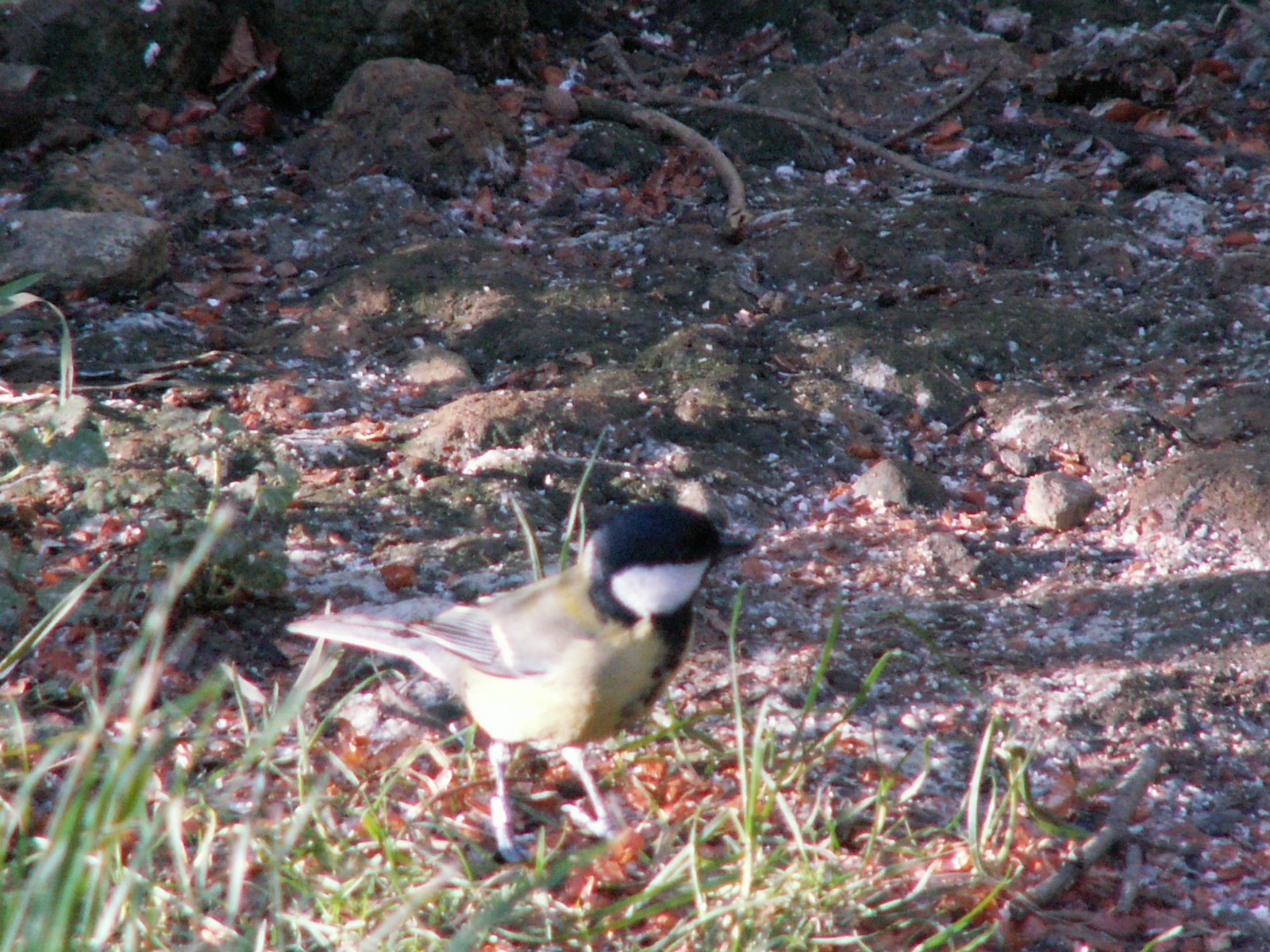
Great Tit


On a lighter note and to remind us all why saving the planet is so important, here’s a Great Tit.


Save the Cow, Save The World

Recently the militant vegetarian organisations, Viva, were saying that the way to solve Climate Change was to stop eating meat and to switch to a completely vegetarian diet.

As I used to be a vegetarian I wanted to look at the data, as it seemed that if what they were saying was correct then I may have missed something. However, while I some sympathy for what they are saying, I do feel that we do eat to much meat, the science is not only flawed it is wrong. Further, they are trying to push their animal rights agenda on the back of climate change. Also while anyone changing their diet to a vegetarian one will not do themselves any harm, the organisation, Viva, will harm the environment as anyone following their agenda will be distracted from the actions that really need to be taken.

At the heart of their claim is the myth regarding the methane that cattle and ruminants produce. More than once in the media here in the UK, mainly the tabloid press it has to be said, Climate Change has been blamed on farting cows. While it is true that bovines produce methane as part of their digestive process, most of it is released via belching. Further while methane is twenty times stronger as a greenhouse gas than Carbon dioxide, it doesn’t stay in the atmosphere.

If this was the cause for Climate change then when the buffalo herds were slaughtered in the North American plains then we should have suffered a global cooling. Also we used to use horses as the main form of motive and agricultural power and again they produce methane too. The simple fact is that while there is to much methane released into the atmosphere, it is not the cause or a major contributor to climate change. Any methane released today will be lost to the vacuum of space in five to ten years.

The difficulty with the approach that Viva want is that if everyone did stop eating meat, there would then be sixty billion animals extra to feed. That’s how many are killed for food each year. I suspect that if there was a great change in diet from meat that these animals would suffer. Also good traditional agricultural practice needs the manure and waste from livestock to fertilise the land to produce the vegetated crops. Without animal fertilisers then more polluting artificial fertilisers would be used.

What I find frustrating with so many of these organisations that are trying to push their agenda is that they miss the point. We all need to drastically change what we do. These organisations fool people into thinking that if they just do that one thing they will be doing all they can. However, we all need to do many things. We need to always think about the environmental impact of everything we do.

Also we do need to be cynical about the companies and businesses that are trying to “sell” us their product(s) as the solution. Nor should we allow ourselves be fooled by green-washing, companies that claim to be acting environmentally but are only doing what looks good. Its like Airlines who claim they are carbon offsetting, while planting trees and taking other measures to mitigate the carbon dioxide is useful, it is not the solution. The only real solution is to stop adding to the CO2 in the atmosphere by stopping consuming and only travelling when needed.


Herbal Tea


Now I have no idea if anyone but me reads the comments that you good folk leave, there are a few people that I need to contact because of what you folks do say. But, I thought I would highlight something I was sent today by a Musty Meles meles.

Why do anarchists only ever drink herbal tea?


Because all proper tea is theft. (Groan)

That’s nearly as bad as one of my jokes!

The picture is of the Badger Man making the tea, anyone for a cup of chamomile?


Monday, 3 December 2007

Good News Bad News


When this Mouse switched on his computer this morning, there were two news stories that caused my whiskers to twitch. The first was that Kevin Rudd the new Australian prime minister had as his first action after being sworn in has ratified (signed) the Kyoto Protocol. That leaves only the US as the only major developed country not to have signed the treaty.

All this is happening just as government representatives are meeting in Bali to discus what follows Kyoto. While it is taking time, little by little, politicians around the world are finally taking the issues of climate change seriously. I have even noticed that in the media they are no longer referring to the process as Global Warming, but are calling it Climate Change. As calling it global warming makes it sound like a jolly nice thing to happen, I am glad to see that the media is finally taking the matter seriously.

Then I came across this story:

An investigation has revealed that some airlines are flying longer routes to avoid paying higher Air Traffic Control fees. In doing so they are burning (Wasting) more Fuel and creating an extra three tones of CO2 per flight. That’s six extra tones for each aircraft in every round trip, all this to save a whopping ninety-nine pounds sterling.

The airlines in question say that they do it to maintain schedules, but if the Air Traffic Controllers didn’t have to adjust flight and holding patterns to accommodate aircraft like these coming in via the back door, there would be no delays.

Until we have people and industries thinking and acting in an environmentally responsible way, we all face the effects of the irresponsible.


Sunday, 2 December 2007

Wandering Albatross Diomedea exulans


When I was a child, as a family we only ever had two holidays. The first was on the Norfolk Broads and even though I would only have been about seven, I was excited by the sights of the bird life that I saw, especially the Herons and the Egrets that were all new to me. Further, I heard a haunting sound that I now know was the booming sound of a Bitten calling. Something that even now, is a really rare sound, seeing the Bitten is even more rare and I know many experienced birders who have never seen one.

The Second holiday was at Dawlish Warren near the Ex Estuary and by this time I was thirteen and able to appreciate the countryside and environment that was at this location. None of my family shared my love of natural history but fortunately I was able to garner the time to go off on my own and explore the mudflats. It was an amazing experience to just watch the waders and seabirds that I had never seen before.

Some of the birds I knew from books, some I didn’t. One that I had not seen before was a Wandering Albatross. Then I had no idea of just how rare my sighting was, and I had no idea that I could or should have reported seeing this bird. It was only a couple of years later when I became a member of the RSPB did I discover that there had been other unconfirmed reports of this Albatross being seen. Also it should be noted that this was in 1976 when the summer was remarkably hot and dry, and with hindsight, the weather and the unusual sightings were some of the first signs of a changing climate.

This experience prompted me to do two things, the first was to start saving up from doing a paper round for an SLR camera, the second was to start seriously looking at learning what I could about what I saw.

With the Albatross all I really knew was the ancient mariner poem and the bit about water and not a drop to drink. But the memory of seeing this bird with such an enormous wingspan has always stayed with me.

Therefore I was surprised to hear that we are loosing so many of these birds, as I couldn’t imagine what could we be doing to drastically reduce the population. The answer was that in tackling one conservation problem we had inadvertently generated another one.

Long line fishing had been seen as a much more sustainable way of fishing than trawling nets when catching species like Tuna. Frequently dolphins and proposes were also caught in the nets. As an air-breathing Mammal they were being drowned in the nets. Therefore fishermen were persuaded to go back to the traditional long line methods. The difficulty was that after years of trawling, the fishermen had lost the skills.

The older traditional fishermen would weight the hooks so they disappeared quickly so that birds like the albatross couldn’t snatch the bait. Also the older and more experienced fishermen would trail flags or banners from the back of the boat to keep the birds away. However the fishermen who returned to this form of long line fishing with lines of baited hooks some as long as one hundred kilometres, have lost the skills and it is now the albatrosses that were being drowned. Therefore organisations like the RSPB and Bird Life International have to re-educate the fishermen in the old skills.

As the albatross is such a long-lived bird, living to fifty odd years, they only reach sexual maturity at twelve to fourteen years. They also have slow reproductive cycle, laying only one egg per pair and only breeding every two to three years. Any sustainable losses will decimate the population. The fact is that in the last twenty years the population has halved and is decline at one percent per year.

The problem here was not the solution that saved the dolphins and proposes, but the fact that instead of using lines that were three or four miles long, but using lines that were more than ten times the length that were traditionally used.

Personally as Tuna is endangered itself anyway, I don’t buy or eat it. By not eating it we may help save the Albatross.


My thanks go to Lex van Groningen and Bird Life International for the stunning image of the Albatross


Business as usual for Bush on Climate Change

One of the greatest difficulties for all of us in our attempts to tackle climate change is the lack of political leadership, especially from the largest polluters. While not the largest population the change of leadership in Australia will be good news in tackling climate pollution.

However while US president Bush has finally been acknowledging that climate change is a problem, events this week shows that the Bush Government intends to do nothing to reduce the Carbon-dioxide emissions from the US. Here in the UK, in the Financial Times, the leading business and financial publication, a conglomerate of international businesses, in a two-page advert, called for leadership in dealing with climate change. The response from the white house was simple, the US will not do anything to cap CO2 emissions and it, the bush government, can not even say when the US will be able to start reducing its carbon footprint.

The science and the evidence is so compelling now that, international business people realise that real action has to be taken. The difficulty is that unless the US, the largest economy in the world, takes political action and tackles climate change then business can’t plan for the investment in a low carbon future.

While there are some businesses that are making the effort, if we have a large economy like the US that refuses to impose regulation, then those businesses will loose money and or profits. Put simply the people that make the effort will always be undercut by the most polluting countries. In some ways this problem is similar to the way that manufacturing has chased the low wages in china. However, unlike this chasing of low wages, governments like the US allowing carbon pollution to occur will kill all industry.

The greatest problem is that oil men like Bush see climate change as an advantage as it is allowing access to the vast oil and gas deposits that are untapped in the artic circle. Further, the US Japan China and the EU are all looking to the probability of mining helium three on the moon, as a new wonder fuel. That is why there is a new moon race and why so many countries are rushing to land men on the moon again. The carbon footprint from these enterprises are vast and will mean that we will seriously damage our climate in trying to obtain this new fuel for an unproven technology.

Further, the US bush government; in particular, assume that the loss of the sea ice will not be that serious for the climate. However that is based upon a false assumption and reliant upon out of date science. In the last five years the unexpected acceleration in the melting of the sea ice has allowed the Greenland Ice cap to start melting. It is loosing up to 150 cubic kilometres of melt water per year. Further this is increasing and this water is flowing into the sea.

Also the Greenland Ice Cap is suffering from cracks and crevices opening up on the suffice of this vast glacier. This means that lakes of melt water that form in the summer are draining down to the bedrock where it is lubricating the flow of the Ice. But this melt water doesn’t re-freeze during the winter as just as happens in a pond or lake the ice on top insulates the water and stops it from freezing. All this is making the three kilometre thick glacier that is the Greenland Ice Cap very unstable.

It will not take a lot for this ice to break up. Scientists are monitoring the Ice and recording the vibrations of the cracking up of this glacier, known as Ice quakes, they occur every twenty minutes. There is an inevitability that sooner rather than later there will be a large area of this glacier will calf and slip into the sea. This will raise sea levels.

Further, any sizeable earthquake nearby could provide the trigger to allow very sizeable chunks of the Ice cap to slide into the sea. This could trigger Tidal waves as well as a sudden and substantial rise in sea levels. What makes this scenario even more disturbing is that the trigger is already in place. Mount St Helens in the US, an active volcano has a bulging plug in its calderas, and when that blows, the quakes and vibrations from that could well be all that it takes to see the glacier slip into the sea.

This is not something that will happen in some mythical time years hence, but within the next four to five years. I just hope that when it happens it finally shocks the US government into taking action on climate change.

I make a clear distinction here between the American people who want action taken on climate change and the Government who have their head in the sand.

Friday, 30 November 2007

For a Fellow tree Hugger

I note that the Mouse’s fellow tree hugger, who lives in Maine has had difficulty seeing some of the pictures here. I am aware just how frustraiting it can be when using a dial up connection, especially when so many people seem to build their sites with only a thought for people with broadband. So I do try and ensure that my images do download properly. That way everyone can enjoy (ENJOY I am not sure that’s the right word?) what I put here.

Especially for my fellow tree hugger, and goat correspondent here’s a picture of a Nuthatch. So I don’t want anyone else to look at it.


An Old Friend Comes Back


As this Mouse had a meeting cancelled yesterday I found myself with unexpected time on my hands. I was fortunate as all this week the weather has been wet or very overcast, but yesterday it was sunny. Therefore I decided to make good use of this bonus.

However, before I tell you about that, I must say that I have been extremely busy working on a possible new project, watch this space for details to come. But it was in relation to this new project that I was supposed to be meeting with other people, but due to events outside of all our control, they had to cancel. It was so last minute that I had already left to travel in to Newcastle. Fortunately, I had missed the earlier bus that I had planed to catch and while waiting for the next one, I got a call on my mobile. As I had been trying to get into town early, had it not been for modern telecommunications I would not have known until I arrived for the meeting.

That left me feeling more than a little disappointed as I had spent a lot of time preparing for this business meeting. However, it is just one of those things that happens in life.

All this meant that I had unexpected time, so I decided to use it productively, and went back out, after changing, to go and watch some wildlife. As my regular reader knows, I have been puzzling over some unexpected animal behaviour among the badgers. At one of the Setts that I am watching, I have seen the badgers tramping over the tracks of the Roe Deer. So I went down to that area partly so I could see what else is about, as normally I am there in the dark. There were a significant number of small birds about feeding on the remains of the peanuts that I am using to feed the badgers. Therefore, I had the delightful vision of small flocks of great, coal and blue tits feeding. I used the opportunity to carefully examine the deer track.

Settling down I watched the birds and I was pleasantly surprised to see an old friend come along, the Fox that I filmed previously.

By watching the birds I realised what the badgers have been doing. The deer use a track that’s a quagmire most of the time. Because the ground is soft and muddy it’s a good area for worms, which is evidenced by the number of molehills I see. But what’s happening is that the worms are coming out after the Deer pass because of the droppings. The badgers are going down for the worms and in doing so are obliterating the signs of the deer.

It was all quite logical in the end, but it did look as though the badgers were deliberately masking the Deer’s passage.


Tuesday, 27 November 2007

Reading the Signs


Yesterday I wrote about interpretation of the signs of animal activity. This picture is a classic example of woodpecker activity. What the bird(s) have been doing is drilling in through the bark to extract insects that are living under the bark. While something like this is obvious to a seasoned naturalist like me, by seasoned I man that I have finally dried out, to a novice it could look as though it were insect activity that caused the holes. While it was experience that told me what I was seeing, I was able to confirm this via observation as I saw a Greater Spotted Woodpecker feeding on this stump. I also saw a Green Woodpecker feeding here during the early summer and both seemed to be feeding young at the time. The Green would vacate the stump when the Greater came along but would be back the moment the greater spotted had collected food for its young.
The second image shows just how perforated the woodpeckers have made the stump, and these holes make it easier for other insects to lay their eggs. Thus a tall standing stump from a wind snapped tree like this becomes more beneficial in its death than it was in its life.


Monday, 26 November 2007

Blackbird


Yesterday after lunch I went for a little wander. For a change I thought I would just go and look what was about in terms of wildlife, rather than going looking for something or anything specific. Often of late I have been out watching badgers or looking at other specific aspects of the local habitats. For example over recent days I have been asked by someone local to look at what he thought was signs of a wild bore. This followed my previous talk on here, of a possibility of a wild bore on the loose locally. On the two occasions I went to look at what he was saying were marks left by a bore, they turned out to be marks left by badgers.

I don’t see any signs of wild bore at all in the local area. I suspect that it is now an “Urban Myth” that is just not true. What signs are misinterpreted as being wild bore, but are really other animals like badgers grubbing up worms. Further, there are no prints and what prints that are seen are in fact the hoof prints of the deer. Further there is a distinct lack of tusk marks or mud smears on the trees that are so distinctive of Wild bore. So while I do keep an open mind, I think at best people are mistaken or are misidentifying what they are seeing.

Yesterday, I was in danger of misidentifying a bird that I saw. I saw a Blackbird that I was not sure was a blackbird. There is a similar sized bird called a Ring Ouzel that looks similar to a blackbird except that the Ring Ouzel has this white patch on the breast. When I first saw the bird it had its back to me, I was approaching and trying to take pictures of it. Then I noticed what looked as though was a patch of white on this bird. What I knew of the Ring Ouzel was that it is a summer migrant thus if it was a Ring Ouzel it shouldn’t be here. Therefore I needed to get a clear picture to ensure I could make a positive identification. Well as you can see from the picture it was a blackbird but is has some spots of white on it.


Sunday, 25 November 2007

What a waste

In previous Blogs I have talked about the problem of rubbish. In the UK we send more of our waste to landfill than any other country in Europe.

Personally, I work hard to avoid collecting packaging in the first place. No plastic bags, nor packaging or anything that can’t be reused or recycled. Thus in any normal month I will normally only need to put my own bin out, a normal sized wheelie Bin, once a month. I say normally as I do also add to my own rubbish the detritus that I collect from my local wood. It’s frustrating that so many people do leave their rubbish in the wood. I always bring my rubbish back with me. I also take the equivalent of a bin bag full of beer and drinks cans to the recycling point. These I should point out are collected from the wood not that I am drinking gallons of beer myself. While I would love to be drinking that much, I could never afford to become a real dipsomaniac, so I just practice.

However, the real point is that it is not difficult to ensure that I reduce the impact I have on the level of waste that goes into landfill. There is a real green benefit in reducing our waste as if our rubbish was only collected once a fortnight instead of once a week would halve the carbon-dioxide pollution emitted in one fail swoop.

Also we need to reuse and recycle much more. When I was a child everyone had their milk delivered in glass bottles that were reused time and time again. While the added weight would have added to the amount of carbon it took to deliver and collect them, it was and still is greener than buying from the supermarket, the way that milk is bought today.

The problem is that milk is now predominantly sold in plastic cartons. This means that the cartons are single use and as very little plastic is recycled, the saving in reduced carbon outputs from the lighter weight packaging, is more than lost by the carbon footprint from the manufacture and disposal of all this plastic. Further, as the supermarkets use centralised distribution, your milk will have travelled hundreds if not thousands of miles.

The problem of waste is a serious problem, while many people do recycle; locally there is a real problem, as our local council doesn’t recycle any cardboard or plastic. So I am pleased to see that three of the local authorities in the region are looking at ways of dealing with our waste.

Personally, I have always disagreed with many environmentalists, as I have always been an advocate for waste to energy solutions. While burning rubbish will produce pollution not just CO2 but all sorts of other harmful chemicals, but some waste has to be incinerated, therefore it must be better to use the energy this creates. Not only will waste to energy projects replace fossil fuels, but also as the waste is not shipped the great distances that fossil fuels are transported. Thus further reducing the carbon footprint.

In the past when trying to get people to take waste to energy seriously, opponents have always said that if we reduced the rubbish we produce then any facility producing energy would run out of fuel. Well if that ever happened then we would really have all turned green.


Saturday, 24 November 2007

High Water


As the last image was not perfect, well neither is this one, but I thought I would show just how the river looks after the recent rain.


Dipper


The other day I talked about seeing a dipper getting ready to roost. I did take a picture but the light was far to low to get a decent image, but this was what I did get.


Consumer electronics and the carbon footprint


I have had to finally spend some money and replace the screen/monitor for my old computer. While the central processing unit is younger, the monitor was well over ten years old. Unlike many people I kept it when I had to change the CPU, as it was a very energy efficient model. Part of my rational about keeping green is to not waste the resources that are used in manufacturing any product that I use.

While that may mean that I don’t have the latest wiz bang gadget or product, often by making careful choices in the first place, I don’t waste money constantly updating something that is still working well. But in the case of the monitor, it was starting to play up. Then finally the tube went so that the screen image collapsed to a third of the screen area. I did try turning it back on to take a picture of what I was seeing but when I did it blew, smoke out the back type of failure that told me it had committed suicide.

However I need the computer so I had to buy a new monitor. While I did look at obtaining a new one, I decided to buy second hand. As often when people buy their new even faster and more powerful computer, they get new keyboard and the rest of the kit, so that there are thousands of tonnes of perfectly good consumer electronic goods thrown away. Therefore, I bought a flat screen monitor for about a third of the cost of a new one. Further, by doing so I have stopped something else going into landfill and it will also reduce my energy costs and help reduce my already small carbon footprint.

I know that some people think that I am being smug by telling you folks in “Blogland” about what I am doing to be greener, when all I am trying to do is lead by example. People seem to think that they can’t do much to help save the environment, when there are many things they can do. Also people feel that there is no point as if they are doing it they will be doing it alone. You will not be doing your bit for the planet on your own, this mouse and many others are already doing as much, and many much more.

It has been amusing for me to observe the way that people have gone out and spent a small fortune on new televisions over the past few years. The screens have got bigger, incidentally at the same time as homes have got smaller, yet with digital switchover coming most of these will be useless unless people invest in the box to receive the digital signal. Will this lead to more consumer goods being dumped as rubbish? Even now with the shut off of the analogue signal less than five years away, in the UK, most of the sets for sale are still analogue and not digital, a complete waste of energy and the earth’s resources.

I am not against consumer goods or luxuries; it is just that we all need to think carefully about only buying what we need and not just changing something just because it’s the latest fashion.

We have gorged ourselves on consumer goods, and just seem to never be satisfied with having a mobile telephone, but it must be the latest model. All these items eat energy and add to climate change, not just in their use but manufacture, shipping and then in the disposal of them.

Even if you don’t give a dam about the environment, not falling into the trap of consumerism will save you a small fortune.


Thursday, 22 November 2007

Learning Lessons from the Badgers


Meanwhile back to the environment. As my regular reader will know I have been spending a lot of time out watching some of my local badgers. Concentrating upon two of the sett’s, I hope to learn more about their behaviour and habits first hand. This has entailed me keeping the frost company while the wind stabs at me robbing me of body heat. While I do take care to keep warm, as I have to remain fairly still, I don’t have the benefit of movement and exercise to maintain body temperature. Therefore, when heavy rain was forecast, I decided to suspend my observations. It was unlikely the badgers would be that active, and the chance of obtaining any meaningful observations would be diminished.

Therefore, today was the first time I had been out for the past two days. I decided to go and look at the entire seven sett’s that I know of in the local area. The wet conditions makes spotting activity easier and my assumptions that the badgers would not be that active in the rain was only partially correct. As with all animals hunger will drive the badgers out looking for food. Further, as a badgers diet is mainly worms, the wet conditions make it easier to find the worms they rely upon. So that’s a lesson that I have learnt and one I should have known.

However, I have learnt something new about badgers already. I had noticed that the badgers were collecting up a lot of bracken for bedding. At this time of year it could be assumed that they are preparing for winter. But I noticed this happening in the summer as well. It seems that the badgers are collecting it when its dry and storing it so that will have a supply of dry bedding even when the conditions are wet. With this hypostatise I was able to find at each of the seven sett’s what appears to be a dry bedding store. Therefore it does appear that the badgers are able to plan ahead and it doesn’t seem to be just one or two clever badgers that are doing this but all of the family groups.

While the overcast and dark conditions made it difficult for photography, I did get some pictures to illustrate the amount of water that has fallen. Further the river is filling up and still rising. There is no risk of floods, but it must make it difficult for the wildlife that uses the river. It was getting towards dusk when I got to the end of my circuit but I did spot where a dipper is choosing to roost. I did try and take a couple of pictures but there wasn’t enough light, but I hope to return, so watch this space.


Don’t blame the Clerk

Yesterday I wrote about the fact that the Inland Revenue has lost in the post the data on all the 25 million people that receive child benefit. The part of the story that I was most alarmed about as it was reported yesterday was that a junior clerk had sent this information. What is alarming is that, if true as reported and I heard what Alistair Darling said, verbatim, that anyone in a junior position would be able to access all the records and to be able to copy them.

I refrained from calling this clerk all the stupid names he deserved to be called if it had been his fault, simply because knowing how people always try and avoid the blame when something goes wrong, was it really just a clerk that had done this.

Well today new information emerges. While the facts as reported were true, it was the facts that emerged late tonight that shows he was only carrying out instructions from above. It turns out that the National Audit Office requested that the data was stripped of anything that sensitive, this was refused by the revenue, on the grounds of cost. Also these emails asking for the information were copied to a person at director level, that fourth down the chain of command from the top, so the poor clerk who was being blamed for this was and is innocent.

It is interesting to note that the clerk, a young man of twenty-three, has been whisked away to a hotel to keep him away from the media. Oh how damaging his account will be.

In the UK we have to provide to various government bodies and departments all sorts of private and confidential information, we don’t have a choice. Therefore the government has to ensure that this data is secure. While I don’t agree with the paranoid people that say that no governments can be trusted, I don’t feel happy supplying any further information to any government department with this extremely poor level of data protection in place at the moment.


Wednesday, 21 November 2007

Between Northern Rock and a Hard Place

In the News over the past two days are two stories that are linked, both are shocking revelations, but the link for me is more personal than they will be for most. Yesterday the Chancellor of the Exchequer, the UK finance minister revealed that the UK treasury has loaned Northern Rock forty billion pounds of taxpayer’s money. In the past when my Blog was on yahoo I have spoken of the over inflated housing market, and as my personal experience will show Northern Rock are all part of this hyped up and grossly inflated market.

However before going there, today I heard that the Chancellor of the Exchequer was going to be making a statement to the commons. I thought that it would be related to Northern Rock, thus I was interested but I would wait until the news latter to find out what had gone wrong now. However the announcement that the government had lost in the post important confidential personal and security details of twenty-five million of its citizens completely floored me. As my ex-wife was and for all I know is, a senior tax inspector, I knew immediately that rules had been broken for this to happen. Also, knowing something about the data protection act, I knew that the law had been broken too.

As I don’t have any children myself, this news doesn’t affect me directly, but as I do have experience of having suffered “Identity Theft”, I realised just how serious this was. Also indirectly, I wondered just how safe are my details, details the government holds about me and everyone else in this country.

When my identity was stolen the term Identity Theft had not even been coined and I was shocked at how easy it had been. In no small part my then bank, Northern Rock, were guilty of gross negligence in allowing it to happen.

I was working away from home, I had a mortgage to pay and I had taken in a lodger. I had gone back to Newcastle for the weekend partly because the lodger had not paid the rent and because something odd was happening with my bank account. I asked the lodger for the rent but he said he couldn’t pay and he wanted to leave. So I went to the bank to try and find out what was happening there. The Northern Rock treated me coldly and quite rudely. It was only latter that I discovered that I was dealing with the same person who had enabled my lodger to have a new cheque book, cheque guarantee card and while I had proof of my identity had done this without carrying out the proper checks on him. Further, had the bank actually told me what they knew immediately, I could have gone to the police and they could have made an immediate arrest, as the lodger was still there in my home.

At this time I was still thinking it was just a stolen or missing chequebook that was the problem, and the lodger was just a non-paying lodger. If it hadn’t been for the fact that I had an empty bank account and I needed to get that sorted before I travelled back to London to work, I don’t know how long it would have taken to discover what was really happening. So on the Monday I called work and explained I had a serious problem that I needed to sort out, and would be back at work the next day. Fortunately, just before I went to the bank again, the post arrived and in it was a Driving licence in my name. This was before pictures were a requirement. Keeping this with me I went to the Northern Rock and got to see the branch manager. It was then that I discovered what the bank had done, and had they told me on the Saturday that there was a suspicion of what’s now called Identity Theft the whole matter could have been resolved strait away. The bank, Northern Rock, even inadvertently admitted that they had not followed their own security procedures and accepted weak and incomplete means of identification by the man that had been my lodger. Therefore I thought the matter would be resolved quickly.

I then took the evidence to the police. A CID officer took my statement and whilst shocked at what I discovered from the police about this type of crime, I was lucky as I had good documented evidence that a crime had occurred. Even the detective acknowledged that had it not been for that evidence, particularly the Driving Licence, there would have been little or nothing they could do.

My problem with Northern Rock continued as they kept on honouring the cheques from the stolen cheque book, and eventually I had to open a new account with another bank, to avoid loosing my pay to an overdraft that was increasing weekly.

Eventually, the police caught the culprit, I even discovered his real name and that the name he had given me was another stolen identity.

Even with the real culprit, Richard Michael Cope, pleading guilty and serving prison time, the Northern Rock Bank tried to pursue me for the several thousand pounds that this guy had stolen. Additionally, I ended up with a poor credit rating because of it. It took several years to recover from that, and I lost my home as a result of gross negligence by Northern Rock and the criminal who stole my identity.

Therefore, I can really feel for all the people who are facing a worrying time because of the gross incompetence of our government.

However the issue that is really worrying, and should worry us all, is the way that the government has supported a Northern Rock, a failing bank.

As Northern Rock is a regional bank its headquarters are here in Newcastle, locally many people don’t want to see the bank fail. Apart from the jobs that would be lost, I don’t see why it should survive. That is not based upon my experience with them, but the hard economic fact that the Northern Rock has been carrying out irresponsible lending. Twice since loosing my home, I have looked at getting back on the housing ladder, and twice I have been told how to get a mortgage via the Northern Rock by committing a fraud. Two different brokers told me how to do it, and Northern Rock would give a mortgage to anyone.

While it may have been tempting to try and cash in on the over inflated housing market, I also have my principals and I will not compromise my ethics for greed.

Also as the housing market is inflated, here in the Northeast the property prices are fifty to sixty percent higher than actual values, this irresponsible lending was bound to cause misery in the end.

When the problems with the sub-prime mortgage market broke here, it was clear that banks like Northern Rock would suffer. However, the government had a really difficult call to make. They couldn’t let this irresponsible bank fail as it would bring about the collapse of the housing market and in consequence the whole economy could fall into recession. Also as all politicians are also property owners, they don’t want to see prices fall for personal reasons too. That makes for poor judgement by governments.

Further, the finance market is not that simple, as the mortgage loans are sold as a commodity amongst banks on the money markets. Therefore, other banks who have been much more responsible and prudent were also at risk. While this method of selling bundles of debt to other financial institutions helped raise more capital for the banks, it also meant that lenders like Northern Rock could and were lending money without even caring if the money would be repaid. They could sell the loans on and it was whoever bought that package of loans to worry about getting their money back. Additionally, when prices are rising even the buyers of these derivatives know that the banks like Northern Rock are making really bad lending decisions, but as long as house prices are increasing, the banks will still make money even if they have to reposes. That is why when house prices stagnated, the other banks refused to lend to Northern Rock.

Step in the Bank of England, but had they known that Northern Rock were lending irresponsibly, as regulator for the banks they would have stopped them making bad loans anyway. So we have the government supporting a failing bank to the tune of thirteen hundred pounds per person in the UK, in a desperate attempt to stop an inevitable collapse in the credit and housing markets. Sooner or later it will have to happen and while I do feel for all the people that will suffer because of it, for the last ten years this country has gorged and consumed on a credit frenzy of one trillion pounds sterling.

Well the party is over and the mess needs to be cleared away.

Sunday, 18 November 2007

Night Life


Last night was the first night for over two weeks, which I have not been out keeping station on the Badgers. It was only because of the poor weather conditions that I decided to keep to my bed, as my nocturnal activities had enabled a chest cold to persist.

While it has been remarkable to watch the season change from autumn to winter, even more remarkable has been my ability to witness the animals as they prepare for winter. Often at night it is really the sounds that tell you the story of what is occurring, however the frequently heard owls seemed to have been everywhere. I had to do some serious reading to work out if what I was seeing was unique. But I realised that it is in fact just that the young hatched this year are finding their own feet, or should that be talons, and trying to establish territories. The fact that they are doing it in their parents’ territories is why they are suddenly so frequently seen. So while this observation is nothing new to science, it has increased my understanding of the natural world. Further, I have been privileged to be using the same branch as my viewing platform as a young tawny owl has been utilising as a hunting perch.

This observation also helped me to decode some of the other faint sounds I was hearing. What I had initially thought was the gentle rustle of leaf in the breeze turned out to be small mammals, mice, vole even shrews.

Then there have been the sounds and shadows of the foxes lightly imprinting their path across the frosted leaves. While a fox can be silent, the cries they emanate can make the blood run cold. I understand that when the mating season for foxes happens, the police get an increase in the number of calls informing them that some thinks a woman is being attacked in the bushes somewhere. Quite a chilling sound and it is no wonder that myths grew up around woods.

Before even talking about the badgers, the other remarkable experience is the deer. With my perch in a tree, I am above the roe deer as the pass below me. They know my sent and know that I have passed, but fortunately they don’t look up. If they did they would see me as this small group of seven hinds walk, amble and skip just feet below me. I may take a picture of this, but I know the flash will startle them and I don’t want to disturb the natural behaviour that I am seeing. Nor frighten them into taking another route. Partly this is because in the badgers I am seeing some remarkable behaviour.

After the deer have passed, quite close to the sett, the badgers seem to then go grubbing for worms along the track the deer took. This has the effect of obliterating almost all the signs that the deer were there. But what has been even more curious is that on the couple of nights that I haven’t seen the deer the badgers don’t forage for worms there. Further, when the deer were late passing, the badgers seemed to wait until they had passed and seemed to move from an equally rich feeding area to feed on the deer track. While I suspect that there is something else going on, it appears as if the badgers are aiding the deer by hiding their passing. Quite curious.


Saturday, 10 November 2007

BBC Autumnwatch


As my reader in the UK will know on television at the moment the BBC are broadcasting again there Autumnwatch season. I should explain to my overseas reader that this is the second year of doing this although for the last five years they have been broadcasting a similar programme in the Spring, yes you guessed it; Springwatch.

While I know that some people feel they don’t like the presenters, they seem to want their natural history/nature programmes to be rather po-faced, I actually enjoy the style. One of the things I love about the fact that they are live, is that we never quite know what is going to happen or if the animals, the real stars of the show, are going to turn up.

This being on has brought me in from the cold where I have been out watching Badgers and other wildlife, and made me appreciate the warmth of a cat on my lap and a cup of hot soup.

However, it is two of the animals that they have shown that sparks my wish to write here. Firstly are the beavers. Every night they are showing live images of a colony of wild European Beavers that have been breed at a compound with the hope of reintroducing them to the UK. As we lost our Beavers about five hundred years ago, I can see the difficulty in reintroducing them. As we would have to educate people to accept them, and we would have to learn how to change the way we manage our rivers to meet their needs. But on balance I think I am in favour of them being reintroduced.

The second animal though is a bit more controversial, Wild Bore. For many years now there has been a small population of wild bore that have re-established themselves, often as escapes from farming of the wild bore. Again this is an animal that was hunted to extinction, about seven hundred years ago, so while it was native to the UK its accidental reintroduction could be problematic.

The greatest problem is its interactions with people and specifically with people with dogs. Dogs and wild pigs don’t get on, and with wild bore having tusks, I can see some dog owners demanding “something is done” especially if a dog gets injured or killed. Then there will be the farmers who suffer losses from the damage they will do to crops. However, the biggest danger will be when the population starts to rise. As wild Bore no longer have any predators, we killed the Wolf off here about one thousand years ago, and there are no natural controls on the population size.

Thus I cautiously welcome this happening as well. I know that locally, though fortunately not in Chopwell Wood, there is a female wild bore on the loose. I have spoken to reliable witnesses of this fact, but also there appears to be no male in the area. Therefore the population is not growing here. But as this makes my nocturnal wildlife watching potentially dangerous, I have mixed feelings about knowing she is out there. That makes my personal preference for dealing with the actuality of wild bore being present in the UK even more controversial. I think there should be a reintroduction of the European Wolf into the UK.

Now I know that would upset almost everyone, but it would help to control the numbers of Bore, Deer and other potential pest species in the UK.

I doubt that it will happen, but it would restore the balance in nature.


Golden Larch

I just thought I would share this image of the Larches in Chopwell Wood. Often in the UK when people think of conifers they think of evergreen trees, but the larches needles turn gold and they shed them, as has now happened days after this picture was taken in the high winds here.
While they look attractive they don’t support much in the way of wildlife, not in this wood anyway, as they are an introduction to this habitat.


Wednesday, 7 November 2007

Unhealthy Skies

While I know that some of my readers think I “Bang On” about Climate Change far too much, it is the greatest threat we face. This Article on the BBC website should send a chill down all our backs. It contains a warning by Nobuo Tanaka, the Executive director of the International Energy Agency; he is warning that our energy demands are outstripping resources. However it is the figures quoted about the current global CO2 emissions that are most frightening. In 2005 they were 27 giga-tonnes! That is 27 trillion, trillion tonnes of new CO2 released into our air that year. I say new but its really old carbon that our planet locked away millions of years ago.

We are rapidly returning our home world back to the primeval first stages of life. The result will be that most of the Fauna and Flora will not survive, and Homo sapiens will become a footnote in the evolutionary history of our planet.

A Healthy River


At the weekend while down on the riverbank, I discovered some old signs of Otter activity. I was then told by one of the Friends’ that he had seen two Otters less than a week ago. On the River Derwent we do have otters, but they are elusive and as they are predominantly nocturnal or corpuscular (Active at Dawn and Dusk), they are difficult to find and rarely seen.

Unfortunately I have discovered that some people are jealous of me for having seen the otters, I have even been accused of making it up, but the otters are their and they are thriving, as the Picture of the Otter Scat shows. I have had some strange looks and comments when I have truthfully told them that I have been taking pictures of wildlife poo, but it’s a useful tool for assessing the health of any wildlife population. I would prefer to be taking pictures of the otters themselves, but while I have tried, they are too secretive for me to have had any luck so far.

Another problem is the territory size, Otters need up to twenty miles of river to hunt and breed on, that means they are often on the move from one holt to another. This was something I discovered from observation, and confirmed by reading what is known. One of the greatest problems that the otters face is disturbance by man, not intentional disturbance, and his best friend the dog. Otters can often be around people without them realising it, I have spoken to many fishermen who have seen otters and were surprised they were there. Further the otters were undisturbed by the human presence. However, add a dog and the otters behaviour changes and the will vacate the area and avoid it at the times when dog walkers are about.

Anyway with otters in mind I headed off yesterday to see if I could find where the otters are. With the new digital camera I felt that I stood a good chance of getting something. However, I had made the mistake of picking up all the wrong batteries. I use rechargeable ones, I can see you are all ahead of me here, and I took out the ones that needed charging. I did get to see plenty of fresh signs of otter activity but pictures no.

I did however see water voles again; I saw one at the weekend, as well as plenty of other wildlife, Dippers, Grey Wagtails and a Kingfisher. So while I returned home resembling something the titanic should avoid, I was very pleased to see that the river is looking so healthy.


Sunday, 4 November 2007

Welcome to the Grass Snake Hotel

With any conservation project the amount of work that can be completed is directly proportional to the hard work and dedication of the volunteers. The building of one Snake Hibernacula was ambitious to build two was going to be difficult but achievable. Therefore in planning what work was needed to be done, two days were allocated to this project.

One of the greatest difficulties was always likely to be that the ground where the pits needed to be dug. As this is a woodland area, that meant digging through tree roots, and anyone who has done any gardening near trees, will know, this is never easy. However, we are blessed with a light sandy soil down by the river, therefore digging would not be as bad as it could be. Thus a balance was there and fortunately on the day the unseasonably good weather held up making the work easier to carry out. While it was still hard work as more than one tonne of soil had to be dug out of each pit, the pits were quickly created.


The pits are made two meters by two meters and about forty centimetres deep, with a slope to wards the south. That way they can drain and will stop them becoming frost pockets. These pits are then filled with logs that are at least twenty centimetres across and laid crossways on two layers. This creates an area of air that is warmer than the ambient air temperature, and even if this log filled pit becomes water logged, that water will not lead to the air within the hibernacula freezing, therefore not harming or killing the snakes inside.


Those logs bring the pit back up to the ground level; at this point the actual accommodation is constructed. This is made up of smaller branches, from ten centimetres down to twigs, stacked so they are in an east west orientation. The orientation again is important so that at sunrise in particular, and less so at sunset, the sun warms the branches at the entrances so that the air temperature is kept higher than the ambient air temperature and frost-free. This stack is built up so that its about eighty centimetres from the ground. All the spaces in this pile are there so that the snakes can find cosy places to sleep out the winter free from predation or disturbance.


Then an insulation layer is put on the logs. While turf would be ideal, as Chopwell wood doesn’t have great swathes of grass anywhere, we used bracken something we do have lots of. Often it is a matter of making minor adjustments and using the materials available, rather than not doing something because you don’t have what’s ideal. Therefore with the logs insulated the soil from the pits is used to cover the hibernacula, leaving the East and West sides open.


The volunteers worked their socks off, and two hibernaculums were completed in a day rather than the two days expected. Friends of Chopwell Wood, and the Durham Biodiversity Action, were really lucky to have had such hardworking and dedicated volunteers. Thanks folks, and I am sure that the Grass snakes will send their thanks too.


All we need to do now is find the tenants!
So to all you grass snakes out there, free accommodation.
(We don’t mind if the Grass Snakes are Squatters either)

Beautiful Location


Friday, 2 November 2007

Enhancing Biodiversity


This weekend the Mouse is going to be busy helping to build not one, but two, Grass Snake Hibernacula in the wood. While climate change may be bringing new species further north, we are at the northern limit of the normal range for Grass Snakes. Unfortunately there has been a decline in the population in recent years due mainly to a loss of habitat. All those overly tidy gardens, spraying of herbicide and modern agricultural practices have all contributed to this. However along the Derwent River, there is an opportunity to reverse this decline by enhancing the habitat for the Grass snake.

Many of the elements are already there including the snakes, it is just a matter of managing the area so that it enables these reptiles to maintain a strong belly hold.

The area that the Grass Snake hotels are to be built in has already had some coppicing work done, this opens the area up to the sunlight and will provide the basking areas the snakes need so that they can raise there temperatures, being cold blooded this is vital to their survival. The fact that the area where the Hibernacula are to be constructed is an area that has to be coppiced regularly is all part of the careful planning and long term viability of the project. Further, because of the need to create piles of composting vegetation so that the snakes can breed and nest, also helps deal with another problem of the highly invasive Himalayan Balsam. This introduced species has created a large colony that has been smothering out all other plants. By utilising these plants as the material to create the compost heaps has the effect of benefiting the Grass Snakes as well as dealing with the invader.

Therefore, while this work will directly benefit the Grass Snakes, it will also help the native plants to re-establish themselves and benefit many other forms of Fauna and Flora too.

It will not be until next year that we will know if there are any snakes using the hotel, but there are snakes in the area, not just grass snakes but the even more endangered adder as well. All this work could benefit tens of species in the long term, enhancing the ecology of the wood and the river Derwent.


There was an article in the local paper today about the project too, and I understand that local TV will be covering it as well. Fortunately the mouse was in hibernation for this.