Showing posts with label Animal Behaviour. Show all posts

Wednesday, 4 June 2008

Crane Reintroductions and Animal Behaviour

I guess that amongst my British readers you will already be aware of and probably already watch Springwatch, but as many of my readers are from overseas, I apologise in advance if I am talking about stuff you already know.

But last year on springwatch they showed one of the Barn Owl chicks eating his younger siblings. One thing that the programme can not be accused of is being over sentimental. This is part of normal natural behaviour. Then this year was something even more extraordinary. When the series started they showed a Swallow (Barn Swallow) that was using an artificial nest. On Monday the chicks hatched and the male killed the chicks. While there was an attempt to save the chicks, there was nothing that could be done and the male killed the chicks. He then went on to build a new nest.

Now while artificial nest boxes are a boon to many birds, even back twenty years ago I was told that artificial nests for swallows just don't work. This is because the building of the nest is an important part of the pair bonding. What possibly happened in respect of the birds on SW was that the male thought the female had been unfaithful. It was not his nest and he possibly thought that he was not the father.

As this has never been filmed before, even the experts are not sure what is going on, but it shows that we don't know everything and we humans have more to learn.

One of the other things that SW has been showing is the work being done to reintroduce the Crane to the UK. This has involved one of the presenters having to dress up in a silly costume to disguise his human form. Something I can empathise with as I have had to do similar things myself. However, while the techniques may seem silly, they are in fact proven ones. In the US the same processes have been used to help increase numbers of the Whopping Crane. This includes all the dressing in silly costumes and using litter pickers to mimic the bill of the chicks mother. As well as teaching the chicks to become cranes, well it has to be seen to be believed. However, the aspect that differs with the American programme is that they have to also teach the birds to migrate.

This is done by teaching the chicks to fly with and behind microlight aircraft so that they can learn the migration route to Florida.
For my American reader you can see this on Wild Chronicles in an edition called Operation Migration.


The success of the red kite reintroduction programme all bodes well for the Crane School.


Saturday, 12 January 2008

More on Co-evolution and Interdependence


Just a couple of days ago I was talking about some of the ways that completely different species have a dependence upon the other. While many are obvious such as food and prey, most prey species need the predator to control their numbers; otherwise they outstrip their food supply. That scenario, as witnessed in many species when the predators are reduced or removed, has the effect of reducing the prey species more than would ever be lost via predation. That is because while some will die from starvation, the greater effect is reduced breeding rates and increased infant mortality. Thus the importance of a full range of species within any habitat is now well understood.

However, currant research is still illuminating some very interesting and subtle examples of interdependence. I still can’t get the image out of my head of scientists sniffing ants. See the previous post on this subject.

However, research is highlighting many surprising examples of the symbiosis of different species and the importance of large animals. As I have mentioned before, in Yellowstone National Park, they discovered that having a healthy and sizable population of Wolfs changed the behaviour of the Elk. By adjusting the way the Elk feed, by keeping them out in the open and away from the Forest and trees, willow and aspen regenerated. This in turn provided food and shelter for beavers, who by creating their pools and this in turn helped the dippers, amphibians and reptiles. The web of benefits extends out to include about one hundred species where a direct link can be shown to the reintroduction to the wolf more than a decade previously.

Research just published in Science Magazine, that journal for the AAAS, carried out by Florida University, has made some remarkable discoveries about the importance of the need for the large herbivores in protecting the acacia trees in the African Savannah.

While this may appear counter intuitive, the acacia trees need the large herbivores like Giraffes, Elephants and Antelope to nibble the trees to remain healthy. As what happens is when the trees are grazed the tree reacts by producing a sweet sap. This may in part be to help heal the wounds, but the important part is this sap attracts ants, specifically, the biting ant Crematogaster who act as body guards for the trees. When the herbivores come back to the Acacias, the ants fight off the grazers; this prevents the tree from being damaged beyond loosing some growth.

The researchers from Stamford University and Florida University isolated the trees, mimicking the loss of (extinctions) the herbivores by fencing the trees off. The effect was not what anyone expected to see as instead of the trees thriving the in fact suffered and became less vibrant and grew more stunted than the ones that were grazed. Part of the effect was that the tree by getting nibbled stimulated extra growth. But the process was more complex than that. Once grazing did not injure the trees they stopped producing the sap that attracted the ants. The loss of the ants allowed other insects to invade and bore into the trees weakening the trees. Therefore the trees needed to large mammals to browse them, to gain the protective alliance of the ants.

It shows that even in the natural world we all need friends.


Photo © Westend61/Alamy


Monday, 31 December 2007

Changes in Bird Behaviour

In the last week I posted about a pair of Robin that had nested, in winter, down in Bedfordshire. While it would be nice to imagine that with the milder winters we are getting as a result of a changing climate, unfortunately what is the determining factor for the survival of the chicks is food. Each parent would need to find 35g of insects that’s about one and half ounces of insects to keep the chicks and themselves alive and for the chicks to build up body mass. Further, the RSPB, whose headquarters are in Sandy in Bedfordshire, also say that unless the parents could find enough grubs or caterpillars then the chicks would die of dehydration. As the chicks need the juicy bodies of these foods to supply their liquids.

While this Robin is an extreme example, part of the reason for the decline in British song birds is that climate change is causing many birds to nest earlier and before the insects hatch, therefore before the food is their to feed the chicks.

The change in the climate is effecting the behaviour of other birds. In the South West of England, Somerset, Devon and Cornwall birds like Blackcap and other warblers have for the last ten years dispensed with migration and are eking out a living in and around the sewage works. They are there because of the insects, mainly tiny flies, which breed and feed there. Not having to fly all the way to the Mediterranean means that they have reasonable fat reserves to make it through a mildish winter. However, any harsh cold snap has reduced the numbers of these non-migrating birds.

Also on the subject of bird behaviour, over the last week or so I have had the privilege of observing a red kite that has been hunting a few hundred yards from my office stroke back bedroom window. Today I went out to see if I could get some pictures. On time the Red Kite turned up. While watching I realised that there was a specific reason for the Kite quartering the area. The resent heavy rains has flooded out many small mammals, I saw a couple of dead voles too. Further while watching I saw a sparrow hawk fly other. I didn’t get any pictures, as I had forgotten the recharged batteries, no images but great memories.


Friday, 30 November 2007

An Old Friend Comes Back


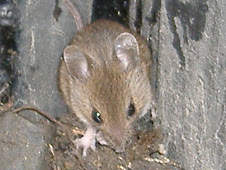
As this Mouse had a meeting cancelled yesterday I found myself with unexpected time on my hands. I was fortunate as all this week the weather has been wet or very overcast, but yesterday it was sunny. Therefore I decided to make good use of this bonus.

However, before I tell you about that, I must say that I have been extremely busy working on a possible new project, watch this space for details to come. But it was in relation to this new project that I was supposed to be meeting with other people, but due to events outside of all our control, they had to cancel. It was so last minute that I had already left to travel in to Newcastle. Fortunately, I had missed the earlier bus that I had planed to catch and while waiting for the next one, I got a call on my mobile. As I had been trying to get into town early, had it not been for modern telecommunications I would not have known until I arrived for the meeting.

That left me feeling more than a little disappointed as I had spent a lot of time preparing for this business meeting. However, it is just one of those things that happens in life.

All this meant that I had unexpected time, so I decided to use it productively, and went back out, after changing, to go and watch some wildlife. As my regular reader knows, I have been puzzling over some unexpected animal behaviour among the badgers. At one of the Setts that I am watching, I have seen the badgers tramping over the tracks of the Roe Deer. So I went down to that area partly so I could see what else is about, as normally I am there in the dark. There were a significant number of small birds about feeding on the remains of the peanuts that I am using to feed the badgers. Therefore, I had the delightful vision of small flocks of great, coal and blue tits feeding. I used the opportunity to carefully examine the deer track.

Settling down I watched the birds and I was pleasantly surprised to see an old friend come along, the Fox that I filmed previously.

By watching the birds I realised what the badgers have been doing. The deer use a track that’s a quagmire most of the time. Because the ground is soft and muddy it’s a good area for worms, which is evidenced by the number of molehills I see. But what’s happening is that the worms are coming out after the Deer pass because of the droppings. The badgers are going down for the worms and in doing so are obliterating the signs of the deer.

It was all quite logical in the end, but it did look as though the badgers were deliberately masking the Deer’s passage.


Thursday, 22 November 2007

Learning Lessons from the Badgers


Meanwhile back to the environment. As my regular reader will know I have been spending a lot of time out watching some of my local badgers. Concentrating upon two of the sett’s, I hope to learn more about their behaviour and habits first hand. This has entailed me keeping the frost company while the wind stabs at me robbing me of body heat. While I do take care to keep warm, as I have to remain fairly still, I don’t have the benefit of movement and exercise to maintain body temperature. Therefore, when heavy rain was forecast, I decided to suspend my observations. It was unlikely the badgers would be that active, and the chance of obtaining any meaningful observations would be diminished.

Therefore, today was the first time I had been out for the past two days. I decided to go and look at the entire seven sett’s that I know of in the local area. The wet conditions makes spotting activity easier and my assumptions that the badgers would not be that active in the rain was only partially correct. As with all animals hunger will drive the badgers out looking for food. Further, as a badgers diet is mainly worms, the wet conditions make it easier to find the worms they rely upon. So that’s a lesson that I have learnt and one I should have known.

However, I have learnt something new about badgers already. I had noticed that the badgers were collecting up a lot of bracken for bedding. At this time of year it could be assumed that they are preparing for winter. But I noticed this happening in the summer as well. It seems that the badgers are collecting it when its dry and storing it so that will have a supply of dry bedding even when the conditions are wet. With this hypostatise I was able to find at each of the seven sett’s what appears to be a dry bedding store. Therefore it does appear that the badgers are able to plan ahead and it doesn’t seem to be just one or two clever badgers that are doing this but all of the family groups.

While the overcast and dark conditions made it difficult for photography, I did get some pictures to illustrate the amount of water that has fallen. Further the river is filling up and still rising. There is no risk of floods, but it must make it difficult for the wildlife that uses the river. It was getting towards dusk when I got to the end of my circuit but I did spot where a dipper is choosing to roost. I did try and take a couple of pictures but there wasn’t enough light, but I hope to return, so watch this space.


Sunday, 18 November 2007

Night Life


Last night was the first night for over two weeks, which I have not been out keeping station on the Badgers. It was only because of the poor weather conditions that I decided to keep to my bed, as my nocturnal activities had enabled a chest cold to persist.

While it has been remarkable to watch the season change from autumn to winter, even more remarkable has been my ability to witness the animals as they prepare for winter. Often at night it is really the sounds that tell you the story of what is occurring, however the frequently heard owls seemed to have been everywhere. I had to do some serious reading to work out if what I was seeing was unique. But I realised that it is in fact just that the young hatched this year are finding their own feet, or should that be talons, and trying to establish territories. The fact that they are doing it in their parents’ territories is why they are suddenly so frequently seen. So while this observation is nothing new to science, it has increased my understanding of the natural world. Further, I have been privileged to be using the same branch as my viewing platform as a young tawny owl has been utilising as a hunting perch.

This observation also helped me to decode some of the other faint sounds I was hearing. What I had initially thought was the gentle rustle of leaf in the breeze turned out to be small mammals, mice, vole even shrews.

Then there have been the sounds and shadows of the foxes lightly imprinting their path across the frosted leaves. While a fox can be silent, the cries they emanate can make the blood run cold. I understand that when the mating season for foxes happens, the police get an increase in the number of calls informing them that some thinks a woman is being attacked in the bushes somewhere. Quite a chilling sound and it is no wonder that myths grew up around woods.

Before even talking about the badgers, the other remarkable experience is the deer. With my perch in a tree, I am above the roe deer as the pass below me. They know my sent and know that I have passed, but fortunately they don’t look up. If they did they would see me as this small group of seven hinds walk, amble and skip just feet below me. I may take a picture of this, but I know the flash will startle them and I don’t want to disturb the natural behaviour that I am seeing. Nor frighten them into taking another route. Partly this is because in the badgers I am seeing some remarkable behaviour.

After the deer have passed, quite close to the sett, the badgers seem to then go grubbing for worms along the track the deer took. This has the effect of obliterating almost all the signs that the deer were there. But what has been even more curious is that on the couple of nights that I haven’t seen the deer the badgers don’t forage for worms there. Further, when the deer were late passing, the badgers seemed to wait until they had passed and seemed to move from an equally rich feeding area to feed on the deer track. While I suspect that there is something else going on, it appears as if the badgers are aiding the deer by hiding their passing. Quite curious.