
Conservation is a complex subject area, as often the question is, what is it we are conserving? As the landscape in the UK is all the result of human intervention, we are often conserving something that is a human construct anyway. Therefore a better question should be what is the purpose or effect of this conservation work. Only by understanding what the desired end result should be, does the purpose of the work undertaken in the name of conservation, start to make sense.
Far too often people assume that doing nothing and leaving an area of land alone and letting whatever are the strongest plants grow, is all you need to do. However, because we have been impacting upon the land for so many centuries, we can’t just leave an area of land to just go wild.
In previous generations, and we only need to go back three or four generations, it was the land management for agriculture that provided the UK with its rich, varied and colourful tapestry that is the British countryside. With the advent of industrial farming in the last sixty years, there was a dramatic effect upon the landscape. Traditional farming had helped support the diversity of habitats and hence the wildlife that lived within these diverse landscapes. With these changes to land use, the impact upon the populations of many species was devastating. I can sit and read books about the countryside written in or from the firsts half of the twentieth century and see just how much we have lost.
Therefore the challenge for conservation is to carry out work that provides the correct condition for many endangered species to live. However, this does present a difficulty as often this can and does mean destroying another form of habitat.
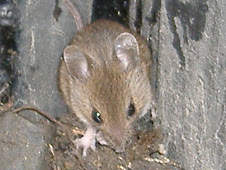
This dilemma was perfectly illustrated in the Conservation task that this mouse was involved in on Tuesday. Along side one of the burns (a stream) in the area, is a ride of thickly growing trees. These are mainly pioneer species like Silver Birch, Rowan (Mountain Ash), Elder and the dreaded sycamore. But there were also plenty of Oak, small leaved Lime and Ash as well. The ride was being opened up so that butterflies would benefit from the open glades that will be created alongside what will become a bridal way. Dealing with the sycamore is not a problem, it is prolific and invasive, it shades out other trees and if allowed to would take over. The Silver Birch while a beautiful tree, is one of the pioneer species that establishes its self very quickly, but would eventually die off naturally as more longer-lived mature trees of oak took over. But here they are trying to take advantage of the open glades and needed to be reduced in number. The Elder, while it to would eventually die off if this were full woodland, needed to be removed totally. They will return but in their present numbers they would have prevented the insects, butterflies and moths from re-establishing themselves. And while it will cause a small impact upon food for small birds in the short term, in the long term the greater the moth and butterfly populations the more food there will be for the birds, especially at breeding time.
The difficulty starts to occur when dealing with the Rowan and the Ash. They are useful trees as well as being beautiful, but while there were many young trees there, they mainly were growing in the areas of the glades. That meant they had to be removed. It is never an easy decision to cut down a tree, but it was only happening because of the long-term goal of creating areas where insects, moths and butterflies could live and breed.
The wood from these trees was deliberately left so that insects like beetles could bore into the cords, as well as providing hibernation sites for all manner of animals.
What made the work so poignant though was the fact that while working I received a call about growing trees and replanting work that will be happening in my normal stamping ground of Chopwell Wood. The difficulty is getting people to understand that sometimes to preserve a habitat sometimes we have to destroy what’s already there.




 Posts
Posts

