Showing posts with label Insects. Show all posts

Saturday, 28 February 2009

The Bees Knees

As today is the last day of winter, here is a a Bee resting on a flower to remind us of the summer to come.


Wednesday, 19 November 2008

Dancing Crane Fly

At the end of July I spotted a crane fly on the kitchen celling vibrating as if she were dancing. It brought to mind a song from the eighties called “Dancing on the Celling”. I did want to film that but there was no way I could get up there to film her.

It is one of those aspects of behaviour that can be misinterpreted. As if it were outside, most people would assume it was just the wind or air movements that was causing the vibrations. When in fact she does this to waft her pheromones out to attract a male and mate.

Well about a week later I had just come back from the supermarket when I noticed a crane fly out side doing the same. It may be the same one, but I just don't know. Anyway, I got the camera out and filmed her. Once I had got some footage I went back and unpacked my shopping and put it away. As she was still there I was able to get some really good close up shots of her.
As I always lean something new from watching wildlife, this time I got to see just how beautiful she was. I also leant that I needed to clean my kitchen windows.

Well here's the film of this female crane fly Anisopus fenestralis


Tuesday, 11 November 2008

Loving the Unlovely

While it can be relatively easy to get people excited about all the cute, cuddly and obviously beautiful wildlife, it is more difficult when we are talking about creatures that are seen as ugly or that generate loathing.

I well remember as child visiting the Sun trap Centre in Epping Forest, on a school trip and seeing a Kestrel for the first time. I pointed it out to the teacher and that thrilled everyone. I then, to the obvious horror of the teacher and most of the other pupils, took a large Beetle to the teacher to show her. But the tutor, probably an education officer, at the Sun Trap centre was thrilled as it was a male lesser Stag Beetle. It was a quickly learned lesson that the majority of people don't like many of the creatures we share the planet with. Also as several of the boys and a couple of girls, tried to grab the beetle as they wanted to stamp on it. This incident lead to me having a fight at school a few days latter, well not a fight but where I was beaten up by a girl as I refused to fight. I had always been told never to hit girls.

So while I had been praised for spotting the Kestrel, I became a figure of ridicule for like and protecting a beetle. Add to that I had been beaten up by a girl. It has never been easy being Green. Kermit and I are soul mates.

As I have grown up and older, I have discovered just how selective people are about what creatures they love. I have know people who love their pets, yet in their gardens they wage war on every insect that walks and flies. When it comes to slugs its genocide. Even with a beast as magnificent as an Eagle or a Harrier they suffer because of what they are perceived to do, at the hands of some.

So while I value each and every aspect of the Flora and Fauna we share our globe with, I don't particularly want to share my home with beasts like flies, midges or beetles. Just as I do not want a fox coming into my house. They are better in their habitat and me in mine. Nor do I use insecticides to kill flies in the house, not least because I don't want to breath in these chemicals myself. That's partly why I tolerate a spider or two in my home. Another creature that seems to generate loathing and hatred in some. My Ex who never wanted to harm anything would run screaming from the Bathroom if one that had fallen into the bath. I earned my hero status many times with women by rescuing many spiders from a watery grave. On a similar note recently on a bus I rescued a wasp that get trapped on the bus. While it didn't cause any screaming, everyone moved from one side of the bus to the other as the wasp flew around trying to get out of the windows. As I had one of my test tubes in my pocket that I use for collecting insects or other environmental samples, I was able to catch the wasp and release it at the next stop. The Bus driver told me that I should have just killed it.

Even my window cleaner thinks that I should clean up my yard, although he never told that to me, it a village and these things get back to me sooner or later. But if I had a neat and tidy yard it would also be sterile and I doubt that I would have a newt and a frog in my yard. Nor would my resident Robin find the insect food that keeps him there and feed.

Well here is a film clip of a House fly Musca domestica feeding on the nectar of Hawk weed. I think it is a beautiful critter, in its place.

However, to placate the folks that don't share my definition of beauty, here is something I am pleased to share too. From a podcast that I listen to Birds and Nature from a Pittsburgh radio station, I heard of this Blog by a woman called Monarch Chaser who is currently down in Mexico with the monarchs where they overwinter.


Sunday, 9 November 2008

Bibionidae Fly

One of the joys of watching wildlife it that I can lose myself in the moment. Sometimes my mind is working overtime, trying to work out the details that will help me latter identify a species, or by observing the subtleties of behaviour discover what this particular animal or bird is doing. But most of all, I can find myself my inner humanity.

There are many times when I do worry about the state of the planet, and there is a lot to worry about, but getting out and seeing the wonders of our world both excites and calms me. It reinforces my reason for fighting for the environment, in a small way, I have no delusions that I can or will do more than apply a sticking plaster to the wounds we inflict upon our planet. However, getting out and seeing what we share the planet with makes life worth living.

While I have covered some serious topics in my posts of late, for a while I want to just concentrate upon what is so special about wildlife. Not least because I am researching some much more serious topics for latter postings. Thus I need to have something positive to balance the negative of the acts of environmental vandalism that is going on.


So as a start, here is a film of a Bibiondae Fly, I think the species is Dilophus febrilis feeding on the nectar of a cow parsley.


Sunday, 1 June 2008

A Busy Do Nothing Day


About four or five months ago, I wrote to a gentleman that worked for one of the clients of the company I used to work for. As his company created wildlife and scientific films, I wrote to his as I thought that he would, if willing, be best place to offer me some guidance. As I did not hear from him, I had assumed that he either had not got my letter or had decided to file it in the bin.

As our relationship had not been anything but a professional one, I had expected any reply. However, I had a telephone call that really surprised me. While the intended recipient had received my letter, he had indeed ignored it. But one of his colleges found the letter and phoned me. I was just enquiring about the technical challenges of filming things like insects, and he was very forthcoming with some help and advice. While many of my initial ideas were quite good, with the guidance he gave me I should avoid some of the pitfalls that I would have fallen into.

He did ask if he could see any of the film that I have shot already, so I directed him to You Tube and he was kind with his words, but I know that as I am still learning I am not anywhere near the ability of the quality I would like to be at. But I am grateful for the encouragement and advice. But of course I inflected them upon you folks first.

One of the problems that I have is that there is so much I want to do, that I cant find enough time to do all I would wish. For example I did want to film the Bluebells in the Woods, but other commitments prevented me from doing that. I wanted to do this as the native bluebell is in serious danger of becoming extinct. As gardeners have planted bulbs of the Spanish bluebell in their gardens, they are cross pollinating with our native species and our woodlands are losing part of their character.

One aspect of the conversation that I had with the film maker that was invaluable was guidance on video equipment that can film in Infra Red. While I cant afford to buy anything just yet, I can see real possibilities of filming the badgers. As my regular reader will know, I have had my permission to access one of the Setts that I watch temporarily revoked, but I still have other sets I can get to. In fact I went round the other night and it looks as though there are a total of about fifteen or sixteen cubs that have been born this year. Further scouting out the other sites enabled me to rediscover one of the young sows who I had thought had disappeared. She has a white tuft on the black stripe on her snout, thus I rather predictably called her tufty, I had thought that she may have become a road casualty. But it looks as though she has moved to another gang, further she appears to have two cubs herself. I can not be sure as the problem with the other locations is simply that while its possible to see the Badgers, it is much more difficult to sustain observations at close quarters. Thus making it difficult to be sure of the individuals. It is normally at night that badgers are active and very inconsiderate of them for us poor naturalists.

As I was talking on the telephone, I saw some of the newly fledged tree sparrows visiting my yard and feeding on the black sunflower seeds I put out for the birds. I could tell they were newly fledged as they still had tufts of down on their heads. I think there were seven. So when I finished I set up the camera in the yard latter so I could try and catch them on film if they returned. Following doing that, I sat down with a cup of tea, there is a developing economy that would collapse if I stopped drinking tea, and saw that there was a repeat of another Natural History programme of the episode that I had missed this week.

Because of the Olympics being healed in Beijing this year, the BBC have been showing a series of programmes about China. This one, Wild China, stands out as much of the wildlife that has been shown is relatively new to the western world. Also it has an anthropological aspect and shows the relationship that the people have with the landscape and the wildlife. Personally, I am learning more about this part of the world. While much of it is a delight, the programmes also highlight just how endangered much of the wildlife is.

While there is little I can personally do on a practical level about there, I do get involved with practical conservation work here. As my regulars will know I am learning how to handle and trap small mammals. This is not just for the fun of doing it, but with this skill I will be able to help do proper studies of wildlife populations and help with conserving the wildlife and preserving habitat.

Coincidently the picture was take one taken about Easter by the other students while I was learning some of the surveying techniques. I was lucky as anyone who read my previous post on that, will know that my ponytail got savaged by a dog. Someone had supposedly filmed this, but the goddess must have been being kind to me as he filmed over that bit of tape. So that's one bit of film that will not feature on You Tube.

Also today, its been a busy do nothing day, in the post arrived a book. Because of my recent problems with Spy ware on my computer, I have been reluctant to look for new books on Bay. But now my old 'puter is clean again, and no there was no risk of me infecting anyone as I had inadvertently locked the Spy ware out from on-line access. Anyway, this book is a field guide to the Rare Birds of Britain and Europe. I am delighted with it as it has images of many of the vagrants that come across from America. As I have several readers who are in the US, and talking birds, I am often left wondering what these birds look like. Well now I know what some look like.

I am still tempted to get my hands on a field guide to the US so I can see, in print at least some of these wonderful avians.

Tuesday, 27 May 2008

The Bank Holiday


Yesterday, Monday, was a bank holiday. But unlike a normal bank holiday we had brilliant sunshine. Well we did in the north (Self satisfied Grin), in the south it was torrential rain. So it looks as though the south got the weather we were supposed to get. As nature often does though we are paying the price today. (Drip, drip)


After having a nice long lay in today, over the last two weeks I have been surviving on just four to six hours of sleep, I indulged myself. I only really had some shopping to do, and this enabled me to follow my diet and indulge in a Coffee and Cake. I say follow my diet as I have lost three inches off my waistline so I need to put on some weight so that my clothes fit me.


Yesterday, I went out and stood watch over an area that the Kites regularly visit. However I did not see the Kites at all. It may well be because of the number of people about enjoying the sunshine. I did however, get this short clip of film of a Wall Brown Butterfly.


Early in the morning I was trying to check my mail and such like, and I saw a procession of birds visiting my yard. The prettiest of them was the Collard Dove.


Later I was able to put up my do not disturb sign and watch the start of Springwatch on the TV. I can report for my overseas reader, that the Ospreys have two chicks!


Tuesday, 20 May 2008

The Crucifix Beetle


There were two wildlife stories that I read about yesterday that have real relevance to my local countryside and woodland. The first was that the National Trust have rediscovered the Crucifix Beetle in Wicken Fen in Cambridgeshire after an absence of more than fifty years. Now I know that is a couple of hundred kilometres from me here, (as I am aware that the geographers among you will swiftly point out). But last year I had seen this same Beetle in Chopwell wood. However, while I knew it was rare, I had not realised that it is one of the Rarest Beetles in the UK.

This discovery shows just how important our little wood is to wildlife, diversity and habitat. The other story is about another rare creature that does live in the local woods. While I may have seen one when I first moved here and started exploring the woods, it was so brief a glimpse of an Adder that I could not be sure. However, when talking to the Ranger, I discovered that it was in the location of a known but elusive colony.

Anyway, The Herpelogical Conservation Trust are asking for people to send in details of sightings of Adders so that a conservation plan can be drawn up.


Photo Credit; my thanks to F Koehler for the picture.


Saturday, 8 December 2007

Angle Shades Moth


The other morning returning, doing my impression of an icicle, from a night of watching the badgers, I noticed this Angle Shades moth that had settled on the doorframe of my shed. It’s actually what used to be the out house and colloquially known as a “Netty”. What is unusual is that this moth should be in hibernation but while the weather is cold, it is still warm enough for this insect to still be active.


Saturday, 6 October 2007

Speckled Wood Butterfly


I was nearing home on my way back from walking in the woods when I saw a butterfly on the wing fluttering from flower to flower in a bramble thicket. The fact that in October we still have wild blackberries trying to flower is a sure sign of climate change, but I was more interested in the butterfly. While I was in need of getting home, I stopped and watched until I could get a good clear observance of the butterfly. As you can see from the photograph it was a Female Speckled Wood Pararge aegeria. tircis


Thursday, 27 September 2007

Understanding Conservation


Conservation is a complex subject area, as often the question is, what is it we are conserving? As the landscape in the UK is all the result of human intervention, we are often conserving something that is a human construct anyway. Therefore a better question should be what is the purpose or effect of this conservation work. Only by understanding what the desired end result should be, does the purpose of the work undertaken in the name of conservation, start to make sense.

Far too often people assume that doing nothing and leaving an area of land alone and letting whatever are the strongest plants grow, is all you need to do. However, because we have been impacting upon the land for so many centuries, we can’t just leave an area of land to just go wild.

In previous generations, and we only need to go back three or four generations, it was the land management for agriculture that provided the UK with its rich, varied and colourful tapestry that is the British countryside. With the advent of industrial farming in the last sixty years, there was a dramatic effect upon the landscape. Traditional farming had helped support the diversity of habitats and hence the wildlife that lived within these diverse landscapes. With these changes to land use, the impact upon the populations of many species was devastating. I can sit and read books about the countryside written in or from the firsts half of the twentieth century and see just how much we have lost.

Therefore the challenge for conservation is to carry out work that provides the correct condition for many endangered species to live. However, this does present a difficulty as often this can and does mean destroying another form of habitat.

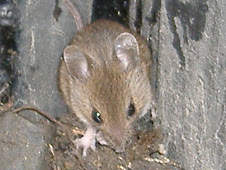
This dilemma was perfectly illustrated in the Conservation task that this mouse was involved in on Tuesday. Along side one of the burns (a stream) in the area, is a ride of thickly growing trees. These are mainly pioneer species like Silver Birch, Rowan (Mountain Ash), Elder and the dreaded sycamore. But there were also plenty of Oak, small leaved Lime and Ash as well. The ride was being opened up so that butterflies would benefit from the open glades that will be created alongside what will become a bridal way. Dealing with the sycamore is not a problem, it is prolific and invasive, it shades out other trees and if allowed to would take over. The Silver Birch while a beautiful tree, is one of the pioneer species that establishes its self very quickly, but would eventually die off naturally as more longer-lived mature trees of oak took over. But here they are trying to take advantage of the open glades and needed to be reduced in number. The Elder, while it to would eventually die off if this were full woodland, needed to be removed totally. They will return but in their present numbers they would have prevented the insects, butterflies and moths from re-establishing themselves. And while it will cause a small impact upon food for small birds in the short term, in the long term the greater the moth and butterfly populations the more food there will be for the birds, especially at breeding time.

The difficulty starts to occur when dealing with the Rowan and the Ash. They are useful trees as well as being beautiful, but while there were many young trees there, they mainly were growing in the areas of the glades. That meant they had to be removed. It is never an easy decision to cut down a tree, but it was only happening because of the long-term goal of creating areas where insects, moths and butterflies could live and breed.

The wood from these trees was deliberately left so that insects like beetles could bore into the cords, as well as providing hibernation sites for all manner of animals.

What made the work so poignant though was the fact that while working I received a call about growing trees and replanting work that will be happening in my normal stamping ground of Chopwell Wood. The difficulty is getting people to understand that sometimes to preserve a habitat sometimes we have to destroy what’s already there.


Sunday, 23 September 2007

Small Copper Butterfly


While walking home yesterday, I noticed the flash of colour of a small orange butterfly dancing upon the breeze. As anyone who has tried to watch or photograph butterflies can tell you it is not always easy to get a clear view, and I had to spend about half an hour patiently moving slowly to get close but after spending that half an hour dancing along the ride, skipping from Dock to Dock, I got this picture of this Small Copper Lycaena phlaeas


Thursday, 6 September 2007

Good Bug or Bad Bug?

It is strange that our culture provides us with different reactions to different insects. Here for example is a Seven Spot Ladybird Adalia 7-puncatata as a beneficial insect, even as children we educated to respect it, even nurture them. Yet the other picture is of a Burying Beetle Necrophorus vespilloides another colourfully marked insect yet while an equally beneficial one, is treated as though it were a plague carrier. Yet often our pets, cats and dogs, carry more germs then do these beetles. I just wonder why this should be?


Red Admiral Butterfly

While out the other day I spotted this newly emerged Red Admiral butterfly Vanessa atalanta, although it could fly, it was still drying off its wings near the top of a young oak tree. Until recent years I could have positively said that it will soon be travelling all the way down to the Mediterranean to over winter, but this butterfly could over winter somewhere closer because of the milder winters. It will not breed until the spring.


Thursday, 16 August 2007

The Intellectual and….


For my sins and since becoming involved with conservation in my local area, I sit on various committees. While it is the least favourite aspect of my duties, it does mean that I can have a positive input into the discussions regarding what is happening. However, I enjoy meeting with other people who share my passion for the local woods and the surrounding countryside. Last night for instance it was great to hear one of the local farmers talking with passion about seeing four of the red kites, quartering a neighbour’s field, as they were cutting corn. For me it was fascinating as he detailed behaviour that I have never observed myself but have only read of in books, the lucky chap.

Attending these meetings also have another advantage as it provides me the chance to take a regular route into my woods and see what is happening at various points where I have seen wildlife previously. Frequently I will see signs of activity and occasionally some of the wildlife its self. One of the other advantages of this is people will tell me of what they have seen too, and this all helps build up a picture of the vitality of the local habitats and the environment in general.

Last nights meeting was one of the better ones, as we covered a lot of ground and in a very positive manner. Further, the concusses of the people at the meeting was very much in favour of a much more conservationist approach to the work and activities in the woods. It is when we have everyone trying to find workable solutions to some of the problems that tackling the intellectual aspects of conservation can be so worthwhile.

Then today it was back to doing the practical. Rather than just do work on my beloved woods, I have started doing other conservation work as well. This helps me re-acquire skills, as much of the work will be the type of work that I have done before. Also it will allow me to discover the different approaches to solving similar problems, which other organisations use. Additionally by working on different habitats I get to see a wider range of wildlife.

For example today’s work was grassland management at a pond and wetlands site. It’s a nature reserve on a former quarry site that is rich in reptiles and amphibians. Cutting the grass and removing the sward and vegetation to keep the soil denuded of nutrients thus providing the perfect conditions for many wild flowers. This vegetative cover provides the habitat that voles, mice and birds need as well as the reptiles and amphibians. Further because of the wild flowers, it attracts numerous insects that can feed the birds, amphibians, reptiles etc.

While it was a bit windy the weather was great and the work while hard was not arduous and we could see results as the work progressed. However, while we saw no small mammals there were plenty of Toads and frogs to be found as we raked the grass up.

There were plenty of volunteers attending too, so that a number of objectives were fulfilled. This included litter picking, a job that I am trying to get all conservation organisations to call "Womballing", as well as trimming back some of the trees along a main path to make access safe and easy.

For me though the high light of the day was getting this picture of a Common Sympetrum Dragonfly Sympetrum sanguineum as it rested for a moment on some ones hi-visibility coat.