Showing posts with label Extinction. Show all posts

Tuesday, 4 March 2008

The Delight and Despair of Natural History on TV

A few weeks ago I said that on Mondays I could not be disturbed as I have been watching the BBC programme Life in Cold Blood. It lived up to my expectations and I know that there will be folks around the world that will enjoy it too. So I will not spoil any future enjoyment of my three readers and the cat.

However, the one thing that makes watching this natural history documentary and others like this is just how rare many of the animals in these programmes are.

Today two hundred species will have become extinct. That is two hundred lost today, another two hundred will be lost tomorrow. That is the rate of extinction the fauna and flora on our planet every day. That is the greatest rate of loss since even before the dinosaurs

This is much more important than we realise, not because we loose the beauty of our planet, as important as that is. But its the loss of resources that we have not even discovered yet that is the real loss. Who knows if a species that we have lost could have been a cancer treatment? That's not being emotive as many drugs on the market are derived from plants.

Also by loss of a species we could allow another pest species to become more prevalent. This happened with the Passenger Pigeon in the US. When the Europeans first invaded north America there were five or six billion of them. Their flocks were so large that they would darken the skies for hours as they flew over. But they were easy to shoot and tasted good. So they were shot barrelled and shipped in large numbers. Then in 1915 in Cincinnati Zoo the last member of her species died.

While the loss of a species that once had a global population the same as all the humans now on the planet was lamented it was not until the nineteen twenties that the effect of this loss became clear. As the Passenger Pigeon was a key part of the food chain that once removed lead to the explosion in the insect populations that were in part responsible for the dust bowl in the twenties.

Often in Natural History documentaries there is almost what has become a throw away line that in ten years, in fifteen years, in five years this critter will be extinct. I truly hope that will still be able to see the the beauty of our planet in real life and not just on film.


Thursday, 28 February 2008

Vendace Brought back from the edge of Extinction


When I was a child, I started making a list of the whole of the Flora and Fauna to be found in the British Isles. Really Geeky I know, but I have always been an odd ball. This was originally a paper record. Then back in 1981 I bought a computer. It was really basic compared to the ones available now, no hard drive, storage was on five and a quarter floppy disks. On this computer I was able to record much of the wildlife this country holds.

But what with work and other commitments I eventually abandoned the project. Also, as computers improved, I discovered that to transfer the data to a new computer was going to require retyping in thousands of records. In many ways it was a project that would have been ideal for the internet age.

While I did abandon this, it did enable me to discover just how rich our wildlife was, and I discovered species that I would never have known. One such species was the Vendace. However when I was doing this it was uncertain if this fish was extinct or not. It has been the loss of species that has been my driving force in conservation for most of my life.

Therefore, it was pleasing to discover this article about the Vendace and how it is now thriving in a new location when it has died out in three of the four of its natural locations.


Further Information One Two Three


Tuesday, 26 February 2008

Are Genetically Modified Crops Killing Bees?


Several months ago I started writing a piece about the rise in food prices and the unethical way that we in the west are diverting food crops to Bio-Fuels. I was going to also talk about the effects of climate change and the way that our changing climate could be effecting bees. As has been reported bees are suffering from a condition called, Colony Collapse Disorder.

Now while I strongly suspected an environmental reason for this, however as I always use good quality research as the basis for my postings, I did not want to blame global warming for this Colony Collapse Disorder if that is not what the sciences shows. Therefore I contacted people that would know what the current state of knowledge is. While I thought that it was likely to be an environmental factor, what I was told shocked me.

However, I needed to verify if what I was being told was accurate. Therefore I have been very busy ensuring that the data I was being shown was accurate. Further was the interpretation of the data correct.

Well I have long thought that big business, global business and its total disregard for the environment is pushing us to hell in a hand cart, but the data “Appears” to show that pollen from GM crops is killing the bees.

While I have strong reservations about Genetically Modified foods, I am not against them as long as they are properly tested. Something that has never happened. The research, while not conclusive, showed that when bees were feed on various GM crops lost their ability to navigate. Why this should happen is still a mystery, but its the only effect demonstrable in the laboratory that mimics what's happening in the wild.

I have spent much of my time asking some hard questions of the people who have supplied this data. Why have they not made this data public and why not go to the media? They told me that effectively they have been gagged as research funding is dependent upon “pleasing” vested interests. They cant go to the media as while the research appears to be impacting the immune system of the Bees the data was not conclusive proof and they reminded me of Arpad Pusztai. For those that don't know or don't remember, Arpad Pusztai gave a television interview where he expressed concern about GM as in his experiments of feeding GM potatoes to rats, they failed to thrive. Effectively the potatoes were less nutritious.

Arpad Pusztai, paid the price with his career.

While the science is not conclusive proof, yet, as the powers that be have halted any further research by these scientists, I now find this knotty problem in my lap.

As the Internet is the home of every nut job, and I am fully aware that to many as an Environmentalist I fall into that category, in breaking this news I could be being set up.
While all the documents I have seen look genuine, and while the story I have been told sounds “reasonably” credible, I still don't fully understand why I have been given tacit approval to break this story. While I know that I do have my readers here, three Americans and a cat, I have to trust that their reasons are genuinely altruistic. They needed a conduit like me to get this story out in the public domain.


If True and Accurate then we really have destroyed our planet. Charles Darwin accurately predicted that without Bees we would (The Human Race) suffer a total collapse of our ability to grow food in six years. Colony Collapse Disorder is a real disaster for us all. We really are going to hell in a hand cart.


Friday, 14 December 2007

I wish I had been Wrong - Part Two Saturated Oceans


While in the previous section of this post I have shown that predictions of devastating climate change is now inevitable. I have also shown that there are potential solutions if we can find the will to act.

While the attention has been focused on the atmosphere as climate change has been allowed to creep on, it is in the oceans that drive the climate where real damage has been allowed to become so polluted that we have created the situation where we cannot stop climate change.

The seas are now saturated with CO2 that it cannot absorb much more. If we don’t start to take real action today the effects that are already going to occur will only be the devastating beginning of the extinction of the human race.

Tuesday, 11 December 2007

Is there hope for Polar Bears in a Fossil?


It used to be that the scientific community would couch their arguments on climate change with comments that “It appears…” or “the models indicate…” or other such caveats so that they didn’t appear alarmist. There is a new sense of urgency in the scientific community as the predictions of the climate models are coming to fruition thirty and forty years ahead of what the models expected. This is even more pronounced in the Artic and Antarctic. Even some of the most sceptical sat up and took notice when the Larson B ice shelf disintegrated in only a few months.

When this area of sea ice, the area of Cornwall, broke away from the Antarctic, suddenly climate change switched from being something that could or would occur in the future, but became something that’s happening now.

While many people have been trying to raise awareness of the very real threat of this, our voices have been drowned out by the noise of the hot air of they nay Sayers.

The new scientific reports on climate change are having to revise forward the dates when certain events are expected to occur. The most noticeable is the loss of the summer sea ice at the artic. This year the volume and area of Sea Ice, matched what was predicted in climate models it to be by the year 2050.

While I could tell you of the implications of this for our climate, it is the effect upon two important species that rely upon the Sea Ice that is really alarming. With a reduction in the size of the habitat, the ring seal population will eventually fall to about thirty-five to forty percent of existing numbers. This will impact even more on the numbers of Polar Bears.

While the discovery of this part of a jawbone of an ancient Polar bear shows that they could have survived a previous inter-glacial period, the fact remains that polar bears will loose ninety-five percent of their territory when the sea ice disappears. Further, while some may be lucky and find themselves stranded on some of the islands dotted around the Artic, unless they have a food source, i.e. Ring Seals, they will still die off.

While I would love this discovery to be a source of hope, I don’t see it as much of one.


The News Story Here.


My thanks to WWF for the image

Wednesday, 24 October 2007

Mass Extinction and Climate Change

When I saw the headline of this story on the BBC web site, I thought this is not news, the IPCC (International Panel on Climate Change) have already reported that we will have up to a forty percent loss of species as a direct result of this man made pollution we call climate change. However, this research is new and marks an important change in the attitude of scientists. Previously the language used “Hedged the Bets” and spoke of what was theoretically possible rather than what was actually happening.

Part of the problem in dealing with the man made pollution that is climate change, is a psychological one. In the past we have seen pollution as localised, and no matter how bad it got, when action was finally taken, the environment improved and the problem dissipated. Even with acid rain as that was a regional problem, in Europe for example, when Europeans acted collectively the situation reversed. And while there still is some sulphur pollution that is causing acid rain, it is relatively negligible.

With Climate Change, we can not see (or at least some can) that there is anything we can do, as we psychologically assume that there is no point as China or India or what ever other country we want to use as an excuse, are not doing the same. What is needed is leadership, and that should be coming from America and Europe. As the USA is the biggest polluter, producing 24 tonnes of CO2 per head of population they should be taking the lead here.

But the problem is that everyone is hoping for that technological fix, that mythical grail of pollution free energy. As a planet we have squandered our energy resources. We have allowed a culture that is so reliant upon oil to develop that we are prepared to fight wars for access to it, and allowed our whole way of life to become dominated by the automobile. The problem is that to power our way of life we are burning billions of tonnes of oil and releasing all the carbon dioxide that the planet sequestrated away back into the atmosphere.

What this new research shows is that while climate change has naturally occurred in the past, and effected the biodiversity of our planet, our current man made driven warming of the globe could wipe out most of the life on our home world. That as I am sick of having to point out includes us.

If we lost important pollinators like bees how long would we last? That’s not a rhetorical question, but fortunately minds far better than mine have already done the research and tell us that we would last only six years. We would loose our ability to grow over ninety percent of our food. That is what mass extinction will do to us.

Even now when there are clear signs of the effects of Climate Change in the forest fires in California, we still do nothing. Unless we act now, if we survive, we will become the most hated generation of humans within our children’s history.

Friday, 28 September 2007

The Truth is Inconvenient

As I haven’t seen the Al Gore film the inconvenient truth, I cannot say if the film is party political or not. But Climate Change is political, if only because so many people are trying to keep their heads in the sand over it. I am glad that British school children will be getting the chance to see this film, as hopefully it will help capture the hearts and minds of the coming generation.

Even today the news that the old energy inefficient incandescent light bulbs are to be phased out is bitter news as it will not be until 2012 this happens. When it could have happened by the end of this year. That will mean at least twenty-five extra tonnes of CO2 will be released into our biosphere before the ban occurs. It’s all far too little, lets hope that it’s not too late.

After all the important line in the IPCC report that everyone seems to have missed says; “If Climate Change is not reversed, we will face temperature increases that will make life on this planet unsustainable”

I shouldn’t need to translate that but that means WE BECOME EXTINCT.

Already this year there is less sea ice in the Artic, and even conservative predictions are saying it will disappear by 2030, that’s only twenty-three years away. And once we have lost a critical mass of that sea ice, we then have thermal induction and convection from the sea, accelerating the rise in air temperatures. In reality if we lose the Sea Ice we lose the fight and the domination of Homo sapiens ends.

Therefore I hope this misguided parent looses his legal challenge to the film being shown to our children so that even if we fail to act, they will.


The original story on the BBC Web Site

Thursday, 27 September 2007

An Inspirational Conservationist


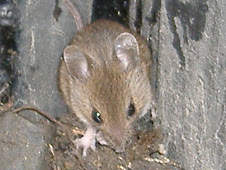
I was asked if I could help provide some green woodcraft activity for some of the Forestry Commission staff that were attending a meeting in Chopwell Wood yesterday. As this mouse and a few other members of the Friends of Chopwell Wood recently underwent four days of training and experience to enable us to pass on these skills, I thought that it would be a wonderful opportunity to show the Forestry Commission folks what we do in their wood. While I do frequently call it my wood, that is just because it’s my home base from a landscape and conservation perspective, and while the Forestry Commission owns the land, it is in fact the communities’ wood.

However, I only tell you all this to set the scene, as after I had set up the equipment, as any reader of my old Blog will know we made a Shave Horse and Pole lathe, I was offered some lunch and the opportunity to hear a talk by Keith Bowey the head of Northern Kites.

Again my regular reader knows, I am passionate about the Red Kites, any day that I see them lifts my spirits and the way that the local community gets excited about seeing these birds is amazing. Every time I meet a stranger and they see I am carrying a camera or binoculars (That’s all the Time), I am asked if I have seen the Kites!

Yesterday I met the man who has inspired that passion, Keith Bowey. Every now and then you get to meet someone who really shares a passion, and for me that happened yesterday.

I have personally felt that far to often when conservation projects happen that everyone should be told of what is occurring. That way people can be enthused by great wildlife. One of the things that the Northern Kites team did was to tell everyone that “Hey we are reintroducing this bird into the area” rather than keep it all secret. This has had the positive effect of ensuring that the birds were not persecuted. Persecution is why the Red Kite nearly became extinct in the first place. In the 1930s it was down to one breading female.

That was how close we all came to loosing this fantastic bird.

Right from the start, Northern Kites, got the community involved and all of the birds have been adopted and named by local schools, in fact we need the kites to breed faster as more schools want to adopt the birds that have yet to be laid and hatched yet! By being so public and getting the community support and involvement when one of the birds was poisoned in the first year, the community condemnation, especially from children, has prevented it happening again.

The Red Kites were one of the prime factors that caused me to move to my village in the first place.

I wish I could convey the passion that Keith Bowey has, personally he has inspired me a new and I can see great thing for my wood, our community woodland that is Chopwell Wood.

Monday, 10 September 2007

The Extinction of the Polar Bear

While my primary concern is the fate and protection of the wildlife and habitats in my local wood and its surrounding countryside, I am still deeply concerned about the fate of the Flora and Fauna of the entire globe.

Global climate change is predicted to cause the loss of up to forty percent of species on our planet. The extinction of the Polar Bear is rapidly becoming an Icon of our collective failure to take seriously the crisis that is the pollution of greenhouse gasses.

Over the last decade we have witnessed the acceleration of loss of sea ice in the artic. It is happening faster then any of the respected climate models would have predicted. This is one of the problems, very few scientists wanted to put their head on the block and say that the situation really is a crisis. Even now, the predictions are cautious and they are saying that in fifty years we will have lost forty percent of the sea ice habitat used by the Polar Bear.

This caution is what is really holding back the politicians from making the bold moves that are really needed. If the rate of acceleration stays the same the sea ice will be gone in five years not fifty. That will mean the extinction of the Polar Bear, as they need the Sea ice to hunt from.

As well as losing this Icon to Climate change, the loss of the sea ice will cause the accelerated melting of the land Ice, particularly from the Greenland Ice shelf. That will cause a seven-meter rise in sea levels and such a dramatic change to climate and weather that we will be shown once and for all the true effect of climate change.