Showing posts with label Ethics. Show all posts

Thursday, 3 July 2008

Oil Prices, Climate Change and Food

Yesterday saw lorry drivers in Britain lobbying Parliament over the price of fuel. While from an economic prospective, I can understand that people are feeling the pain of the increase in the price of oil, but there is actually nothing that government can do.

I have watched the situation carefully, trying to understand what is really going on. What was perplexing was simply that when the price of oil started reaching new and record highs, it was the forward price that was rising. That meant oil for delivery in six weeks was at $120 to 130 per barrel, this price for immediate delivery stayed at $75-80 per barrel. While this has now changed upwards, the oil companies profited from this for over eight weeks selling petrol at the price it would be in six weeks time, while they were only paying for it at the $75-80 per barrel mark.

While this profiteering by the oil companies was a factor driving this it could not explain the whole of what was driving the market. The other aspect that doesn't make sense is that while the current global use is close to the current output, there is still more production than use. On the classic supply and demand principals of economics there is no logic to this.

There is a new factor that has come into play, that of the speculators. While there has always been some speculation in the commodity markets, with the rich and the super rich no longer making money from property vast sums are being ploughed into commodities like oil and wheat. However, while this is an important aspect that is driving the price, it is not the only factor. If it were then they will get their finger burnt when this bubble bursts. As it will.

The real difficulty is that of politics and the lack of political will to tackle climate change. Part of the political factors is the Iran question. While I personally don't like the idea of Iran having nuclear weapons, the rhetoric that the US government is using, is making the oil producing states and the emerging economy of China very nervous as they fear that Bush could suddenly rack this up to war.

While I personally doubt that even Bush could be that stupid, I can understand the rest of the globe becoming wary about this and the effect upon oil supplies. Thus some nations are increasing their stocks of petroleum.

The other political aspect is the lack of action regarding Climate change. This is the part that really makes my head hurt trying to understand the logic here.

There is a lack of investment in refining capacity, and the oil companies don't want to make that investment because they are worried about immanent sea level rise. They don't want to build on or at the coast where refineries have traditionally been constructed, as they would be lost when the seas rise. Nor do they want to build inland at a greater elevation, as that would mean the oil industry is acknowledging the reality of dangerous Climate Change.

Even looking at all these factors together still only provides an incomplete picture. But before we look at the other factors, I want to deal with three issues, not least the price of Diesel. The truck drivers protest and lobbying of parliament has provided a useful hook to examine the problem of rising oil costs. But the price of diesel is actually a symptom and not the problem. The reality is that there are to many trucks on the road. That's not a political or environmental statement but an economic one. There are twenty five percent more trucks than there are loads to carry. Even if the fuel costs were stable or even falling, there still would be businesses failing. The difficulty is that the price diesel is accelerating the failure of businesses that are failing anyway. It is painful, that I understand, but nothing can or should be done to keep lorries on the road.

The other area where the price of diesel is hastening the end of a moribund industry, is fishing.

For the last twenty years in Europe, we have continued taking fish from the breeding populations of the fish we use for food. It has also been happening all around the world, but here in Europe we actually have good data that shows what needs to be done. As during the Second world war when fishing was not possible particularly in the North Sea, fish stocks recovered and when fishing resumed fish was abundant. The only way of ensuring a fishing industry in the future is to stop fishing now. Not reduce the catch but a complete cessation to fishing and that has to be for ten years.

Fishermen will wail in protest at that, but if not there will be no fish to catch in ten to fifteen years as we are currently harvesting the breeding stock. The increase in diesel costs means that the boats can no longer afford to travel the great distances searching for the fish. They are having to search for fish that are not there. When they do catch fish, they are smaller, often not even having reached sexual maturity. Again this increase in the price of diesel is not the problem it is and has been the industrial scale harvesting of the seas that has eliminated the fish stocks. There are also additional factors such as warming seas driving the remnants of the fish populations further north, but the longer that fishing continues the faster the fishermen will kill their industry.

The last point regarding oil prices is that of speculation. The immorality of the rich gambling on the price of oil and foods, beggars belief. They are making money off poor and vulnerable people. Here in the UK the price of heating oil will be around £1200 ($2000) per delivery this winter at current prices. In many rural areas where there is no gas, that will mean the poor, the elderly will suffer, as in cold weather that delivery would only last four to six weeks. I fear that people will end up dyeing from cold this winter. I am saying this now as I will rage when it happens.
However, the speculation on the oil price is only part of the picture as it is the speculation on foods that is really what is driving the up the coast of oil. I can see the puzzled looks from here, but as the value of crops like wheat and maize go up, more farmers are planting them. That means there is and will be, a greater demand for diesel to power the tractors.

It doesn't end there, as our chemical based farming is reliant upon fertilizers that are made from oil. It is in fact this factor that is what is really driving up the price of oil.

We obviously do need to feed the world, but we have become so fixated upon the chemical inputs to grow crops that we are failing to utilise the traditional methods of feeding the soil.

This is why we are all having to pay more for oil and food.

It is a complex picture, and it has taken a while to unravel what is really happening, but this is all the result of our addiction to oil.


Tuesday, 25 March 2008

The Embryology Bill

As my personal ethics are firmly based within what is right for the environment, I find myself in the strange position of agreeing with the catholic church. However The Embryology Bill that is going through parliament at the moment will not allow human-animal hybrids to be created so the facts need to be outlined first.

What the bill would allow if passed, is the use of egg cases of animal ova to be used. Filled with human cells, these cell lines will then be used to develop stem cells. Therefore it is not as has been said human and animal hybrids that are being created.

Further my moral objection to this work is much more based upon the fact that we are playing about with human genes when we don't fully understand what most of the genes do. For example there is a gene in the human genome that helps protect against malaria. Great you could say; except this same gene is also the cause of sickle cell anaemia.

While it would be a great benefit to mankind if a way could be developed to reduce the risk, or even cure malaria, would it be justified if the cure caused other conditions? Unlike conventional drug therapies or treatments, introducing new genes or new cells to treat a patient could alter the genetic make up of subsequent generations.

Therefore, some new wonder treatment, could be discovered and used long before we discovered, generations latter, that it was the cause of something previously unknown and possibly more serious than the original condition.

Medical science is littered with wonder drugs that it was latter discovered had serious side effects. Here in the UK we recently had a report on Seroxat an anti depressant that caused an increased risk of suicide in some users. Further, the company manufacturing the drug knew of this at least two years before being forced to notify the authorities. They only did this when the media discovered the truth.

Now I can envisage some new wonder gene therapy being developed, making some business billions of dollars and them fighting tooth and nail to protect that income even if it started to look as though that therapy was causing a problem.

Equally, with the process of developing these cell lines in animal ova, there is a small chance that some of the animal genes could combine with the human DNA. If that were to happen it would take years before that was even noticed. This could lead to disease that are at the moment exclusively animal becoming infectious to humans.

Inadvertently we could be on course to creating genetically modified humans. I realise that for the people with conditions like Parkinsons disease or altzimers, this form of stem cell research could be seen as some great new hope, but every technology has a down side, an unforeseen consequences that a lack of research fails to see.

It is the blinkered rush into these new technologies that could cause problems worse than climate change that are the basis of my moral objections to this Embryology Bill. We are already seeing that GM crops are killing off bees, I foresee that if allowed this research could kill off the human race.


Friday, 8 February 2008

Censorship Of Video Games

Sometimes life can throw you some strange serendipity. In that last couple of days I have been talking about censorship on television with a friend. Then today on the BBC News website was this article.

Personally I have never been that interested in video games. I am disturbed by the titles that are advertised, like Grand Theft Auto. But having not used them, I couldn't really comment on the content. However, from what I have seen I am disturbed by the casual violence and the glorification of crime that these games portray.

Now while I am in general a liberal and I do think that adults should have the freedom to choose what films they watch, the problem is that children are being allowed access to much of this material. I have experienced two examples of this; while helping out at a local school in their garden one of the children who was only about ten years old asked me if I had seen a horror film. I cant remember the title, but I knew even as I was asked it was a film that was supposed to be an adult film. I don't know if this child had parental consent to see this film, but I suspect he did from what he said, but the point is that with access so easy for children, the companies that publish films and video game need to be much more responsible.

The second example I was told about by an Education Welfare Officer, she had visited the parents of a child who was not attending school. While trying to talk to the parents, and competing for attention with the television, she realised that what the parents were watching was a Hard Core sex video. Obviously, that is an example of bad parenting.

However, even on mainstream television there are far to many examples of graphic violence. While an exposed breast at the Super bowl a few years ago, the incident that sparked my private discussions, caused such an outcry. Personally, I would rather have to explain to a child who accidentally stumbles upon nudity, or even sex on television than to try and explain acts of violence.

However there is a much wider problem with this material. It is clear that we do have a problem with violent children. While it would be far too over simplified to just blame it on videos, DVDs and Video Games, they must be having an impact. For example police officers who have to deal with the vile crime of child pornography, and have to view these images, receive psychological support as it has long been recognised that these images do disturb the viewer. Therefore an endless diet of violent images, especially on young people, must be having some effect too.

While there is no direct causal link between playing video games and the violence and crime we see on our streets, I am sure the link is there.


Thursday, 7 February 2008

Tesco Lies to the BBC

While I am sometimes up early enough to catch Farming Today on BBC Radio Four, it starts at 5:45 in the morning, I was really glad that I did today. As I have written about previously, here in the UK what's called a standard chicken some supermarkets have been selling for three pounds each or two for five pounds.

Following a series of programmes on television that highlighted the low standard of welfare inflicted upon these birds to achieve this price, initially Tesco's said that it had seen no impact on its sales. On farming today they even reported that Tesco reported an increase in sales of standard chicken. My sources tell me that this was a lie. In fact as I posted just last week Tesco have notices up in store saying that they are trying to expand production of the high welfare chickens.

Today, Farming today were reporting that Tesco will be selling standard chickens at one pound and ninety-nine pence as a special offer.

After checking with my sources, I discover that far from the television campaign not impacting sales, Tesco have lost sales. People are rejecting the low welfare standard chicken and as they have done little to source high welfare chickens, they are loosing market share.

It just goes to prove that the supermarkets don't follow the customers lead as they claim but will inflict on us whatever rubbish will make them a profit.


Wednesday, 6 February 2008

Processed Food Is Causing Tropical Deforestation


While the link to quality food, supermarkets processed foods, deforestation and climate change is not in the forefront of many peoples minds, the link is a direct one.

The food industry will always use the cheapest ingredients it can source. While there is the obvious link regarding the miles that food travels, however the more damaging problem is in fact regarding the use of palm oil in almost all processed foods. The economics are simple, palm oil, freshly processed from Indonesia sells for less than .09 pence (20 cents US) per kilo. Thus as would any business, the food industry uses palm oil by the tonne (many million tonnes), as a way of maximising profits. Something that all businesses are legally required to do for the benefit of shareholders.

While all the talk in the media has been about palm oil as a bio-fuel, an alternative to petrol and diesel. What people are failing to recognise is that there already is a very high demand for palm oil from the food industry. Also it has to be said, most soap is made with palm oil. The brand Palmolive takes his name quite simply from the fact that it is made from 90per cent Palm Oil and ten percent Olive Oil. I am not singling out that particular brand as almost all soap is made using Palm Oil.

Therefore, in relation to climate change, the bio-fuel industry will have a tough time sourcing enough palm oil. While this commodity pressure should be good prices, the reverse is actually the reality. This is because vast areas of rain forest is being felled and replanted with palm oil. In Borneo half of the rain forest has been lost in the last fifteen years. While some NGOs are saying that this has happened in the last ten years, but I am quoting and relying on official figures here.
While the governments of Borneo and Papa New Guinea, are trying to stop this happening the planters are getting in the illegal loggers and clearing the land. It has also happened by burning down the forest, but as the timber can be sold even as illegally felled timber, the companies that create the plantations are creating clear land. The governments then agree to this now cleared land being planted with palm oil.

This is creating an oversupply, that is depressing the price of the palm oil. Additionally because of the loss of government revenues from managed and sustainable logging that the illegal logging, it is no wonder that the governments agree to these new plantations being established. These are developing countries who do not have the resources to replant the forests.

There are other financial and social impacts from the use of palm oil by the western food industry. As many of the peoples that live on and around the land where the plantations are established are predominantly creating and deriving their livelihoods from the forests, they loose their means of existence. Often these indigenous peoples are not earning money or generating monies by this hunting and gathering, their needs are ignored. However, without their traditional lives, they then become a burden on the state as they become jobless even homeless.


This is the reality of our so called cheap food in the UK and the west. Furthermore we already have many other fats and oils that could be used in manufacturing these processed foods are available. Olive oil, Grape seed oil are but two and they are considered beneficial for health. They are not used not because they are drastically more expensive but because they can not be manipulated to greatly extend shelf life. That also raises a question about how fresh our food really is, but I may tackle that at a later date. However, with all the problems of obesity that we face in the western world, in my mind at least it makes me wonder if the prolific use of palm oil in our foods is part of the problem? That said what is clear is that precessed food is a significant contributing factor in deforestation.

While this posting has focused upon the unknown or ignored aspects of why our food industry and our eating habits are significantly adding to deforestation, and our changing climate, as in Borneo deforestation is placing the Orang-utan at serious risk of extinction. All this as a direct result of our demand for palm oil. Climate change affects us all, in ways that most people don't understand or realise, from the poor displaced peoples in Indonesia to the rise in obesity in the west. That is why conservation is really important for all our futures.


As climate change is a reality we all need to send signals to the food industry and stop them supporting, indirectly, illegal logging and directly other unethical business practises.


Education Is De-skilling our Children


Earlier on today I was drafting out a posting on a completely different topic, but as today is Shrove Tuesday, the topic I was writing about reminded me that in the village store I had seen an instant pancake mix. My initial reaction was that surely people know how to make pancakes?
However, I realised that actually it is quite likely that people don't. Further, I realised why this was and it is in fact at the root of many of the social problems that exist today. Back when I was at school even us boys were expected to do one term of cooking. It had the fancy title of Home Economics, but basically it was simply cookery. I enjoyed it and predominantly by teaching myself, I learned how to cook. I am not perfect, even now I can get my timing wrong and I have served starters after the main course!

However I went to school just as the industrial age was ending. No matter what your real talent was the schools then were churning out factory workers. Or so they thought, during my last two years at school on the bus I would pass the factories where I was expected to work. Yet in those two years I saw factory after factory close. I was fortunate as I got a job in a Horticultural Nursery, very poor wages, but a job.

The certainties of the whole basis of the education system just fell away. The education system then emphasised, even more than it had previously, that exams were the way to go. When I left school O-levels were what was required. Then the emphasis was pushed onto A levels, (the equivalent of a high school diploma). Now all the emphasis is on getting a degree.

What has been lost in this overly academic thrust in the education system is the chance to experience different subjects, especially the practical ones.

That's the base of this triangle, another aspect is the number of women that are now working. This is not an anti-feminist rant, the fact that a woman is just as good as a man in any job has been proved time and again. However, this change has not come as a choice that women are free to make as most of the time women have to work just to make ends meet. When I was a child on the news you would hear about “A Family Wage”, now even two young working professionals together struggle to afford to live on a joint salary. Therefore, parents are so busy working that they don't have the time to pass on the skills of cooking. Additionally, the food industry and the supermarkets are tricking us into buying all these highly processed convenience foods. Further undermining the confidence of people in their abilities to cook.

Finally is the hype that is marketed to us about what we should be consuming and the lifestyle we should be leading. In the developed western world, while we are all richer, anxiety and depression rates are at an all time high.

I don't know first hand what the situation is like in the US, as an example, but here in Britain very few families sit down at the table for a meal. More often than not, its a plate on the lap in front of the television. Further, sometimes because of shift patterns or other commitments different members of the family are eating at different times.

While I am not advocating that it should be the woman that does the cooking, when I was married I did most of the cooking. But the loss of household skills and the reliance on “Fast Junk Food” is de-skilling a whole generation. This all impacts upon the loss of social cohesion, as a family sitting around a table eating and talking builds bonds, while eating microwave mush in front of the television just deadens the mind.

It would have been all to easy to have dismissed the appearance of an instant pancake mix on the shelves of the local store as people being lazy, but its really the loss of skills and the confidence to try that enables the food industry to make and market products like this successfully. When I first started to cook, I made my own recipe book. Pancakes was the first recipe I wrote in the book.

Personally I would encourage everyone to make their own. Apart from it being way cheaper than this manufactured junk, it can also be fun.

Here's the Recipe:

3oz (75g) of flour
¼ pint (150ml) of milk
One Egg (Medium or Large)


Mix the milk with the flour until you have a smooth paste. Season to taste with salt and pepper, beat in the egg, you should have a pouring paste but you can add extra milk to make a pouring paste.


It really is that simple, but if you have never been shown or had the opportunity to learn, well now is your chance.

What is particularly crazy about all this processed food is that it all contributes to climate change. The factories that create this stuff use far more energy per portion that you would do in your own home manufacturing it, then with child and frozen food its all kept in open chillers in the supermarkets. Add in the energy used to transport it around and the economics of processed foods start to look crazy.

It is worth noting that the supermarkets don't sell convenience foods for our benefit, while they may say they are offering choice, really they do it because they make more profit on these foods.


Therefore save money and save the planet by learning how to cook.


Friday, 1 February 2008

Closing Down Four Coal Fired Power Stations


Yesterday, because of the poor weather forecast, I decided I would do my shopping early. Following my previous comments about wanting to avoid the chemical contamination of my foods by the “Food Industry” I have been using up more of the ingredient, stock and store cupboard items that I always keep, so I knew that this would be a big shop. At times like this I keep on saying I should hire myself out as a pack horse.

Sticking to my resolve of avoiding anything that would be better suited to a chemical factory, I loaded up my trolley. I knew it was not going to be a cheap trip, but even I was surprised when the bill came in at under forty pounds. Normally when I have to restock its over fifty.

So while its not yet proof, it does look as though avoiding processed foods is cheaper. Nor had I stinted on quality or quantity. But I had looked for any bargains. One of those bargains that I got was a Brisket of Beef, that was reduced because of a short sell by date. While I prefer to use the butchers, a joint of properly matured, 21 day, British beef was not one I was going to miss out on. And as I write, I am happily digesting the first meal this produced.

The other item that I bought was a Chicken from the high welfare standard range. Normally I would only buy free range, but I wanted to make a statement to the supermarket, that I will only buy chickens, or any meat for that matter, that comes from a high welfare standard. I also noted that the “Standard” low welfare birds have actually gone up in price. Further, the supermarket has signs up saying that following the television programmes, that they were striving to meet the increased demand for the higher welfare standard chickens, but there was now a shortage. Coincidently when I got home I made some enquires and discovered that the price rise on the “Standard” low welfare birds was forced upon them partly by farmers who are now earning triple from each bird, up from three pence to nine pence, but more importantly from customers who were appalled by the fact that the supermarkets were only paying the farmers third world prices.

Back at the supermarket, as Consett is situated at the top of a hill, it gets quite battered by the weather, and the high winds were battering us yesterday. However, while waiting for the bus to get back home, I spotted a bird that I surprised to see a Great Bustard. I wished I had had my camera with me, but with all this shopping to carry...

That was not the only pleasant surprise I had either as when I got back home I took my recycling to the recycling point and discovered that the council has installed a new bin for plastics. It has long been frustrating that plastics the biggest polluter and the greatest volume in most peoples bins, is not recycled. Finally it is happening.

Then to top all this, I got a phone call. As I mentioned in a previous posting, I helped one woman in the village reduce her electricity bills. Suddenly with the substantial rise in gas and electricity prices people are starting to see the wisdom of reducing energy consumption. I was being asked to help a small group of five women who were trying to reduce their bills. So today I went and had a chat with them.

The first comment I had to make was just how hot it was, in this woman's home. Granted it was blowing a blizzard outside, it was boiling in the house and everyone was wearing tee shirts. So the first thing I suggested was that everyone put on a jumper. The woman who was hosting this symposium said; “Oh no need I will just turn the heating up”

By explaining that it a lot cheaper to put on a jumper (American translation: Sweater) than racking up the heating they could all save up to forty percent off their heating bills, suddenly they could see the point. For example one woman last year had a winter quarter gas bill of over four hundred pounds. She is still paying this off. So reducing her bill by one third or more would make a real difference to her and her family.

The real shock was that all of these women had each got two low energy light bulbs but had not fitted them. One of the tabloid papers here, I will not name one of Rupert Murdock's trashy papers here, on 19th January gave away four and half million low energy light bulbs. All of them had these twin packs, but none had bin fitted. So I did a trail around fitting light bulbs. I gave some other advice but I am amazed at how people don't seem to be able to do the obvious things. I know that this is all small scale but little by little people are realising the value of saving energy even if only to save money.

However, the real story here is that in this consumer give away, if all those bulbs were fitted, in one year alone it would stop three thousand five hundred tonnes of CO2 going up into the atmosphere. Even more staggering is if we all changed to low energy bulbs we would reduce energy consumption by the equivalent of closing four coal fired power stations.

So why not change your bulbs today?


Sunday, 27 January 2008

If the list of ingredients looks like a chemistry lesson then...


This Last week for me has been very busy. The demands on my time are coming quite thick and fast. Some of these I will detail in latter postings. However there are two instances that I want to tell you folk about. Firstly, as I previously said I bought a new computer and have been busy setting this up. As I have needed to add hardware and software, I do this an item at a time test it before adding the next bit. This is far more time consuming than just putting it all together and hopping for the best. It has and does pay off in the long run.

However, this meant that I had lots of spare time to sit and watch the birds as they come and visit my yard. This occurred at the same time as the snows came, so I was able to see that my efforts were really worthwhile.

Then as I was awaiting the computer load some software, I went off to make some tea. On returning I suddenly realised that a Sparrow hawk was perched on the power line that runs parallel to my property. I rushed downstairs for the camera but it had gone by the time I got back, but it had been only twenty feet from my window, a real treat.

However, it doesn't end there, while out and about I missed seeing the bird again.
I had returned and noticed that two of the fat balls had been pulled off and were laying broken open on the ground. I presumed by the jackdaws, this wasn't deterring the birds as they were still feeding on them where they lay on the floor. Then a day or so latter I bumped into one of my neighbours who told me that they had seen a bird of prey, that had swooped in and (they think) took a small bird. This could be the explanation of how the fat balls were felled. As they were securely tied I had been surprised to see them on the ground. I would have loved to have seen this, but I cant be everywhere.

This has made me look carefully at where I am positioning the food so that I am not providing a bird table for the hawks.

It just shows that doing just a little can help a lot.

The other thing I wanted to talk about is food. Following the programmes on the food we are having foisted upon us, I have been even more careful about what I am buying. While I am pretty clued up, even I was appalled and revolted by what I was discovering. When I did my shopping last week I took more time to look to see if I could avoid all the foods where the practices of the food industry are unethical and unhealthy. That day I found that by avoiding the products that I would not want to eat, my bill at the checkout was seventy five percent lower.

This got me thinking, was it possible that by buying and eating ethically was cheaper?

As I had a receipt from a previous big shopping trip, this is an unexpected advantage of using reusable bags, and I looked to see if I could buy similar goods without compromising ethics and not breaking the bank either. For example, pasta that contain what is called the hidden egg. These are the broken eggs that come from battery farms. They cant be sold but go into ninety percent of the foods that contain egg. While I support free range by buying free range eggs, it looks as though I have for years been unwittingly supporting unethical farming via these products.

Additionally I wanted to avoid eating anything that was “mucked about”. I do try and eat healthy foods, so the products that are supposed to be more healthy will appear in my shopping basket. But as was shown in these programmes, most of these are still full of salt and sugar. Not only that the fats in them are far from healthy, and in the UK at least, the labelling regulations enable them to hide all the crap, more from what they don't say. While I have known for a long time that we need to read between the lines on labels, it became clear that no matter how aware you are, you can still be fooled. Therefore I am now adopting the simple rule; if the list of ingredients looks like a chemistry lesson then I am not going to buy it. On that principal I will stop buying the instant soups that you make in a mug. Looking at the ingredients in one of them, made me realise just what garbage is in them. Further, as I enjoy making soups, why not go back to what I used to do and make a big pan full when the veg is cheap and freeze some for latter.


Well I following my chemistry free approach, and I saved myself thirty five percent on my grocery bill. It has meant that I have to spend a little more time in the kitchen, but it is still fast food and I doubt that I have spent more than an extra hour in the kitchen this week. And part of that extra time has been spent cooking something special anyway.

What I did that was a bit special was as the result of actively seeking out a decent butchers. The one in the village is not that brilliant, and while the one that I had been using in Consett is reasonable, there is a lack of choice and variety. I don't understand how or why anyone would want to limit what they are prepared to eat, but locally it seems that folks will stick with eating the same limited foods day in day out. Therefore, I went looking for a better butcher, and I think I have found what I wanted.

I have two ways of telling a good butcher, the first is one that makes his (that's not being sexist its just that most butchers are men) own sausages. And if they have offal or the less popular cuts of meat available. It was the discovery that they had an ox tail available that prompted me cooking a large pan, three litres, of oxtail soup.

I also got some of the sausages, Lamb and mint, and they were a wonderful flavour. What's amazing is that a real butcher is cheaper than the supermarket anyway, and the quality is normally superior to the supermarkets anyway.


So it looks as though even with my time pressures this week, cooking and eating a healthy ethical diet is cheaper than the supermarkets would have us believe.


Friday, 11 January 2008

Chickens and Welfare Standards in Farming


Here in Britain on one of the TV channels there has been a season of programmes looking at the production of cheap chickens. For my overseas readers, it has been possible to buy two “standard” chickens for five pounds. Even buying them individually they are still only three pounds each.

Now having once been a vegetarian simply because when I adopted that diet in the late 1970s it was simply that I could not trust the quality and the ethics of the meat being proffered to me. Over the years farming practices did improve amongst a few enlightened people, and it became possible to buy meat from ethical sources. I even kept my own chickens for meat and eggs so I know from experience how well chickens can be kept.

That experience also highlighted for me just how detached people have become from their food supply. Even when offered a fresh, humanely killed plucked and dressed bird they would rather eat a cheap chicken from the supermarket, as they didn’t like the idea of knowing where their meat came from.

It is this fact that allows the supermarkets to control the way that farming and welfare standards are administered. The supermarkets and the food industry in general are forcing farmers to reduce the costs of production by constantly sourcing some of its product from cheep low standard overseas producers. Effectively forcing farmers to produce low welfare standard meat at the costs of third world farming within a developed world economy.

Here in the UK every attempt to raise welfare standards by farmers, NGOs and even the government are being undermined by the supermarkets. The only ethics that these businesses have (Supermarkets and the Food industry) is that of making a profit, no matter what the cost.

Listening to the discussions and debates on the news it struck me that all the excuses that were being proffered by the industry could so easily have been interchanged for a debate on slavery. Apart from the ethics of low welfare standard production, it is these intensive methods of food production that have lead to the food scares. In the UK there was a problem with salmonella in eggs, now happily eliminated, but it would never have occurred had the welfare standards been higher.

All the supermarkets could eliminate this problem if they were to pay farmers more than three pence per bird, and only selling chickens from the higher welfare standard methods of production. While I would love to see only free-range production I am realistic and realise that far to many people don’t care about the food they eat. That is reflected in the rubbish that most people eat instead of real food.

Equally the food industry needs to respect when the government imposes higher welfare standards. Here in the UK a pig production company, DRS, has gone into administration leaving around ninety farmers unpaid. While the reason for this company going bust is related to Foot and Mouth, an important aspect is that the supermarkets refused to pay more for the higher welfare standards of UK pig farmers and switched to buying imported pork where welfare standards are lower.

All this means that we the consumer are being conned into thinking that food must be cheep. Yet while we can add to the carbon footprint by importing foods, we will eventually loose our means of producing food. That makes us in the UK vulnerable to any sudden hike in energy costs, or even any terrorist action that disrupts food imports.

In the UK there is a major problem with obesity, if the government actually started to impose higher standards on food and food production then this would improve health and go a long way towards the UK reducing its green house gas emissions.

This is all a pipe dream I know, as the trouble is that profits are more important than ethics.


Tuesday, 14 August 2007

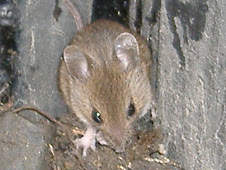
Welcome to The Wood Mouse’s Diary.

Previously I was using Yahoo 360 to keep a web log or a journal on line regarding my activities in and around the bit of countryside that I live. However, yesterday I discovered that Yahoo was passing on details to the Chinese government of its users and the web sites they visited. As a result of this the Chinese government has jailed dissidents or decentres in china, this includes one journalist who has been given a ten-year sentence for trying to seek out the truth.

Thus I decided not to support Yahoo in any way shape or form, and have moved my Blog from there. Now I will be posting here. I hope that other people will support Human Rights and refuse to use Yahoo. As Yahoo have only done this for financial gain, if no one uses their sites or products they will soon discover that they will be the losers here.

One thing that my readers will discover my politics are neither of the Right nor the Left, my political philosophy is Green. Not a green tint, but a deep green that flows through everything I do. I am a strong believer in Human Rights but not where some so-called rights infringe upon other peoples liberties.

I try hard to make my postings entertaining and interesting. At times they will be humorous, but at other times they will be challenging. I hope that you folks enjoy my Blog. You may disagree with what the mouse says but I moved here because of freedom of speech and I will only ever say what I truly believe

Mouse