Showing posts with label Habitat. Show all posts

Sunday, 5 October 2008

Cattle in Conservation

Because the landscape in the UK countryside is shaped by the activity of man, using domestic animals to manage nature reserves is vitally important. In the past traditional farming and agricultural methods created habitat that wildlife was able to utilise.

At Seaton Snook, a nature reserve near Tees Mouth, cattle are used as they eat the long grass. This in turn encourages new fresh growth of new grass and of other herbage that in turn provides habitat and food for the invertebrates that are the start of the food chain.

As Tees Mouth is an important National Nature Reserve, this provides food for the birds in spring and summer, while the fresh growth vegetation encouraged by the cattle grazing in turn provides grazing for migrant geese and swans in the winter.


Saturday, 9 August 2008

Badgers and Orchids

Because of a couple of long very busy days, by five in the afternoon I found myself falling asleep. So I decided to go to bed. Getting back up at ten, once I had eaten I decided to use this time productively. Therefore I went off to check out the two new badger setts. While there is nothing significant to report with them, I am curious why these have appeared at this time.

In the normal course of events, less dominant female badgers will move to other setts and this helps prevent in breeding. Also males will be driven out from a family group again preventing these males from mating with sisters and other closely related group members. Additionally, while the family group maintains a large central home sett, that group will have smaller satellite setts where different members of the family can go off to cool off or get away from tensions. Much like the way that humans can and will avoid other members of the family to maintain harmony.

Therefore, while having one new sett starting within an existing territory is rare, it does happen. However, having this happen twice appears outside what happens normally. It could just be that it has not been recorded before, so at the moment I am working on the hypothesis that something has happened that has disturbed or disturbed another sett elsewhere.

I may never find out what has caused this to happen, and the two new setts are settling down quite well, thus while this may be a curiosity it could also be that this is quite normal. What also has me wondering is why the dominant male has allowed this? As the old Brock became a road kill in February and a younger male took over it could be that this is the special circumstance that is at the root of this. In some ways it shows just how little we know about even common animals.

This relates to other work I have been doing. I have been busy preparing a report for a site looking at what species are there, what species are missing and what improvements can be made to increase biodiversity. While much of the work is looking at what foods are there for a particular species, then overlaying these matrix networks, it is possible to work out where there are gaps in food plants or insects on a site. Therefore, it then becomes relatively easy to see where habitat restoration work is needed.

However, sometimes it is not that easy, as you can provide the right foods, the right conditions and a species that you would expect to be there just is not present. It is often what we don't know or yet understand that is the important factor.

Equally, a species may be present yet because we don't have any knowledge of behaviour or lifestyle and behaviour, to know what is needed to encourage this species. On this site there is, apparently, a rare orchid but I cant find any substantive information regarding its needs to be able to offer any real help as to what needs to be done not only to ensure its survival or how to improve the habitat to encourage its numbers. This also means that not knowing what the needs of this plant are, any other work that improves conditions for other species could inadvertently harm this orchid.

I have not yet visited the site in Yorkshire, I can not and will not reveal more than that about the location, but I hope that by seeing the site will provide some clues as to what work if any could and more importantly should be done.

While I don't claim to be an expert, there are holes in what we know about natural history that means we can not assume we have all the answers. That is why watching and studying wildlife is so exciting and fascinating.


Tuesday, 8 July 2008

New Badgers on an Old Sett

Late on Saturday I got a call and was invited to do some wildlife watching the following day. As the weekend was very wet, as per the forecast I was not sure about this. But I did agree and at a quarter to four on the Sunday morning I was picked up.

As my regular reader will know, I helped with a site survey on some private land that contains a remnant of ancient wood. This lead to me being asked to help with relocating some rabbits where I saw Golden Eagles. That only happened because the wife of one of the land owners had just given birth. Therefore, in spite of the poor weather and my lack of sleep, I had agreed to go. While I too my cameras with me there was little prospect of my filming as while I can and do protect them in the rain it was very heavy rain we were having.

Anyway I explain all that as my expectations were not that high. As had happened on my previous time there, they had set up a tent that we could use as a hide. When we got there the mother and child where there already. While I didn't say anything, I did think that having a baby there was reducing an already small chance of seeing wildlife. And as can happen even when I am enjoying myself, I did think that I really should be in bed. As the tent was cramped I set up my Tripod outside but kept the cameras in the tent. If the rain stopped then I perhaps could use them. In the low light levels the slow shutter speed means that trying to use them without support was a waste of time.

Talking in whispers we had a long stacarto conversation about some of the ideas I had brought forth when I had looked at the site previously. One of them being the removal of lots of galvanised netting that had been placed around the perimeter of sections f the wood to prevent deer grazing a number of years before. This had been done and they had seen more fallow deer in the wood since. That had only taken ten days or so to create that effect. So was it the deer they had brought me to see?

Then the baby started crying, I really thought that would be the end of any hope of seeing anything. Fortunately as I was laying at the entrance to this tent, mother was able to sit at the back and feed baby G. As I lay there I could hear the noisy suckling noises and this nearly obscured the sounds of an approaching animal. Even I could not believe what I was seeing, a badger, a young Brock.

In their Forest was the remains of an ancient badger sett that had not been occupied for at least twenty years. The sett had been raided by Badger diggers in 1987, and the last badger was seen a year latter. One of the works that had recommended was where the chicken wire could not be removed, holes should be cut into it so that other mammals could gain access. I had even found a spot where it looked as though foxes were worrying at the fence. Anyway, within days of them creating holes in the fencing for the wildlife, they noticed that one of the old badger holes was being re dug. So the wife not following a conventional sleeping pattern anyway, had had the tent erected here so that she could bring the baby and feed her while seeing what was going on. There are two other young sows and an older female with cubs that have moved in too, but I only saw the Brock. At the time when I suggested the fencing removal, I had said that eventually the set would be used again. I was thinking two or three years, but this was amazing. Then in the distance we saw two fallow deer with a calf. That was all to brief as they caught the whiff of human sent as someone in the tent needed her nappy changing.

For me what is remarkable about these people is that they are quite clearly from the upper echelons of society, they do have a rather posh accent. Therefore it does seem strange them being as hands on as they are. But for them it is about ensuring they keep this bit of land and countryside healthy for their children.

That brings me to an aspect that I spoke about in a previous posting. As with all land in Britain there is an interaction between man and the landscape. This wood is no exemption, in fact the previous owner of the land, a farmer, so valued the land and the people who share it, that when he sold it he placed a covenant on it to keep it safe. He also went further and split the wood so that when the farm land was sold, no one person or company had complete control of the land. However one of the buyers, even though he had agreed to this had wanted to develop this wood for commercial reasons. As I suspected the fencing had originally been put there so that pheasants could be raised there. But the economics of shooting ensured that was not viable. Then he wanted to build on the land, but that meant acquiring the rest of the wood. Had it not been for me legal friend and his wife buying the farmhouse, stables and land, the developer could have succeeded then.

Anyway, a group of local residents got together to keep the wood safe, but their efforts were being undermined at each turn. Until it emerged that one of the group was apparently helping landowner who wanted to develop the site. This was all rather puzzling, until it was discovered that the man who had been a hand on the farm and is now retired, was struggling financially. Thus the developer had offered to buy his cottage and rent it back to him for helping him. So the layer and his wife have made the same offer to the old boy, and that has resolved that problem.

While I am uncomfortable with one man having that much control, at least for the moment this has all helped keep the little wood safe. Further, because of the fact that the site has four rare and endangered species on it, they are now able to move forward to get some form of legal protection for the site too.

I hope that I will be able to return there soon to share the beauty of this hidden gem.


Tuesday, 1 July 2008

Improving Habitats and Stag Beetles

While I know that some of my readers (Well I have two cats and a human that reads this) don't like me posting on political issues, they would rather I just posted on wildlife and Environment topics, but Zimbabwe is an environmental issue. To put the situation in context, my ex wife went to Zimbabwe on a School trip, in my school the best we got was a visit to the Natural History Museum, the year of their first anniversary of their independence. What she brought back was the very real feeling of hope the people had. Additionally, the country really did think that it could help feed Africa. While we now know that hope was dashed and the bread basket for the region is now facing the worst harvest for sixty years, the environmental impact of this will seriously effect the ecosystems in the region. Desperate hungry people will kill the wildlife to eat, and if crops are poor, more wild land is taken to try to grow crops.

Therefore, the environmental impact of injustice and human rights start to become obvious, so I feel justified in posting on that topic.

Anyway, back to the wildlife. On Monday, I went to visit a private wood for the owners. It all started a couple of weeks ago when I had a telephone call form someone I did not know. The call was memorable as the gentleman that called did not even know my name, and I thought it was rather fishy. Was it someone trying to sell me something? Or was it someone trying to garner my personal details? In the end I told my caller that he had to tell me the purpose of his call or I was going to hang up. It turned out that someone else had given him my number as they were looking for some help with declining wildlife in their wood.

I don't know how or why, but I seem to have earned a reputation.

What had sparked their concern was that when they had bought the wood some ten years back, they had quite a good population of birds, insects and wildlife in general. But they had noticed a decline in the birds last year and even fewer this year.

So they had contacted various people to see where they could get help from and it turns out that a former landlady had given them my number. They, the owners, had bought the wood to provide free wood fuel for the folks in the syndicate. But also they loved having the wood as a place to walk their dogs and to have gatherings, parties and barbecues.

Anyway, I had to travel to Durham to meet the to guys who were going to show me their woods. Their forest looked fine as we approached but as we walked into the woods, it struck me that there was no dead wood at all. Also, the normal under brush was missing.

What they have been doing is collecting all the fallen and dead wood for fire wood and by not leaving any for the insects, they were removing the food for the birds. Also they have been spraying brushwood killer to get rid of much of the brambles and such like, again this has removed much of the natural habitat the wildlife needs. Brambles are important as they provide cover and food for a lot of wildlife. It turned out that there had been strong disagreements about much of what they had been doing, so much of what I suggested was what they had already realised they needed to do.

What they also needed was guidance on how to harvest the wood so they were not cutting down all the trees. So I suggested coppicing some of the trees, I even ended up marking the trees for them, and it looks as though I will be going back to show them how to coppice in the autumn.
It is a shame that they hadn't sought better advice when they first bought the wood, as they do have a lovely setting. By buying their local wood they have ensured that the wood will stay. Also by utilising the wood in a sustainable way for their fire wood, the fifteen acres provides fire wood for more than twenty households, so while it was never intended to be a green project, this is what it has become.


Further, while I did not see any this time, they did have Lesser Stag Beetles their when they first obtained the wood, and if they haven't destroyed all the dead wood they could return. Its an insect that I would love to see. I have permission to return too at any time, so I left them with instructions that they have to improve the habitat so that I can come back to get pictures of the wildlife.


Wednesday, 11 June 2008

Beavers return to Britain


As my regular readers (two cats and a human) will know, back in Autumn I spoke of a project that planed to reintroduce the European Beaver back into the UK. The greatest difficulty with any project like this is in fact education as people develop prejudice against some species.

With the beaver the prejudice centred upon the damage they would do to fish and to woodlands. As Beavers are vegetarian and eat tree bark they would not damage fish at all. In fact the calm pools the create for their lodges actually benefit most species of fish as they create habitats that enable the fish to breed more successfully.

The other prejudice was, is and will be more difficult to counter, as beavers do fell trees.

However, in the control areas where captive populations have been introduced, the activities of the Beavers has actually mirrored much of the tree felling work that has to be done to preserve riverside habitats anyway. As we live on a crowded island, the competition for space has meant that many of the natural processes have been interrupted. Further because of the loss of species, or exclusion of animals, humans have had to resort to carrying out maintenance work to retain the ecology that was there in the first place.

Therefore, by reintroducing Beavers, the trees that would overwhelm river banks get felled naturally. This will save the conservation organisations, farmers and land owners millions over the coming years as work normally undertaken by volunteers, contractors or workers will occur naturally.

A further benefit that was not expected was the discovery that the root systems of the trees felled by the Beavers worked much better as erosion protection. Because the Beavers are felling the trees younger, that would happen for conservation reasons, the micro root systems of the trees retained the soils of the river bank better. Additionally, the made the rivers less prone to adding to the damage caused by flooding. Partly because these root systems acted as a better sponge, but mainly because of the slower flow rates of the Beavers created habitat meant that in a flood swollen river, the water drained away better down the river channel and was less likely to over spill.

So while some people may still object to this reintroduction, the benefits will be imminence. As the species is being introduced into a landscape that has done without Beavers for several centuries, legal permission was required from the Government. This has now been given by the Scottish Parliament, and the reintroduction programme will occur in Scotland.

All the effort in the study of the possible effects of the Beavers on the environment was important as it was possible that the effect would have been like an invasive species that would have seriously impacted existing species and habitats. However, by ensuring that we knew what the likely impacts were and most of them are beneficial, we can all look forward to a time when Beavers will become a part of the British landscape again.

My thanks to Natural England for the picture by Paul Glendell

And here's a link to the Scottish Wildlife Trust and more information about the reintroduction project.


Tuesday, 10 June 2008

Lapwings and Skylarks


While there are some days that I have to wait to see what happens in the day to provide inspiration for a posting here, today I could write five or six posts just from what happened this weekend. Also there is some good news I will be bringing you soon about some important conservation work that is happening.

Further, events in the news could have elicited my posting today, but as I personally am fed up of hearing bad news and I having had enough of people in my life dumping their emotional baggage at my feet, I have decided that where possible I want to try and keep this web log about wildlife, the environment and more importantly all the positive aspects of conservation. While I know that will not always be possible as events unknown may well dictate this.

Anyway, over the weekend while out walking to get some petrol, I spotted a Lapwing sitting in a field. There was in fact several there, but this one was very close. I thought that it was likely that I had found a nesting colony. So I returned today to take a closer look.

While the weather remained fantastic, and the Lapwing were still around the location, as it was on a working farm, the farmer was working on the field today. My assumption that it was being used as a nesting site and the farmer to his credit and my praise here, actually times his work to enable the birds to nest and fledge. Further, he also does many other things to accommodate the wildlife on his farm. From the information supplied he was able to guide me to a bird that is familiar and normally seen on its song flight, the Skylark.

The farmer has taken my details and has told me that he will let me know next year when the Lapwings return as he would love some pictures for his farm website. I told him that I would put a link to his from here, but he told me that he didn't want that, as it risked to many people coming down to the farm, especially as he had just had all his heating oil and his diesel stolen. Not only that but to get to the fuel they had damaged the storage tanks making them unusable. While the farmer was insured it has made him wary of strangers. While this made him initially appear quite hostile towards me when I first showed up at the edge of his field. But also had that event not occurred then he probably would not have stopped to find out who I was.

Lastly, I want to thank his wife for the lovely fresh bacon and egg breakfast that they treated me to. It is not that often that I get that sort of treatment from people whose land I have strayed onto.

One final comment I want to make, he asked me where I most enjoyed watching wildlife, I told him a on a small group of islands on the north western edge of Europe. The British Isles. While that may sound corny it is also true.


Monday, 24 March 2008

Planting A Native Hedge


As people will know in the UK there has been snow this Easter. As this year Easter is very early in the calender, this should not be such a surprise. However, with a changing climate causing much of the wildlife starting to breed earlier in the year, this late snow will have an impact upon the fauna and flora in Britain.

While in the UK there are already serious pressures on wildlife numbers, most birds, mammals, reptiles and Amphibians are in serious decline, weather like this could seriously inhibit numbers for another year. Last year while the picture was not a clear image of decline, the patchy breeding success was not good news for the long term health of more than sixty percent of the natural populations.

Therefore, it is good see that there are people actively seeking to help the natural world. Not just seeking to, but actually doing more than a little bit to aid wildlife. The HOP Garden is a perfect example. This Easter they started planting a hedge of native species, Hawthorn, Blackthorn, Holly, to name a few. All around an area that is going to be converted into a wild garden that is designed to encourage butterflies.

While this plot of land was being used by some wildlife, enhancing the land in this way will make an important additional habitat for wildlife. Further, previously it had only been used by a few inconsiderate dog owners who instead of taking their dogs for a walk would just let their dogs use it as a lavatory. Now this community project will turn this in to an educational and community resource.

While it has taken a long while to get the permissions from the local council, now that has been granted the help given by the local authority includes the donation of the whips to plant. It shows just what a community can do when a lot of effort and a great deal of dedication is put into a project.


Thursday, 10 January 2008

Co-evolution and interdependence

While reading an article in the journal of the American Association for the Advancement of Science, AAAS, on the co-evolution of Ants and Large Blue Butterflies, I had this mental image come into my mind. As the article was about the pheromones that both critters produce, I had this picture in my mind of the scientists going around sniffing Ants and Caterpillars. I wish I could draw as I would have drawn a cartoon of it.

However this posting is not about my warped state of mind, but the importance of understanding the co-dependence of species within a habitat. Further, as I have just been talking to someone via email about this in relation to the conservation potential within the habitats of my local area, I thought it apposite.

While most people will know of the food chain, we probably all did that at school. But the way that its taught is misleading as its better to think of the interactions more like a web rather than a chain.

Locally we have Green Woodpeckers in the wood, they are even breeding, as a very rare bird that’s great news. The only reason that they are here and able to breed is because we also have Wood Ants. During the breeding Season the woodpeckers rely on the ants lave for food. Thus if there were no ants there would be no Woodpeckers, further, the ants need to have trees like Larch and Pine so they can utilise the needles to build its formicary. That obviously is an example of an interdependence chain. Yet when you start adding species like the fungi that need pine or larch and the mammals that feed on the fungi and each of these chains start to spread out to form a multi-layered web not of feeding but of interdependence.

When the objective is just observation, one of the best ways of making an initial assessment of the health of an ecosystem is by looking at or for the top predators in that habitat. Often this will be the birds of pray, as in the UK we do not have any of the top mammal predators here. But as I have previously written about, in Yellowstone National Park in the US, the health of the whole of the reserve is dependent upon the wolf packs. However, it is not as simple as just introducing native predators to a habitat, to ensure the health and biodiversity in any environ, you have to start at the bottom.

This is why in the UK we have to manage lands carefully to conserve what we already have and to provide the conditions needed to enable any expansion of species. Taking my local wood as an example it has a fairly rich mosaic of habitats, in spite of it being a plantation wood; there are enough broad leaf trees in the mix to have kept much of the wildlife there. However, while there are plenty of species their, there are gaps where via previous neglect and poor management, important species have disappeared. Even in my short time here I have witnessed the loss of the Red Squirrel from Chopwell Wood.

Having scoured the wood for the last three months, I can find no sign at all of them.

Yet with careful thought, planning and execution our local woods could become the real haven for wildlife it needs to be. We are lucky as in and around the wood we have about ten percent of the species that our government has recognised as needing special protection, with careful habitat creation and management we could expand that to nearly twenty percent. As the list contains over one thousand species, that would make our local woodland an impressive haven for wildlife.

There are parts of the wood that are very boggy, this aspect of the mixtures of habitats means that we already have plants like the Marsh Orchid growing in profusion. Yet by careful interventions we could provide sites for many other rare orchids. This could then attract some of the endangered bees and other invertebrates too.

The key is understanding the interdependence of the whole of the ecology and not carrying out work in isolation. Especially if it involves sniffing ants!


The Picture is of the Common Spotted Orchid Dactylorhiza fushsii (Try saying that after a few pints)


Friday, 4 January 2008

The First Snow of the Year


Today I need to apologise to the whole country, yesterday (by the time I post this) we had the first substantial snow this winter. The reason I need to apologise is when talking to a friend over in Maine who had just had a foot of snow, I told her to send some over here. Well it looks as though she did just that.

It was a strange coincidence but last night after getting the woman I spoke of yesterday to read and approve the posting; I went to the Pub for a couple of pints of Irish. As I was walking to the pub it started snowing a bit, but it was more like hailstones. Anyway as one has to, I stepped outside to act as a leper, and while I puffed away, I was told that, with authority, it was to cold for snow. Well the white stuff must be dandruff, memo to self, must get some shampoo! I didn’t want to get into an argument over the point, but I think that when everyone is saying its going to snow, then snow it will.

I did want to get out and take some pictures, but I had a meeting in the morning and I had to do some food shopping in the afternoon, maybe tomorrow.

While it does look picturesque, it does have an impact upon the wildlife. Some will suffer like the robins I reported on recently. And the snow cover will make it more difficult for birds to find food, that’s why I have been feeding the birds since I moved in here. But the snow can also help; small mammals like voles and mice can become insulated from the cold by a blanket of snow. Additionally many tree and shrub seeds need a period of cold the trigger germination in the spring.

Lastly, a reasonable period of cold will help kill off the insects like midges that have brought diseases like Blue Tongue to the UK this year.

One of the difficulties with snow is the way that people drive. I realise that most people don’t experience snow that frequently, that fact should make people more cautious, but they seem to drive with wild abandon. While on the bus I saw several drivers who were on the verge of loosing control of their vehicles. Even as the bus travelled up the hills to Consett, I saw more than ten incidents were a car was driving to fast for the conditions and where the car lost traction and was sliding. Later when I went to the greengrocer in the village, I heard that effectively the village was blocked by accidents at both ends of the village. The main road through the village was just a sheet of ice, yet people were determined to drive on it and were slipping and sliding all over the place. As I walked back home, I advised the driver of each vehicle of the problems and most realised that it was wiser to safely park up and walk rather than trying to slide up the hill home.

I realise that most people need (or think they need) their cars for work. But today the common sense thing to have done was use public transport, but in my experience sense is not common.


Wednesday, 26 December 2007

Beaver Reintroductions in the UK


Back in the autumn I talked about the possibility of Beavers being reintroduced into the British ecosystem. This triggered by the BBC showing images of beavers on the Autumn watch programme. Following that I started looking at the effects of reintroductions.

It is important to distinguish between introductions, a species that is not native but is introduced either deliberately or accidentally, and generally damages the environment and eco systems. Where as a reintroduction is a species that used to be a part of the ecology but has disappeared for some reason, and is reintroduced to rebalance habitat. Locally red Kites were reintroduced as an example, and are thriving. As I write, I can see a Red Kite to the north of my Village out of my window. The impact of them back in the environment is having a real benefit. As they are predominantly carrion feeders, the Kites are removing items that previously had been attracting rats and it seems that having the kites is helping to reduce the numbers of these vermin.

Therefore, reintroductions do create a positive impact for the environment. In the case of the Red Kite it has been an unexpected reduction in the numbers of rats, as well as providing a boost to the economy via tourism. For example there is one particular pub where it’s possible to sit in the beer garden and watch these magnificent birds.

However, it is the benefits to the eco system that is most amazing. In Yellowstone National Park in America, the reintroduction of the wolf aided the habitat, and in surprising ways. One of the effects was that Aspen trees and the willows started to regenerate. This was because the wolf is the top predator and the numbers were sufficient to affect the behaviour of the Elk who were browsing on the shoots of the trees. By the wolfs being their the Elk were keeping to the open and the hills where they could observe the wolfs. That was stopping the Elk from constantly nibbling off the shoots from the trees thus allowing the trees to regenerate. Further, this benefits animals like Beavers who rely on the willow for food. Additionally, the extra ground is benefiting a whole range of other species too.

It has always been known that the presence of top predators is a good indicator of a healthy habitat. But what is a new discovery here is that just how important they are to the health of the whole chain of life in a biosphere.

With the plan to reintroduce Beavers in Scotland there will be great benefits too. At the moment conservation organisations have to invest a lot of time and money in coppicing trees at the waters edge, this the beavers will do naturally for food and to build their homes. Further, in places like Germany where they have already been reintroduced the Beavers have seriously knocked back invasive species like Himalayan Balsam that is choking out native species of plant life. Therefore, I cannot see any disadvantages to this reintroduction programme.

In addition to this reintroduction, I also understand that on another Scottish Estate a breeding pair of Elk have been reintroduced as part of a long term plan that could see another colony of Beavers reintroduced along with Wolf and Lynx. While I personally feel that this would benefit the environment, I can see objections to this and careful preparation work would need to be done, especially education. So I watch and wait.


Sunday, 23 December 2007

Old Friends and New Beginnings

When I was younger and worked in the photographic industry, I worked for a company that carried out the photo processing services for The British Antarctic Survey. Via this work as well as getting to see many amazing images, I got to know a couple of the scientists who lived in this frozen wilderness. There were times when talking to these people when I really did think that in their hands that part of the planet was safe.

However as can happen, I lost touch. Then in the last couple of months something remarkable happened, the husband of one of the people I knew then, recognised my descriptions of watching badgers in Epping Forest, and realised who I am. So he emailed me.

Yesterday, I had a rather nice lunch with her and as well as catching up on what has happened in our lives but it also emerges that she was in Bali for the Climate Change conference. One interesting fact that I gleaned was that one of the NGOs were making a “Fossil of the Day” award to the delegate who was being most obstructive. I wonder what country won that one?

One important commitment we made, apart from a commitment to stay in touch, was that she is going to take me whale watching, she is involved in a project monitoring citations. So I will have to get my sea legs out of the cupboard.

While it was great to catch up with an old friend, it was also disheartening to hear just how much the climate is affecting the habitat that is Antarctica.

Although I am looking forward and I was able to run my current idea past her. I have been thinking of trying to record some of the sounds of the wildlife that I encounter. One of the aspects of watching wildlife that people, who do their nature watching from an armchair, is just how much noise animals can make. Often when out watching, or trying to watch is a more accurate description, the badgers I have a symphony of sounds around me. Owls calling, the sounds of the badgers snuffling in the earth, even mice and voles make sounds as they are moving about. Thus, I have been looking at recording some of the sounds.

However, I just didn’t know how to do it. Therefore, I went to another friend to learn what I would need to do. I discover that it need not be that expensive either. Therefore I have already started obtaining some of the equipment I will need. While this will not be happening just yet, I am thinking of producing a monthly Podcast with news and stuff regarding Natural History and Wildlife watching. My friend said that she was willing to be interviewed for one or two of them.

So while I thought this last year had been busy, I guess that I will be kept even busier in the coming year.


Tuesday, 27 November 2007

Reading the Signs


Yesterday I wrote about interpretation of the signs of animal activity. This picture is a classic example of woodpecker activity. What the bird(s) have been doing is drilling in through the bark to extract insects that are living under the bark. While something like this is obvious to a seasoned naturalist like me, by seasoned I man that I have finally dried out, to a novice it could look as though it were insect activity that caused the holes. While it was experience that told me what I was seeing, I was able to confirm this via observation as I saw a Greater Spotted Woodpecker feeding on this stump. I also saw a Green Woodpecker feeding here during the early summer and both seemed to be feeding young at the time. The Green would vacate the stump when the Greater came along but would be back the moment the greater spotted had collected food for its young.

The second image shows just how perforated the woodpeckers have made the stump, and these holes make it easier for other insects to lay their eggs. Thus a tall standing stump from a wind snapped tree like this becomes more beneficial in its death than it was in its life.


Thursday, 22 November 2007

Learning Lessons from the Badgers


Meanwhile back to the environment. As my regular reader will know I have been spending a lot of time out watching some of my local badgers. Concentrating upon two of the sett’s, I hope to learn more about their behaviour and habits first hand. This has entailed me keeping the frost company while the wind stabs at me robbing me of body heat. While I do take care to keep warm, as I have to remain fairly still, I don’t have the benefit of movement and exercise to maintain body temperature. Therefore, when heavy rain was forecast, I decided to suspend my observations. It was unlikely the badgers would be that active, and the chance of obtaining any meaningful observations would be diminished.

Therefore, today was the first time I had been out for the past two days. I decided to go and look at the entire seven sett’s that I know of in the local area. The wet conditions makes spotting activity easier and my assumptions that the badgers would not be that active in the rain was only partially correct. As with all animals hunger will drive the badgers out looking for food. Further, as a badgers diet is mainly worms, the wet conditions make it easier to find the worms they rely upon. So that’s a lesson that I have learnt and one I should have known.

However, I have learnt something new about badgers already. I had noticed that the badgers were collecting up a lot of bracken for bedding. At this time of year it could be assumed that they are preparing for winter. But I noticed this happening in the summer as well. It seems that the badgers are collecting it when its dry and storing it so that will have a supply of dry bedding even when the conditions are wet. With this hypostatise I was able to find at each of the seven sett’s what appears to be a dry bedding store. Therefore it does appear that the badgers are able to plan ahead and it doesn’t seem to be just one or two clever badgers that are doing this but all of the family groups.

While the overcast and dark conditions made it difficult for photography, I did get some pictures to illustrate the amount of water that has fallen. Further the river is filling up and still rising. There is no risk of floods, but it must make it difficult for the wildlife that uses the river. It was getting towards dusk when I got to the end of my circuit but I did spot where a dipper is choosing to roost. I did try and take a couple of pictures but there wasn’t enough light, but I hope to return, so watch this space.


Saturday, 10 November 2007

Golden Larch

I just thought I would share this image of the Larches in Chopwell Wood. Often in the UK when people think of conifers they think of evergreen trees, but the larches needles turn gold and they shed them, as has now happened days after this picture was taken in the high winds here.
While they look attractive they don’t support much in the way of wildlife, not in this wood anyway, as they are an introduction to this habitat.


Thursday, 4 October 2007

To Intervene or not to Intervene that is the question…


The anonymous person that made the comment that they feel that in conservation they would like to see a landscape untouched raises an important point. I too would prefer that the land is not touched unnecessarily. However, in the UK there is not a single part of our country that does not show the hand of man upon it. Therefore, ironically to get back to a natural landscape we actually need to intervene and manage the regeneration.

Chopwell Wood is a tiny remnant of ancient woodland; we are in fact one acre short of a thousand acres now, when the original wood was over one million acres. Now there is no way that I can see, that we could even think of expanding the wood beyond its current boundaries. Therefore we need to manage the wood very carefully so we keep what’s good, and improve the rest. We could just rely upon natural regeneration, and allow the sun lovers such as Beach, Birch, fir Pine and Spruce to grow from the latent seed bank. That’s the dormant seeds in the soil already, and if we had even a quarter of the land the old wood used to occupy then that would be the right way to move forward. However, we have only less than one percent of the land occupied by the ancient woodland and if we let nature take its course we risk loosing the gene pool from the ancient trees long before the forest has the chance to regenerate.

In recent history, the last hundred years, the wood has constantly been devastated as wood and timber was harvested to supply the war machine of the two world wars. Going back even further, the wood was destroyed by Charles the first to build his flagship, so warfare has been the greatest environmental devastator of our woods here than anything else.

It is on the steep and inaccessible valley sides that retain the remnants of the ancient woodland. People tell me that the Oaks there are about three hundred years old, but as many of the trees are rooted into the stones of a cliff face, the standard measure of age based upon girth and height are inaccurate and some of these trees could be five or even six hundred years old. And that’s using data from Kew gardens.

Further, because in the North East of England we are loosing our ancient woodland, if we did not intervening positively, we could loose what little we do have. Additionally if we just allowed natural regeneration the small population of endangered or threatened species that we already have in the wood, would be at risk of dying out before we had recreated the habitat for them.

Any landscape management is and has to be a long-term project, even more so when we are dealing with woodlands, as a truly healthy wood requires various stages of decay and re-growth. Therefore, keeping dead wood is vital. Often the greatest difficulty is overcoming ignorance of what constitutes a healthy landscape. Some people want to see the countryside as a nice and tidy place just like a garden. But as anyone who gardens with wildlife in mind will tell you there needs to be some mess; those piles of logs, the nettle patch etc.

Add into that equation the need to ensure that the paths, tracks and bridal ways are safe from falling dead branches, and the balance becomes even more delicate.

While I know that some people don’t like other people using our woodland, it is only people that will protect it in the end. Therefore, while all this regeneration work is being done for the wildlife, ultimately it is for the benefit of all the people who use the woods.

The landscape is a living, breathing place, and just as a rotten apple needs to be removed from a bushel, we need to tend the forest to maintain its health.


Saturday, 29 September 2007

Changed Plans and A Long Walk

One of the large coppice stools

While I knew that I had a couple of important errands to run yesterday, I was planning to have a quite day especially as I have a load of washing to do. One of the problems with living a truly “Green” lifestyle and being so involved with practical conservation is that my clothes do get mucky. Therefore I needed some time to get my washing done. I don’t have a washing machine so it’s all done by hand. Rather old fashioned but effective. However, I got a call from the Ranger as the Forestry Commission Crew had been in that morning and had coppiced the large trees down where the Friends’ are building the Grass Snake hotels. As I seem to have become by default the task leader on this project, I needed to check to see if there was anything else that the FoCW needed done while the crew were still around.

Therefore, I had to adjust my plans and go and visit the site. As building these Grass Snake Hotels, Hibernacula, is a big project and we are relying upon volunteers, we need to keep a sensible balance in providing work that is interesting yet achievable. Had we left the large timber there to be coppiced by inexperienced volunteers, far less could have been done as the site lacks the space for twenty plus people to be working and several tonnes of timber getting felled. Also as the volunteers are inexperienced, by making the work interesting with results that they can see occurring, they are more likely to want to continue volunteering and doing their bit for the environment.

Well when I got to the site, the Forestry Commission crew have done a fantastic job. They have left the smaller more manageable trees there, for the conservation volunteers to deal with, but have opened up the area so that we can work on the Hibernacula. None of the wood will be wasted as it will be required for the construction of the grass snake hotels, and what is not used will be corded so that insects and other small animal can use it. None of the trees have been killed, as the coppice stools will regenerate. The site was chosen as the trees there need to be coppiced anyway, and because of that fact the location is perfect for the Hibernacula. It all goes to become a virtuous circle of enhancing habitat.

As my regular reader will know, previously while carrying out a survey of potential bat roost sites, I had shredded my old boots, so on Monday I went out and bought a new pair. I was glad that I had as the site where the Friends of Chopwell Wood are to build the Grass Snake Hotel is not easily accessible. Access is via a steep bank and you need good stout footwear to get on or off the site. Because the tread on my old boots was so worn on the last occasion that I had been to the location I had to slip down on my butt to gain access. This time it was a piece of cake.


The steep valley near the river

As I had needed to alter my plans I decided I would take some time out and relax by taking a nice walk and see what was happening in the wood. With autumn showing its self in the wood, it was possible that I could get some great pictures. I personally love this time of year because of the colours and the way that the wildlife is feverously preparing for winter.


Thursday, 27 September 2007

Understanding Conservation


Conservation is a complex subject area, as often the question is, what is it we are conserving? As the landscape in the UK is all the result of human intervention, we are often conserving something that is a human construct anyway. Therefore a better question should be what is the purpose or effect of this conservation work. Only by understanding what the desired end result should be, does the purpose of the work undertaken in the name of conservation, start to make sense.

Far too often people assume that doing nothing and leaving an area of land alone and letting whatever are the strongest plants grow, is all you need to do. However, because we have been impacting upon the land for so many centuries, we can’t just leave an area of land to just go wild.

In previous generations, and we only need to go back three or four generations, it was the land management for agriculture that provided the UK with its rich, varied and colourful tapestry that is the British countryside. With the advent of industrial farming in the last sixty years, there was a dramatic effect upon the landscape. Traditional farming had helped support the diversity of habitats and hence the wildlife that lived within these diverse landscapes. With these changes to land use, the impact upon the populations of many species was devastating. I can sit and read books about the countryside written in or from the firsts half of the twentieth century and see just how much we have lost.

Therefore the challenge for conservation is to carry out work that provides the correct condition for many endangered species to live. However, this does present a difficulty as often this can and does mean destroying another form of habitat.

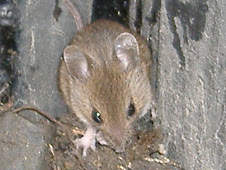
This dilemma was perfectly illustrated in the Conservation task that this mouse was involved in on Tuesday. Along side one of the burns (a stream) in the area, is a ride of thickly growing trees. These are mainly pioneer species like Silver Birch, Rowan (Mountain Ash), Elder and the dreaded sycamore. But there were also plenty of Oak, small leaved Lime and Ash as well. The ride was being opened up so that butterflies would benefit from the open glades that will be created alongside what will become a bridal way. Dealing with the sycamore is not a problem, it is prolific and invasive, it shades out other trees and if allowed to would take over. The Silver Birch while a beautiful tree, is one of the pioneer species that establishes its self very quickly, but would eventually die off naturally as more longer-lived mature trees of oak took over. But here they are trying to take advantage of the open glades and needed to be reduced in number. The Elder, while it to would eventually die off if this were full woodland, needed to be removed totally. They will return but in their present numbers they would have prevented the insects, butterflies and moths from re-establishing themselves. And while it will cause a small impact upon food for small birds in the short term, in the long term the greater the moth and butterfly populations the more food there will be for the birds, especially at breeding time.

The difficulty starts to occur when dealing with the Rowan and the Ash. They are useful trees as well as being beautiful, but while there were many young trees there, they mainly were growing in the areas of the glades. That meant they had to be removed. It is never an easy decision to cut down a tree, but it was only happening because of the long-term goal of creating areas where insects, moths and butterflies could live and breed.

The wood from these trees was deliberately left so that insects like beetles could bore into the cords, as well as providing hibernation sites for all manner of animals.

What made the work so poignant though was the fact that while working I received a call about growing trees and replanting work that will be happening in my normal stamping ground of Chopwell Wood. The difficulty is getting people to understand that sometimes to preserve a habitat sometimes we have to destroy what’s already there.


Sunday, 23 September 2007

Small Copper Butterfly


While walking home yesterday, I noticed the flash of colour of a small orange butterfly dancing upon the breeze. As anyone who has tried to watch or photograph butterflies can tell you it is not always easy to get a clear view, and I had to spend about half an hour patiently moving slowly to get close but after spending that half an hour dancing along the ride, skipping from Dock to Dock, I got this picture of this Small Copper Lycaena phlaeas


Tuesday, 11 September 2007

Preparing for a transformation


Here in my local wood we are on the brink of a new era. As the wood is a plantation that sits on the site of an ancient wood, it has been decided that it will be replanted with the native hardwood trees that would have been part of its natural mixture long before it was used as a plantation. Thus I find myself in the luck position of being around to see this happen. Or at least the start of it happening as it will continue long after I have departed.

What makes me so pleased is that if we, the Friends of Chopwell Wood and the Forestry Commission get the management right, we will be regenerating a habitat that has been in rapid decline for years. Therefore we will be helping in preserving many rare and endangered species for future generations.

At the moment I am busy trying to collect seeds from the trees that we will need to grow on and plant in future years. My back yard already looks like a mini forest with hundreds of Oak seedlings in there. I expect that while these will be planted in November, watch this space for details, and there will be a new mini forest in my back yard for years to come.

In the picture you can see the trees marked with coloured dots are the trees that are to be thinned.


Thursday, 6 September 2007

Good Bug or Bad Bug?

It is strange that our culture provides us with different reactions to different insects. Here for example is a Seven Spot Ladybird Adalia 7-puncatata as a beneficial insect, even as children we educated to respect it, even nurture them. Yet the other picture is of a Burying Beetle Necrophorus vespilloides another colourfully marked insect yet while an equally beneficial one, is treated as though it were a plague carrier. Yet often our pets, cats and dogs, carry more germs then do these beetles. I just wonder why this should be?